Scroll
latest
post
Featured
featured posts
Podcast

Everyday I hear from product-based business owners who are curious about other people’s business models, their teams, their tech-stack, how much revenue they are earning and what other product business owners pay themselves.
And although we know that every business is different, it is natural to want to see behind the curtain of other brands in your industry.
But it is more than curiosity.
We know the industry has experienced major shifts over the last several years. Everyone has been pivoting and recalibrating.
We're experiencing new normals.
You need to know what’s happening in our industry.
So, the Proof to Product team decided to take an industry-wide temperature check.
And, 925 product based businesses owners answered the call, anonymously sharing their business details with us for the 2024 State of the Product Industry Report

Expanding your wholesale product line can be both exciting and daunting. There are a lot of factors that go into creating a new product and finding the right manufacturing partners to turn your vision into a reality is crucial, particularly if you’re planning to sell the product to the wholesale market. In this article, we’ll guide you step-by-step through the process of finding a product manufacturer that aligns with your product specs, budget, timeline and quality. We also want to make sure our manufacturing partners communicate well, work efficiently and have values that align with our brand.

Are you a business owner looking to hire a virtual assistant in 2021? Maybe you’ve even googled “hire a virtual assistant” only to be met with thousands of Websites that sent you into a state of analysis paralysis? Today we are breaking down the exact steps you need to take (plus what to avoid) to hire a virtual assistant and build a lasting, effective working relationship. It just might be the best business decision you ever make.

These days, social media isn’t an optional part of running a business. Like book-keeping, sales, and marketing, it’s a necessary part of building an enduring, sustainable brand. But just like other areas of entrepreneurship, you don’t have to do all of it yourself. Social media can be outsourced to free you up to focus on work that matters most to you, whether that’s driving sales or developing new products.



filter by category
all Posts
Featured

Every founder I know has wondered:
How much are other brands making? What tech are they using? How big are their teams? Are they paying themselves yet?
And even though every business journey looks different, it's natural to want a peek behind the scenes — especially right now.
The product world is shifting fast.
Rising costs, tariffs, supply chain delays, and changing customer habits are reshaping how we create, market, and sell. We’re all adjusting, recalibrating, and figuring out what growth looks like in this new landscape.
So once again, we decided to check the pulse of the industry.
Over 400 product-based business owners answered the call, generously sharing insights for the 2025 State of the Product Industry Report.
We heard from brand new founders and seasoned six- and seven-figure businesses. They shared how much they’re earning, paying themselves, where they’re selling, how they’re building teams, and how they’re feeling about the future.
I hope you find these insights not just interesting — but empowering — as you plan your next moves.
Thank you to everyone who contributed. Your openness helps us track trends, spot opportunities, and better support this amazing industry.
Grab your favorite ☕️, find a cozy spot, and dig in. I’m so glad you’re here.
Everyday I hear from product-based business owners who are curious about other people’s business models, their teams, their tech-stack, how much revenue they are earning and what other product business owners pay themselves.
And although we know that every business is different, it is natural to want to see behind the curtain of other brands in your industry.
But it is more than curiosity.
We know the industry has experienced major shifts over the last several years. Everyone has been pivoting and recalibrating.
We're experiencing new normals.
You need to know what’s happening in our industry.
So, the Proof to Product team decided to take an industry-wide temperature check.
And, 925 product based businesses owners answered the call, anonymously sharing their business details with us for the 2024 State of the Product Industry Report
Expanding your wholesale product line can be both exciting and daunting. There are a lot of factors that go into creating a new product and finding the right manufacturing partners to turn your vision into a reality is crucial, particularly if you’re planning to sell the product to the wholesale market. In this article, we’ll guide you step-by-step through the process of finding a product manufacturer that aligns with your product specs, budget, timeline and quality. We also want to make sure our manufacturing partners communicate well, work efficiently and have values that align with our brand.

Are you a business owner looking to hire a virtual assistant in 2021? Maybe you’ve even googled “hire a virtual assistant” only to be met with thousands of Websites that sent you into a state of analysis paralysis? Today we are breaking down the exact steps you need to take (plus what to avoid) to hire a virtual assistant and build a lasting, effective working relationship. It just might be the best business decision you ever make.
These days, social media isn’t an optional part of running a business. Like book-keeping, sales, and marketing, it’s a necessary part of building an enduring, sustainable brand. But just like other areas of entrepreneurship, you don’t have to do all of it yourself. Social media can be outsourced to free you up to focus on work that matters most to you, whether that’s driving sales or developing new products.

Small Business Bookkeeping Has A Cost If Not Done Right. Bookkeeping is one of those necessary aspects of business. However, it can end up being one of the last things small business owners and service professionals want to deal with. It’s important to know that bookkeeping is more than just adding categories to your expenses and income. Good bookkeeping gives you data you can use to make better decisions for your business growth.
So you can imagine that if your books aren’t organized and accurate, is a stressor that can build up and over time wreak havoc on your business plans. There are many common mistakes that we see business owners make, especially physicians, attorneys, allied health providers, therapists and other service professionals.

Let’s get real for a moment and agree that 2020 has been insane. But, however you look at it, online sales this holiday season are a sure thing. Plenty of folks are avoiding bricks and mortar stores in favor of ordering online. Last festive season, ecommerce sales hit $138.65 billion in the US. Out of total retail sales of $722.60 billion (source: Digital Commerce 360). Whatever happens, there’ll be lots of fingers tapping credit card details into phones, tablets and laptops. So let’s talk strategy. How can you make sure your emails get opened and read - and bring in sales for your brand?
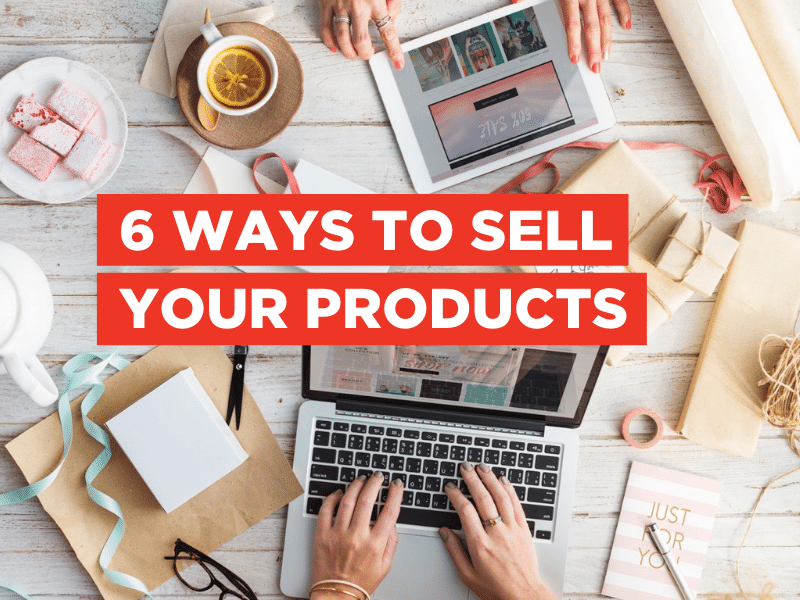
Last week I got an email from someone asking me, “Do people really make money selling paper products and gift items?”
Insert the sound of me gasping on my side of the screen.
The consumer products industry is an $635 billion (with a B) industry based on the last stats I saw. Stationery alone was $8 billion; which means there is a lot of money to be made.

My goal when joining the Proof to Product Mastermind was to build the wholesale arm of my stationery business. Two months in, the COVID-19 pandemic swept across the United States, forcing many small businesses to close their doors and the economy to take a worrisome dip. I needed to redirect my immediate focus. Had I not been a part of the Mastermind group, I know my confidence and my ability to react with clarity would have suffered. Yet instead of floundering, I was inspired by our coach, Katie’s ideas for actionable steps, and her wise advice to do what felt right for my business, once I felt ready. Katie’s reassurance, plus the ability to speak openly with our group, helped prevent me from spiraling in a time of high stress and uncertainty. It allowed me to sit with our current circumstances and take everything in, then move forward. The biggest help for me was to embrace connection, reach out for support, and offer it back in return. All while giving myself some time and grace. The Mastermind group gave me the perfect outlet to do so, and then to take the same approach within my business.

I shared this list with my mastermind group and I wanted to share it with all of you, too.
Proactive ideas you can implement to keep and/or gain new business through different sales channels.

Visual Merchandising, by definition, is the creation and projection of an attractive, exciting, practical sales
environment, whereby the proper presentation of merchandise within that environment acts as your most important selling tool … the silent salesperson. It is a marketing practice that uses floor plans / booth layouts, themed color, lighting, graphics, display props, technology, and other elements to attract customer attention. Its goal is to use the available trade show floor space to generate more sales. Keep reading for 7 tips to effective visual merchandising for your trade show!

Francesca Fuges was in the process of launching her business Loudhouse Creative when she came to Paper Camp.
She knew she wanted to sell wholesale and exhibit at the National Stationery Show the following year but she needed help developing her product line, building her sales tools and preparing for the show.
In her scholarship application for Paper Camp, Francesca set her sights high sharing that Paper Source was one of her dream stores that she hoped to work with one day.

Meet Ariel of Woodsy Foxman. She's one of our Paper Camp alums!
Ariel's dream store was located too far away for her to connect in person, so she wrote a handwritten, personalized note and sent a few extra samples since she didn't a physical catalog.
She followed up a week later via email and the buyer wrote back gushing about the samples and placed an order right away.
It took Ariel three touch points (snail mail, email and connecting on social media) to get the sale and now the store re-orders month.

You’ve probably heard me say this on Proof to Product and in previous emails, but I’m a firm believer that relationships are they key to running and building a successful business.
Everyone from our team, to our customers, to our colleagues, to our vendors plays a significant role in our personal growth as well as the development of our company. Your relationships with wholesale buyers, are no exception.
But how do you find the right stores?
How do you connect on a personal level with the buyer?
How do you know if a store is a good fit for what you sell?

When Alex Gagné from Chez Gagné came to Paper Camp, she had been in business for just under 2 years and had created a collection of 80 greeting cards.
She knew that wholesale was her end game, so she soaked up a ton of info at Paper Camp; then went home and put what she learned into action sourcing new products, reaching out to buyers and streamlining her processes.
Within one year of coming to Paper Camp, Alex’s hard work and hustle landed her products in more than 500 stores, including Paper Source.

Parrott Design's booth consisted of an 80sq ft in-line booth under the low ceilings at Javits. Sarah and her team designed and built the booth in Rhode Island than drove into NY via a U-haul van, saving significantly on shipping costs . The hard walls were built from 1/4" plywood with 2x3s for the frame. She has used the same 6 clip on lights from Ikea for two years, and did not use a parcan. The jute rug was literally pulled up from a room at her house (easy, convenient and free!). The rug was durable and a neutral shade that hid dirt well yet cleaned easily. Her signs and booth numbers were made from wood and cut with a CNC Router at a local shop. They sanded and spray painted the sign and hung with small nails and glue dots. Shelves were made out of wood and L-brackets purchased at Home Depot. She reused them the following year and spray painted them for a different look. Sarah purchased a vintage credenza from Craigslist and 2 chairs from Overstock.com - both pieces are now being used at her studio everyday. This was Sarah's second year exhibiting at the National Stationery Show. I love that blue accent wall!

We have exciting news!
Our very own Katie Hunt, Founder of Tradeshow Bootcamp, has been selected as one the first-ever Gift + Stationery 40 Under 40 honorees.
Katie, along with the other 39 honorees, were selected based on leadership qualities, creativity, innovative thinking and commitment to the industry by representatives of Gift Shop, Stationery Trends, Museums & More, the Gift & Home Trade Association (GHTA) and GHTA’s Young Gift Executives Program (YGE).
Katie is honored to be chosen as one of the stationery industry’s top 40 professionals under the age of 40, and would like to extend Congratulations to all the TSBC alums, speakers and friends that also made the list!
Below is the full list of honorees that were chosen as well as a snippet of Katie’s amazing accomplishments. Congrats Katie!

Anemone Letterpress had a 80 sq ft in-line booth under the low ceilings for their fourth year exhibiting at NSS. They built framed hard wood walls, using plywood and laminate on the plywood on the rear wall for color. Their booth was lit with 6 halogen spot lights - similar to Skanda lights - that they sourced on eBay. Carpet tiles were from FLOR and their signage was cut vinyl created by a guy local to them in Los Angeles. For past shows Carrie and Wally had affixed their cards direction to the booth walls, but for this show they added trim for shelving to display cards. All furniture was purchased at Ikea and will be reused for future shows. They used Showtime Express to ship their crate to NY, and it is now stored in Showtime's warehouse. One way shipping cost about $750 and storage for a year is roughly the same. Carrie recommends communicating with tradeshow unions via email so you have everything in writing.
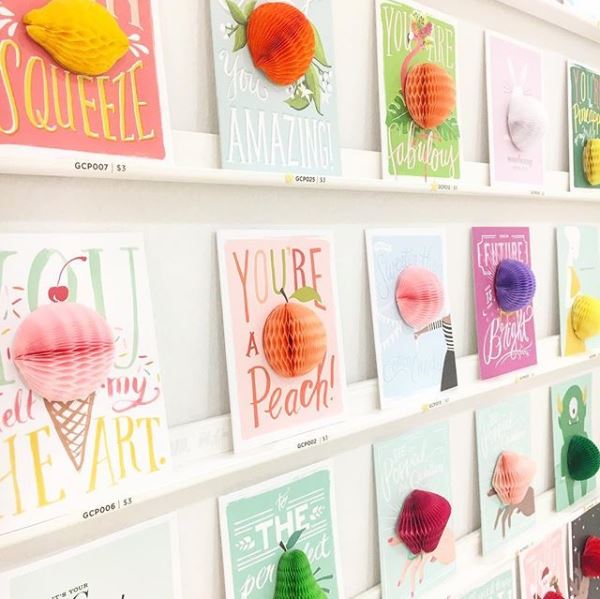
About two years ago, Paper Camp alum Inklings Paperie was exhibiting at NY NOW for the first time, in a shared booth and on a bootstrap budget.
Inklings Founder and Creative Director Lindsay Henry happened to get to talking with a kind person at that trade show...who happened to be the Brand Manager of Global Merchandise for Starbucks.

Excellent lighting is critical to your trade show booth. You want your booth to be inviting and display your products in the best possible way. And, lighting is a big component of this. As you’re weighing your lighting options, keep in mind the reasons behind why you want to have great lighting in your trade show booth.

In the paper industry, many brands look to the National Stationery Show to serve as their wholesale debut. It’s a great place to meet buyers, get feedback on your products and build relationships with press, reps and other designers. It's where I launched my wholesale line in 2009.
However, this isn't the only way to launch your wholesale brand.
Many thriving businesses are introducing their product line to buyers outside of shows and doing it successfully. A great example of this is Paper Camp Alum, E. Frances Paper.

First time exhibitors, Golden Fox Goods' had a 80 sq ft, corner booth under the low ceiling at Javits. Missy and Grant initially wanted to use foam core walls but opted for hard walls built by a local carpeter to ensure they could easily and safely hang their art prints. They lucked out and were directly under an overhead light, they also utilized clip-on desk lamps with high-wattage LEDs. Shelving and tables were purchased at Ikea. They used vinyl flooring from a local store in Los Angeles. It was cushy and easy to lay over the concrete. Vinyl was cut by Dave at EGI Vinyl. Grant warns to order vinyl early and order extra in case you make a mistake. They built an (extremely) large crate that they shipped via Showtime which was by far their cheapest option. They shipped early to the GES storage warehouse and were hit with a $300 holding fee. Next time they will ship directly to the show. Grant and Missy recommend allowing 2 full days for set-up, particularly if you're installing your own walls.

When you’re planning your tradeshow booth, start with your walls. The type of walls you choose to use will have a domino effect on other decisions you make for your booth. For example, your walls will determine how you display your products, whether you use shelves, how you hang your signs and what lights you use. Plus, your walls set the stage for the overall aesthetic of your booth.

We love to spotlight our Paper Camp alums because we believe there is always something we can learn from one another’s experiences. Francesca Fuges of Loudhouse Creative recently exhibited at the Las Vegas Market; her second tradeshow in the last year. We sat down with Francesca to get her feedback on the show. But first, her story.

Iron Curtain Press returned for their second year at the National Stationery Show, exhibiting in a 80sq ft corner booth located in the low ceiling area of Javits. Rosanna and Joel built their hard walls and reused clip-on lights they purchased last year from Ikea with bright LED light bulbs. Their woodgrain foam floor tiles were purchased from foamtiles.com. Vinyl signage was used for their logo and booth numbers, which they affixed themselves. Display shelves were made out of wood purchased at Home Depot and attached to the walls using carriage bolts and wing nuts. The carriage bolts, while pricey looked really nice and the wingnuts allowed them to attach the shelves without using any tools. ICP shipped a pallet via Airways Freight, costing $425 each way from LA to Javits and back again. Rosanna warns that crates and pallets will get roughed up during transit and delivery so pack it with great care.

Can we talk about product packaging for a minute? You want your products to look unique and stand out from the crowd, but you don’t have to break the bank to do it.
There are so many packaging options available, and it’s important to know when to follow the crowd and use standard packaging and when to get creative and do your own thing.
Ultimately, your product packaging must make it easy for the end customer to understand what your product is and how they can use it. And, from a business standpoint, you want to ensure that your packaging looks great, is scaleable and doesn’t cut into your profit margins. Here’s where to focus.

Veteran exhibitor, Shana Frase worked with a cabinet maker to build her 10x10 custom booth. Shana used clip-on lights and chose to add a Parcan this year to ensure strong lighting which enhanced product photography. Shana says it was a tough decision to rent the parcan but she's glad she did. "I am now team parCAN (& team robbing banks ;))" Her flooring is two layers - very inexpensive floor tiles with navy carpet squares on top. Shana recommends ordering more carpet tiles than you need so that everything matches if you move to a larger booth. Her company name was hand painted, framed and displayed on a gallery wall. She also used custom vinyl on the outside wall. Her table and chairs were purchased for a previous NY GIft show and reused. She shipped everything on a pallet but would have preferred to use a crate. The booth is now stored in New Jersey with Showtime. Shana's biggest piece of advice is show up early for set-up. If you finish early you can enjoy the city & rest, but thinks always come up.

Catalogs are an important and necessary sales tool for your wholesale business. But they are also expensive and time-consuming to produce so you want to make them as effective as possible.
Whether you’re attending trade shows or sending samples to stores, a catalog is a must-have. Let’s take a closer look at three things you MUST have in your catalog, read on for more!

Emailing prospects.
Following up with retailers after a show.
Tracking who you’ve sent catalogs and samples to in an organized fashion.
These are all good business practices that shouldn’t find you scrounging through old business cards or digging into your inbox. With the right customer relationship management tool, you can do all of these things (and so much more). And many of our favorites have added benefits too.
Here, we have a short review of some of the CRMs used by Paper Camp alumni, and resources we’ve found to really help you have positive client communications and relationships.
Every founder I know has wondered:
How much are other brands making? What tech are they using? How big are their teams? Are they paying themselves yet?
And even though every business journey looks different, it's natural to want a peek behind the scenes — especially right now.
The product world is shifting fast.
Rising costs, tariffs, supply chain delays, and changing customer habits are reshaping how we create, market, and sell. We’re all adjusting, recalibrating, and figuring out what growth looks like in this new landscape.
So once again, we decided to check the pulse of the industry.
Over 400 product-based business owners answered the call, generously sharing insights for the 2025 State of the Product Industry Report.
We heard from brand new founders and seasoned six- and seven-figure businesses. They shared how much they’re earning, paying themselves, where they’re selling, how they’re building teams, and how they’re feeling about the future.
I hope you find these insights not just interesting — but empowering — as you plan your next moves.
Thank you to everyone who contributed. Your openness helps us track trends, spot opportunities, and better support this amazing industry.
Grab your favorite ☕️, find a cozy spot, and dig in. I’m so glad you’re here.