465 | How She Got Her Products Into 1,000 Stores in 3 Years with Melissa Gullatte, Gracefully Made Art
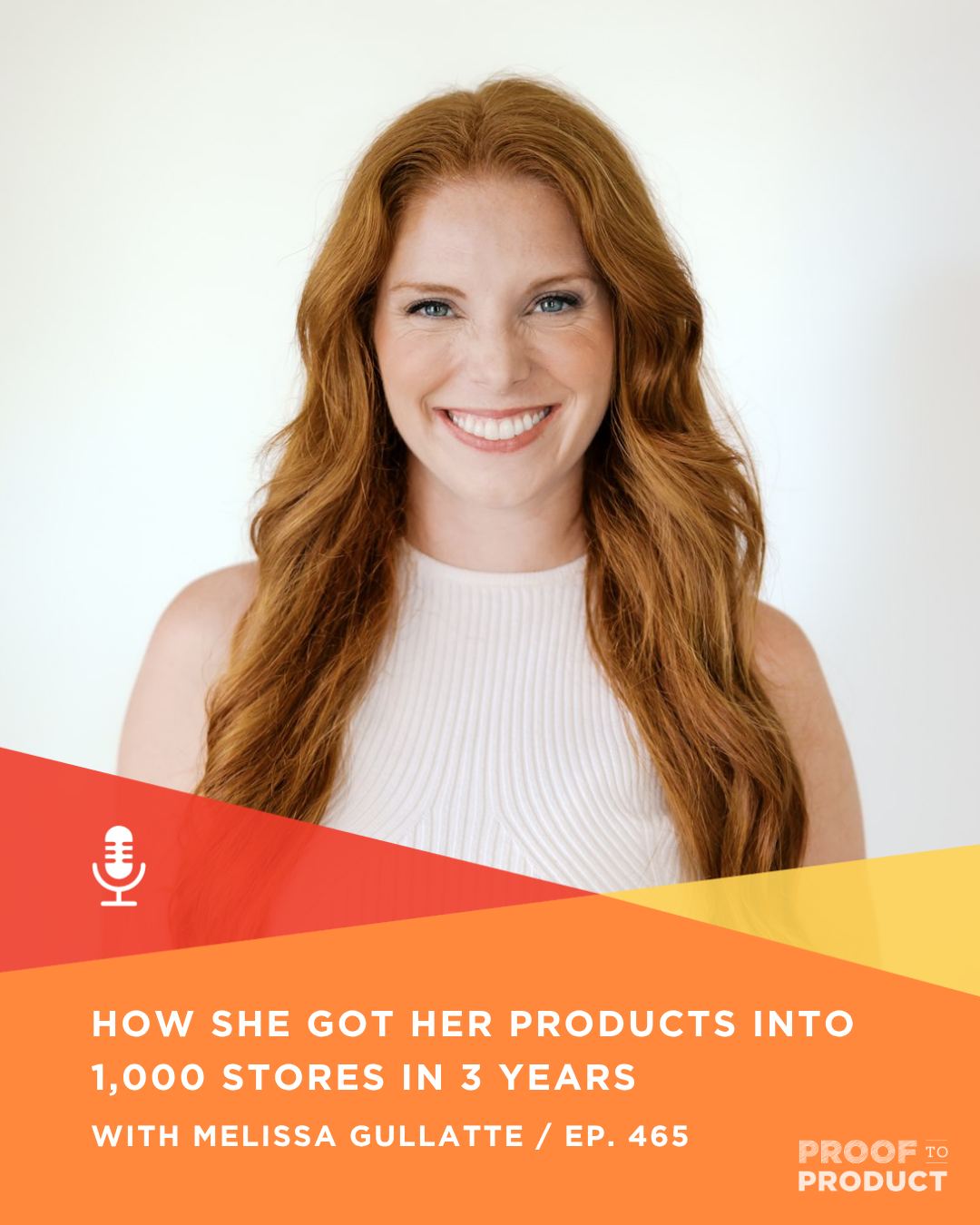
"How did you get your products into so many stores?" Melissa Gullatte hears this question often.
Her business, Gracefully Made Art, started with original paintings and wedding invitations.
After her first daughter was born, she pivoted to officially licensed collegiate and sorority gifts.
She took Paper Camp in spring 2023, thinking wholesale would be a nice side channel.
Three years later, wholesale is two-thirds of her revenue and she's in more than 1,000 stores.
In this episode, you'll learn:
How collegiate and sorority licensing works: applying school by school, getting each product category and every piece of artwork approved, and planning six months to a year ahead of launch
How Melissa landed Ole Miss after two years of rejections
Why sorority licensing opened up a national market when collegiate products sell regionally
How she prices for wholesale first, with royalties of 12 to 20 percent built in, then sets her retail price from there
What tactics got her into 1,000+ stores
How she keeps retailers reordering, and why fewer SKUs helped her business grow
Today's episode is brought to you by our Retailer Roundtable interview series.
To make a strong first impression with wholesale buyers, we need to do a few things well.
We need to make it easy for stores to purchase from us
We need clear pricing and terms and conditions
We need to build strong relationships with our customers
All of that gets easier when we listen to our customers. This on-demand interview series gives you a window into what buyers want and need from you, and it's only $27.
MEET MELISSA GULLATTE
Melissa Gullatte is the founder and owner of Gracefully Made Art, an Alabama- based watercolor and design company specializing in collegiate and sorority-licensed gifts and accessories. As an Auburn University graduate with degrees in Business Administration and Studio Art, Melissa combines her creative background with her love of entrepreneurship to design products that celebrate the schools, organizations, and traditions people love most.
Melissa founded Gracefully Made Art in 2015 as a watercolor wedding stationery business and has since transitioned it to a product-based business. It has grown into a nationally carried product brand, now sold by more than 1,000 retailers. What began with her original hand-painted artwork has expanded into a wide range of thoughtfully designed gifts and accessories, while still maintaining the colorful and artistic style of the brand.
CONNECT WITH MELISSA
WEBSITE: www.gracefullymadeart.com | INSTAGRAM: @gracefullymadeart | TIKTOK: @gracefullymadeart
your product brand right now?

Connect with Katie Hunt
Katie Hunt is a business strategist, podcaster, mentor and mama to four. She helps product based businesses build profitable, sustainable companies through her conferences, courses and coaching programs.
Website: prooftoproduct.com | Instagram: @prooftoproduct
-
Katie Hunt [00:00:01]:
Hey friend, welcome back to Proof to Product. I'm your host, Katie Hunt. Today's guest is Melissa Goulet, the founder of Gracefully Made Art. Melissa started her business in 2015 while she was a student at Auburn, and at the time she was painting original artwork, and then she started designing wedding stationery. After 8 years, Melissa made a shift in her product line, moving into officially licensed collegiate and sorority gifts and accessories that are now carried in more than On today's episode, Melissa walks us through how college and sorority licensing works, including the process for approval, how much she spends on royalties, and how she prices for wholesale first in order to ensure profitability for both wholesale and retail sales. Melissa shares how having a solid product line and a strong sales strategy have helped her grow to more than 1,000 stores in 3 years. Yeah, so I started since she took Paper Camp in 2023. We also talk about how her role in the business has changed, going from doing everything herself to leading a team of 12.
Katie Hunt [00:01:15]:
I hope you enjoy Melissa's story of persistence and focus and determination. I was really in awe of everything she's accomplished. Today's episode is brought to you by our Retailer Roundtable interview series. If you want to be a fly on the wall and listen in as buyers share how they like to be pitched, how much follow-up is too much, and how you can make it an easier yes for them to purchase wholesale from you, then you got to check out the Retailer Roundtable interview series. It features a lot of different buyers all showcasing their different opinions and preferences. Now this is on demand, so you can start watching it right away, and it's only $27. So you can get access at prooftoproduct.com/roundtable. That's prooftoproduct.com/roundtable.
Katie Hunt [00:02:04]:
I'm Katie Hunt, wholesale expert, business strategist, and mom of 4. I'm also the host of the Proof to Product podcast. Since 2011, I've coached thousands of brands whose products can be found on the shelves of indie shops and big box stores all around the world. If you are a creative entrepreneur that makes and sells physical goods, you're in the right place. Here on Proof to Product, you'll learn new strategies for product development, sales, marketing, and more. It's like your weekly dose of business school, and we're going to help you confidently grow your revenue in your own way and at your own pace. So let's get started. Melissa, welcome to Proof to Product.
Katie Hunt [00:02:47]:
How are you?
Melissa Gullatte [00:02:48]:
I'm good. I'm so excited to be here.
Katie Hunt [00:02:51]:
I'm so excited to chat with you because you have been dropping some like major wins in our community lately of just like how you've been systematically and intentionally growing your business. And so I'm excited to dive into some of that today and also just share your story with everybody about how you've grown this business. So why don't we start there? Why don't you tell everybody about your business, Gracefully Made Art?
Melissa Gullatte [00:03:10]:
So I started my business in 2015 when I was in school at Auburn. I started with just doing original artwork, things on canvas, and then I was getting married to my now husband and started doing wedding invitations. I feel like
Katie Hunt [00:03:28]:
This is an angel story in the industry. Mine, mine too.
Melissa Gullatte [00:03:31]:
Yes. I feel like I've heard this story so many times, but—
Katie Hunt [00:03:35]:
But it's a great starting spot.
Melissa Gullatte [00:03:37]:
Yeah. So, um, I did my own wedding invitations and then I had so many friends ask me to make their wedding invitations. So I just moved straight into wedding stationery and I did that for 8 years until 2022. When I had my first daughter. And after I had her, I wanted to be a present mother, and weddings just honestly didn't bring me joy anymore. And that's what's so great about owning your own business is you can pivot if you want to pivot. So I started dabbling in just general products and started collegiate licensing in 2023. So we do officially licensed collegiate and sorority gifts and accessories.
Melissa Gullatte [00:04:30]:
And we are currently licensed at 8 universities and 21 sororities.
Katie Hunt [00:04:35]:
Okay. Okay. That's a big deal. Did you have to approach them one by one to talk through like licensing their, their logos?
Melissa Gullatte [00:04:43]:
Yes. Yes. So the licensing process does vary per school. Most schools work with a licensing company that you actually go through, and you have to apply for each school and sorority individually. So it is a lot of backend work. It's a lot more administration than people probably realize. And then once you do get licensed with them, that doesn't mean you can make whatever you want. You do have to get
Katie Hunt [00:05:15]:
I was going to ask, are you limited to the certain types of products you can do?
Melissa Gullatte [00:05:19]:
You are. So with a lot of the schools, you have to apply for products individually at that point. And then you have to submit artwork for each and every product and they may approve it, or they may say you need to use a different color blue, or you need to add this or that. So it's not, it's not a quick process. So we, really start working on our products 6 months to a year before we actually launch. So it is, it is quite the process.
Katie Hunt [00:05:54]:
So did you start with the universities? Or did you start with the sororities? Or did they kind of go both hand in hand?
Melissa Gullatte [00:06:02]:
So we started with the universities. I went to Auburn University and was in the marching band as a majorette. And so I love Auburn, I love sports. And so collegiate Licensing was that came. So I had so many people ask me to do Auburn products, and so I knew that I needed to do it correctly. So many people do think you can just slap a logo on something and sell it, and it's fine. They're not going to see you. But you do have to go through the proper channels to get licensed.
Melissa Gullatte [00:06:42]:
So we immediately started doing that. So we had Auburn, and if you know anything about the South, if you have Auburn. Auburn, you have to have Alabama. So that was our next school and we just started adding from there. And then last year we added sorority licensing and that has been super profitable, super great. With colleges, it's so regionally focused. You know, this is popular in Alabama, this is popular in Mississippi, et cetera. But with sororities, all of their branding is the same, whether you go to school in Florida or California.
Melissa Gullatte [00:07:18]:
So that's been really great because it's allowed us to have customers and retailers all over the United States.
Katie Hunt [00:07:26]:
Yeah. What— okay, I want to back up the train a minute. How many other companies license from the universities and the sororities? Is it pretty competitive to get into that? What's the selection process like?
Melissa Gullatte [00:07:39]:
It is pretty competitive. And it does vary per College. Some are a lot more open to new licensees and some are not. So we have definitely gotten rejected from plenty of colleges that we have wanted, but we've learned to be persistent. And sometimes you have to apply multiple times. So for example, we have really wanted Ole Miss. And we started applying 2 years ago. And we just got licensed with them.
Melissa Gullatte [00:08:14]:
So they rejected us multiple times and finally said yes, which is great. Yeah, so it really just depends on the school.
Katie Hunt [00:08:23]:
Do you think it's that they finally said yes because they saw what you were doing with other schools and they were impressed with your, you know, tenacity, but also the breadth of your product line and how you're doing stuff?
Melissa Gullatte [00:08:33]:
Yes, I think so. When you do apply, you have to submit a marketing plan and photos and examples of artwork that you would do with their branding. And then this last time, what I really think got it is I sent them tons and tons of screenshots of Instagram DMs and TikTok DMs and fair DMs of customers and retailers requesting Ole Miss products. So I really stressed to them that I have this very eager audience that's ready to buy. And so I like to think that's hopefully what pushed them over the edge this time.
Katie Hunt [00:09:14]:
Definitely. I mean, one, you have staying power because you've been doing this for several years now, and you've shown a proof of concept with all these other universities and sororities that you've been working with. And then, you know, to also be able to point to them directly and say, look, our people want your stuff. So like, Help us, help us help you, basically. Yeah. You know, okay, so you talked about how, um, you have to get approval for your artwork and your designs. Are you— remind me, I can't recall what you said. Do you also have to get approval on the types of products? Because your line has expanded dramatically.
Katie Hunt [00:09:51]:
You— I mean, you went from greeting cards and like silk scarves and things like that, and now you're doing like stadium bags and quilted duffels and Needlepoint pillows and hair accessories, socks. I mean, I'm sure I'm missing some things in there too, but like, are you having to vet with them what kind of product categories you're, you're going into as well?
Melissa Gullatte [00:10:09]:
Yes. Yes. So every time you want to add a new product category, you do have to submit another application. There are products within schools that we are approved for that we're not allowed to make. Sometimes they only have certain vendors who can make a certain product. And so if you're not one of those, you know, 3 to 5 vendors, they may say no, you can't make a blanket. So yeah, it's, it's very intricate, the licensing world and the licensing process.
Katie Hunt [00:10:39]:
Yeah, I like what you said too about like expanding to the sororities because they're, they have a national footprint rather than just a regional footprint. I mean, the sorority, from everything I see on social media, like sorority bid day and like rush season, that must be huge for you. How do you prepare for that influx of potential orders or just like the demand of that?
Melissa Gullatte [00:11:02]:
It has definitely been a pain point keeping inventory in stock because each year we grow and grow and making sure you have things here at our warehouse. It's definitely been something that's been difficult. So a lot of it is guessing, which is not great.
Katie Hunt [00:11:22]:
Well, let's be real. Everything in business is an experiment and we're guessing to some extent. So yes.
Melissa Gullatte [00:11:27]:
Yes. Yes. So my husband actually works in manufacturing. He's an engineer. And so he's come up with a lot of formulas for us recently that have to do with like our reorder threshold. So we're starting to hone in a little bit better on when we should be reordering, when we should be restocking. But it is difficult because with football season and with bid day season, it is very seasonal. So it may sell super well in the second half of the year, but it is a lot slower in the first half of the year.
Melissa Gullatte [00:12:08]:
So it is a lot of trial and error.
Katie Hunt [00:12:10]:
Now, just to clarify for our listeners and myself, you're selling these products to both wholesale and to direct-to-consumer audiences, correct?
Melissa Gullatte [00:12:17]:
Yes, yes, correct.
Katie Hunt [00:12:19]:
Okay, so talk to me about the money side of this, because with this type of licensing deal, are you paying royalties? to the university and sororities, or is it a flat rate? I assume it's royalties on an ongoing basis. Is that—
Melissa Gullatte [00:12:30]:
It is royalties. Yes. So with most of our organizations, we have to report royalties every month. Some of our other ones, we have to do it quarterly. But yeah, so they will take a percentage of every sale. So it's usually like 12% to 20%. And it does vary per product. So blanket may hold a different royalty percentage than An art print.
Melissa Gullatte [00:12:53]:
So
Katie Hunt [00:12:53]:
that gets pretty complicated as you're like figuring out your pricing, your margins, and then too thinking through like, okay, direct to consumer is one price, of course, but like you need to make sure it's profitable on wholesale as well.
Melissa Gullatte [00:13:07]:
Exactly. So because we have that added layer in here, we do try to first and foremost price for wholesale to where we know we have all of our margins covered and then build our retail price from there.
Katie Hunt [00:13:22]:
Okay, how are you managing that? Because adding an extra— let's, let's run through this real quick because my brain is like firing on all cylinders. If you're adding in, let's say, 20%, or even just 15%, let's say 15% for the royalty, but you're also adding in perhaps like the fair commission and like other things, that adds up pretty quickly. So like, how are you maintaining your strong margins? Like, are you ordering in higher volume? Are you able to charge a premium price because of the you know, college or sorority affiliation, maybe both? I don't know, like, I'm curious how you're, you're making that work.
Melissa Gullatte [00:13:57]:
It is definitely both of those things. So because people have such an emotional connection to their school or to their sorority, or for an LSU water bottle, as opposed to just a pretty water bottle. So we are able to charge a little bit more And we do always stress to our retailers and our customers that it is officially licensed. And so they know that we often do have that extra facet that we have to pay for. So people are willing to pay more for that. And then we do order in larger quantities. So we did get a warehouse about a year ago. So we are able to stock a lot more.
Melissa Gullatte [00:14:43]:
So we are able to order In larger quantities, which has been awesome.
Katie Hunt [00:14:47]:
That's nice. But it is still a bigger outpour of capital too. You know, you're ordering in higher quantity, you're waiting for the seasonality of different things to flow. This is fascinating. I have a couple of clients that do licensing deals, not with sororities and fraternities and colleges, but, um, other public, you know, images and things like this. Let's talk about the official licensing versus people that aren't going through official channels, because that's a big pain point, isn't that?
Melissa Gullatte [00:15:14]:
It is.
Katie Hunt [00:15:15]:
And like, how are you— I assume there's an educational portion of this sales process that you have to explain to people. Is that— am I correct in that?
Melissa Gullatte [00:15:25]:
Yes. A lot of people don't realize that you do have to be officially licensed. I actually, when I started, didn't know that either. I remember I did a pop-up when I was in college and I had the Auburn Creed written on a print. And the store where I did the pop-up, they were so sweet, but one of the girls told me, hey, you know, you have to get that licensed. And I was like, what? I knew that I couldn't use their logos, but verbiage and things like that, I didn't— I didn't know. So, so yeah, so I think a lot of people just truly don't know that it is necessary. But when you think about it, you are using their branding and you are profiting off of their branding and like I said, their emotional connection to the school.
Melissa Gullatte [00:16:16]:
So it is super important because they— you can get in trouble.
Katie Hunt [00:16:21]:
You can get in trouble. Yeah. I mean, it's somebody else's intellectual property. It's their trademarked logos, I'm sure. And yeah, I mean, there's a lot of conversations right now online about using the likeness of celebrities and other things like that, which is It's parallel to this but different. And so I think, you know, do you feel that the people who have unlicensed product, do you feel that they're competing with you? Or do you feel like it's just a totally different—
Melissa Gullatte [00:16:46]:
I kind of feel like it's a totally different thing. I think it's just important to focus on ourselves and realize we're officially licensed, we're doing what we need to do. And we try not to worry about the other people that are not licensed, but it is very easy to spot. Unlicensed things. So
Katie Hunt [00:17:04]:
yeah, well, like you said, they have— you have to get things approved. So I'm sure things don't follow the guidelines and they stand out. Interesting. Yeah, I fully agree with you on like focusing on your own and just articulating to folks you're working with that we are officially licensed and this is, you know, we're doing this the right way. So, so talk to me generally about how your business— what your business looks like today. Like what percentage of your revenue is typically wholesale? What percentage of your annual revenue is typically D2C? Like, what's kind of the breakdown?
Melissa Gullatte [00:17:35]:
So when I started Collegiate Licensing, I had somewhat thought about wholesale. I took Paper Camp in spring 2023 and was just thinking it would be a nice little side thing to my direct-to-consumer, but it has greatly— so we probably do A good 2/3 of our revenue, if not more, is wholesale. And then the rest would be direct to consumer. Thank you.
Katie Hunt [00:18:07]:
You had huge growth. I remember watching your updates and your stats after Paper Camp. You're like, we hit this number of stores, we hit this number of stores. And I talked about you actually in one of our webinars because I was like, look at what she's doing. She's doing the hard work and it's paying off. So
Melissa Gullatte [00:18:23]:
yes, it's been really cool. Yeah, we recently hit 1,000 stores this past summer, which has been cool. So essentially in 3 years, we are now over in over 1,000 stores. So thank you. Thank you.
Katie Hunt [00:18:37]:
You know, we just finished round 48 of Paper Camp not too long ago, and I— somebody sent me a message and they're like, isn't there just like a magic wand I can wave and make all of this work? And she was kidding, of course, but I'm like, I know we all want the magic wand, but no, It's just a lot of hard work and strategic thinking and being, you know, intentional and just doing, doing it.
Melissa Gullatte [00:19:01]:
Yeah, I do have people ask that all the time. Like, how did you get in so many stores? How did you grow so fast? But I mean, it's truly persistence. And it's, first of all, making a product that stores want to order over and over. And then it's also continually putting yourself in front of retailers. So it's not just, joining Faire and hoping, you know, thousands of customers will come to you. It's sending out pitch emails. It's giving your business card when you're in a store. Lots of things like that.
Melissa Gullatte [00:19:35]:
Commenting on stores' Instagrams and, you know, just continually, continually showing up. Another thing that we try really hard to do is make it super easy to work with us. So we provide good photographs. We have very clear pricing. We try to have reasonable minimums. And one big thing that we really try to do is ship quickly. So we got a little bogged down after the fair market in July, but we typically try to ship wholesale within like 3 to 5 business days, if not quicker. So yes, yes, we have several girls whose entire job is wholesale, so they just fulfill wholesale orders all day.
Melissa Gullatte [00:20:19]:
So
Katie Hunt [00:20:19]:
I want to go back to something you said. You said having a great product is a key portion of this, but then the tenacity too of the follow-up. So I assume that you're doing both a lot of work, like you said, with the cold pitching and the customer acquisition side of it, right? Like bringing new people into your world. But then you've also got, you know, 1,000 retailers now that you've sold to in the past. So what kind of things are you doing to nurture those existing relationships and keep those folks coming back ordering more?
Melissa Gullatte [00:20:45]:
We try to alert them when we have new product collections drop. If they ever have any issues or anything, we try to be very quick to respond. We also try to take into consideration if they have any suggestions. So often they'll say, we have lots of customers that are wanting this pattern on a duffel bag or this pattern on a water bottle. And so They really like to be heard. So, it is very cool for them to see when we do implement one of their suggestions. So, just trying to continue to have as many touchpoints as possible. Also, interacting with them on social media, they love that.
Melissa Gullatte [00:21:29]:
So, we do just—
Katie Hunt [00:21:31]:
I think that's great. I think you named something that all of us, as it's just a human thing, right? We all want to be seen. We all want to be heard. We want to feel validated. We like it when other people comment on our posts or share our things. And, you know, it again leans into that feeling seen and heard. So I love that you're doing all of that. That's great.
Katie Hunt [00:21:53]:
For our listeners who— thinking back, like, to the days where you were transitioning your business, maybe, you know, you were trying to find your product footing. You said— you described it in your message to me as like you felt like you were floundering a little bit in those early days, just trying to figure it out. For the folks listening who kind of feel like they're in that stage of business right now, what would you want to tell them?
Melissa Gullatte [00:22:16]:
When I started, I really thought more is better. So I was trying to do, you know, hundreds of SKUs, and I was trying to say yes to everything. And once I honed in on these specific schools and got more niche with it, that's when it really started to flourish. So I learned that every new SKU creates so much work on the back end. So I tried to find what was working and really focused on that and just didn't try to do too much.
Katie Hunt [00:22:53]:
Yeah. I mean, most of the time when I'm looking at my clients' sales reports and data, it's 20% of your product line that's making up 80% or more of your sales. And I think that your suggestion to start small, to like understand your audience, to like lean further into the things that are working makes total sense and it's something that more of us should be doing. I also think too, just the transitions of that, those beginning days, we don't know what we're doing yet. We were, we have some ideas, we have a plan, but also the plans kind of morph and change because we also realize there's other ways we can do this or other opportunities available to us. Do you agree with that?
Melissa Gullatte [00:23:32]:
Yes. I feel like personally my business has lived so many lives. In the last 11 years. It's totally not the same business that it was even, you know, 4 years ago. So it's important to recognize those transitions and to just realize that something that maybe was working when you were half the size isn't going to work now. So just being flexible and being willing to create new systems and make changes is so important.
Katie Hunt [00:24:02]:
How do you feel like you have changed as the leader of your business over the last 11 years? I mean, Definitely confidence growth, I'm sure, like more decision-making. Like, how would you describe your growth as a leader?
Melissa Gullatte [00:24:15]:
Well, for so long it was just me, so I wore all the hats. I did the marketing, the artwork, the ordering, all of that. And then in 2023, I hired my best friend And just being able to share some of that burden was so great and have somebody to bounce ideas off of was amazing. We've grown our team a lot in the last 3 years. So we have 12 girls that work for us now. So it is very— my responsibilities are very different than what they were. So because we have such a great team who really takes ownership over their areas that they're in. I don't have to touch everything, which is great.
Melissa Gullatte [00:25:05]:
So I am able to focus more on the creative process. And it is different though, having to manage people now and be in charge. I do love being in charge, but it is very different. That has been Definitely a learning process. So,
Katie Hunt [00:25:29]:
oh yeah, it's— I think that is one of the— in my opinion, having watched hundreds, thousands, you know, thousands of brands go through this, I think that transition to being the main creator and the main person juggling everything to actually allowing other people to come into the fold of the business, and that changes your relationship with the business too because you become more of that visionary, the leader, the decision— you're still making a lot of the decisions, but you're also then managing other people. And making sure that they're trained properly and they're doing things the way that you want them to be doing. And that's a different day-to-day grind than creating product, shipping product, and all of that too.
Melissa Gullatte [00:26:08]:
It definitely is. It definitely is. But it's so much fun.
Katie Hunt [00:26:11]:
That's amazing. Okay, well, what do you guys have coming up new and next that you want to share with our audience?
Melissa Gullatte [00:26:17]:
So we are actually doing our first trade show in January. So which one are you doing? Atlanta. So yes, so we're super excited about that. We've been prepping for so long.
Katie Hunt [00:26:29]:
That'll be a good one for you.
Melissa Gullatte [00:26:30]:
We're very excited. Yeah, I think being a southern market is going to be really great for us since we do have a lot of the SEC schools and sororities are so, so big in the South especially. So we're very, very excited about that.
Katie Hunt [00:26:44]:
Fantastic. Awesome. Well, where can our listeners learn more about you and check out your products and scope out your brand?
Melissa Gullatte [00:26:54]:
We are on Instagram and TikTok, so we're Gracefully Made Art, and our website is gracefullymadeart.com.
Katie Hunt [00:27:03]:
Fantastic. Are you— do you hang out mostly on Instagram, or are you mostly on TikTok? Just curious.
Melissa Gullatte [00:27:08]:
I personally hang out more on Instagram, but our— we do have a fabulous marketing girl, my sister-in-law. She's wonderful, and she likes to hang out on TikTok. She's grown our TikTok so much, so It's fun over there too.
Katie Hunt [00:27:21]:
It is. I find that it's like, it's just a different vibe and it's a different— I mean, I was playing on TikTok a lot during the pandemic and I kind of pulled back a bit, but Instagram is always a great spot too to land. But, um, I was just curious more than anything.
Melissa Gullatte [00:27:34]:
Yes, yes, it's so fun. Social media is wonderful. So
Katie Hunt [00:27:38]:
I know it really is a good way. Well, and especially with the types of products you sell, I feel— I mean, let me back the tram. I think some people love— people have a love-hate relationship with social, right? Like, I think the pressure to post and to be on can start to feel like a lot for business owners, and I totally understand and respect that. But I also feel like your business has a very unique angle to take with social media because you're really building community there with the folks that are buying your university gear, your sorority gear. I'm sure you're engaged— are you doing like UCG content and stuff like that with folks?
Melissa Gullatte [00:28:11]:
Yes, we do a lot of TikTok collaborations especially, and we do have a brand rep program that's like direct through our website. So yeah, so they've been great helping us market our products.
Katie Hunt [00:28:26]:
That's good. I just realized I said UCG instead of UGC. Wow. Okay, that's the cold— that's the cold medicine talking. Melissa, this has been fantastic. Tell everyone again real quick where they can find your products and where to find you, follow you on social.
Melissa Gullatte [00:28:40]:
We're @gracefullymadeart and gracefullymadeart.com.
Katie Hunt [00:28:44]:
Fantastic. Thank you for your time today. This was really fascinating. One, it was fun to talk to you and just like hear more of your backstory because I've seen like, again, all the wins you've been posting. But then 2, like you're running your business in a very different way than a lot of other folks in our community. And I think it's fascinating to showcase how you can build these businesses any which way you want and you're doing an amazing job. So kudos to you.
Melissa Gullatte [00:29:05]:
Thank you. Thank you so much for having me.
Katie Hunt [00:29:07]:
Of course. All right. Big thanks to Melissa today for sharing her story. I learned so much about how official collegiate and sorority licensing project work. That is not an area that I have a lot of experience with, and it was fascinating to hear how it works, how she's weaved it into her business. I really loved too hearing how strategic she was in starting with the colleges, growing that regional customer base, and then moving into the sorority licensing where they have nationwide chapters. And so that, that grew her reach even further and also grew the number of customers that were interested in her products. Just like so stinking smart.
Katie Hunt [00:29:50]:
Now before I sign off, I wanted to remind you that if you want to get your products into more stores, I want you to check out our Retailer Roundtable interview series. Like Melissa said, a solid product line and making it easy for our buyers to shop with us— those 2 things are non-negotiable, right? But knowing how to communicate with shop owners, how much to follow up, what information to include when we do reach out. Well, that's equally important when you're building your relationships with stores, and we cover all of this and more in our Retailer Roundtable series. You'll hear directly from shop owners about what they need and want from brands that they buy from, and this is an on-demand interview series. It's only $27, and you can get access at proofyourproduct.com/retailer-roundtable. That's proof2product.com/roundtable. All right, thanks for hanging out with us today. If you learned something new, share it on social and tag Melissa and I.
Katie Hunt [00:30:44]:
And if you think a friend would find today's episode helpful, go ahead and share it with them. We love all the shares around here. All right, have a great rest of your week. I'll be back soon with another new episode. Bye.


Today's guest is Melissa Gullatte, the founder of Gracefully Made Art. Melissa started her business in 2015 while she was a student at Auburn, painting original artwork and then designing wedding stationery for eight years. She walks us through how licensing works and how she went from taking Paper Camp in 2023 to having her products in more than 1,000 stores just three years later.