464 | How to Grow Repeat Customers Instead of Always Chasing New Ones with Elizabeth Rees, Chasing Paper
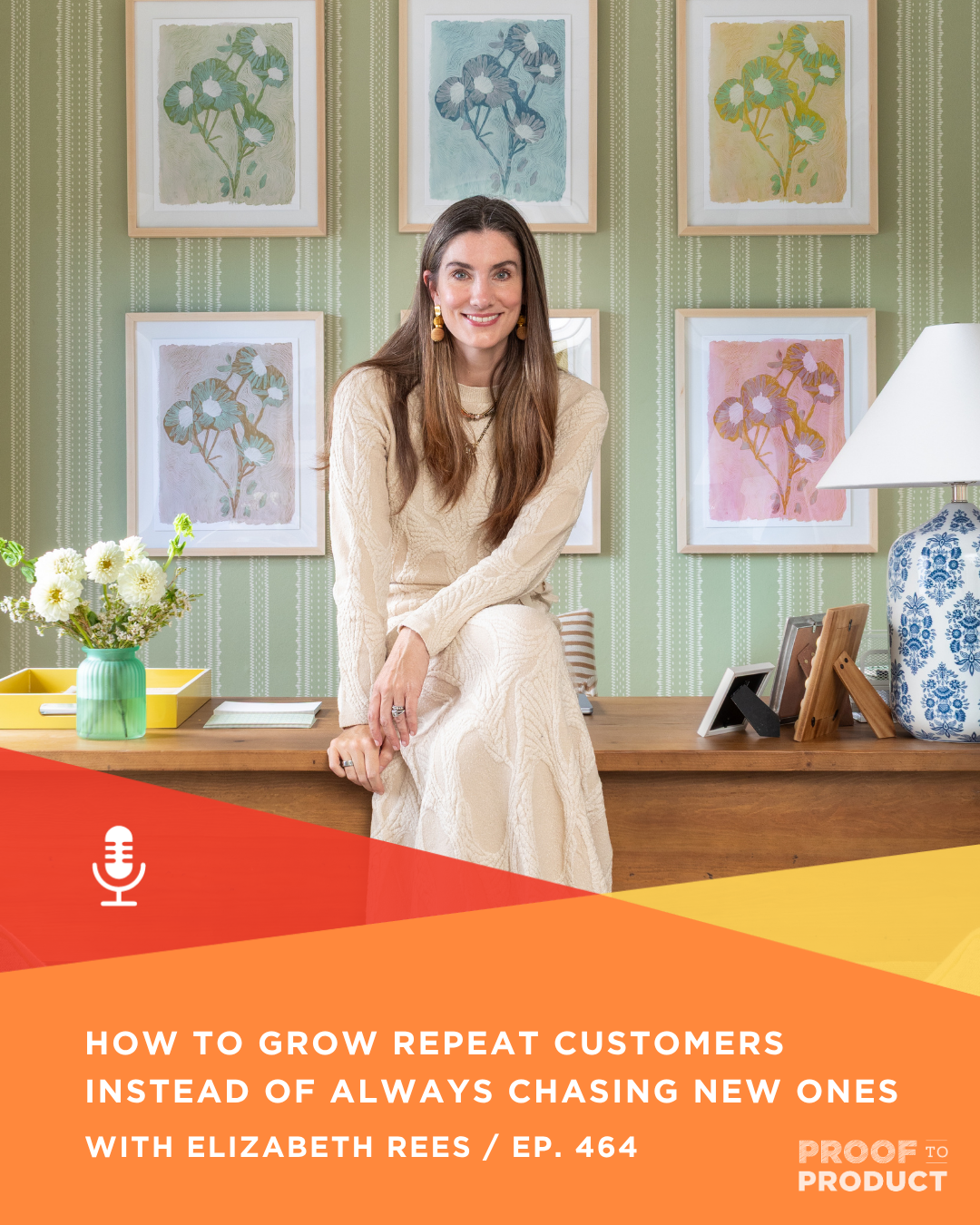
How do you decide what to make next, what to cut, and where to put your limited time and money? For Elizabeth Rees, founder of Chasing Paper, the answer has come from her customers for nearly 13 years.
She shares how customer feedback shaped her product format, her materials, her wholesale approach, and her newest line, and why she checks every instinct against the data before acting on it.
In this episode, you'll learn:
Why Chasing Paper sold wallpaper in panels instead of rolls from the start, so a customer with a small project could spend $60 instead of $250 and buy in at any budget
How launching with two materials, Standard and Luxe, worked like an accidental A/B test, and why Elizabeth discontinued the lower-priced option about nine months in instead of continuing to explain the difference
How Chasing Paper treats wholesale as a customer acquisition channel, drop-shipping for retail partners and using those placements to build brand trust
Why the trade program, where repeat rate, average order value, and lifetime value run three to four times higher than direct-to-consumer, became the reason to launch fabric
Why deepening relationships with the customers you already have can matter more than constantly finding new ones, and why a small team has to be selective about new channels
How Elizabeth pairs instinct with data, and why one source of truth for attribution keeps her team from cherry-picking numbers to support a hunch
Today's episode is brought to you by our Retailer Roundtable interview series.
To make a strong first impression with wholesale buyers, we need to do a few things well.
We need to make it easy for stores to purchase from us
We need clear pricing and terms and conditions
We need to build strong relationships with our customers
All of that gets easier when we listen to our customers. This on-demand interview series gives you a window into what buyers want and need from you, and it's only $27.
MEET ELIZABETH REES
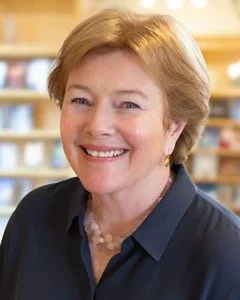
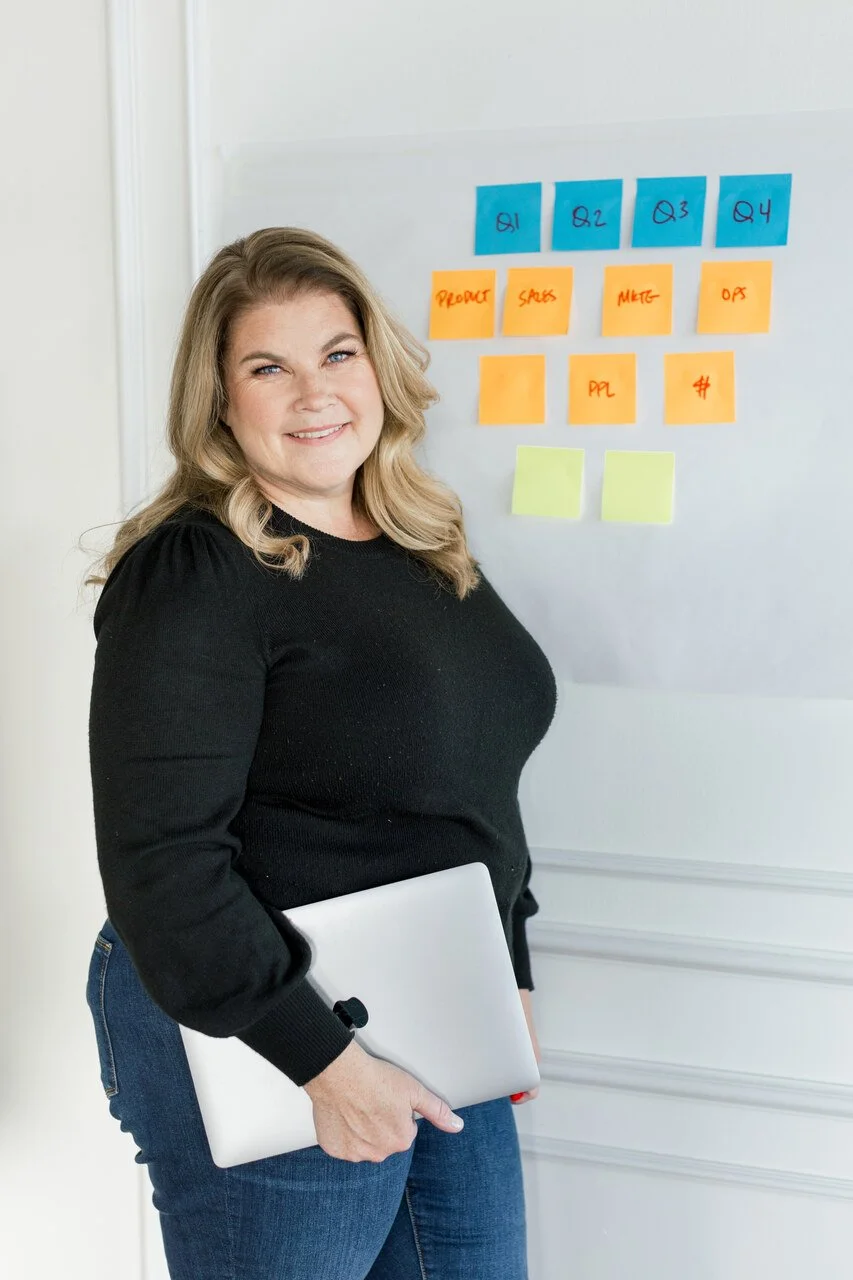
Elizabeth Rees is the Founder of Chasing Paper, a design-forward wallcoverings company, and author of Wall Flowers: A Love Letter to Wallpaper. Established in 2013, the brand has grown beyond its peel-and-stick wallpaper roots to become a leader in the premium wallcoverings industry through creative collaborations with renowned designers, thoughtful print and pattern design, and believing in the power of transformation. Rees comes from generations of printers, carrying on her family’s legacy in her own way through Chasing Paper and celebrates the emotional impact and storytelling capabilities of wallpaper in her debut book, Wall Flowers. Rees resides in the Heartland of Milwaukee, Wisconsin, where Chasing Paper is based, with her husband Brian and two daughters.
CONNECT WITH ELIZABETH REES
WEBSITE: https://chasingpaper.com | INSTAGRAM: @chasingpaper
your product brand right now?
Connect with Katie Hunt
Katie Hunt is a business strategist, podcaster, mentor and mama to four. She helps product based businesses build profitable, sustainable companies through her conferences, courses and coaching programs.
Website: prooftoproduct.com | Instagram: @prooftoproduct
-
Katie Hunt [00:00:00]:
Hey friend, welcome back to Proof to Product. I'm your host, Katie Hunt. Today's guest is Elizabeth Rees. She's the founder of Chasing Paper. Nearly 13 years ago, Elizabeth was living in a West Village apartment in New York City, and she wanted to decorate with wallpaper. But like most of her friends, she rented her apartment and she could not find a renter-friendly option that she could put on the walls and then remove from the walls when she moved out. So she made one. Today, Chasing Paper sells peel-and-stick wallpaper, traditional wallpaper, fabric, and art, and they have a growing trade program for their interior design customers.
Katie Hunt [00:00:37]:
On today's episode, we talk about what it's like to bring a new product to market, including that process of educating customers about what it is and why they need it. We talk about why she discontinued her lower-priced product line after only 9 months and moved in favor of her Luxe brand. We talked about how volunteering got her into rooms that she couldn't afford to be in during the early years in business. And we talked about the importance of actively listening to our customers and allowing their feedback to shape our business decisions. Today's episode is brought to you by our Retailer Roundtable interview series. To make a strong first impression with wholesale buyers, we need to do a few things really well. We need to make it easy for stores to purchase from us. We need clear pricing and terms and conditions, and we need to communicate clearly and build strong relationships with our customers.
Katie Hunt [00:01:27]:
And all of that gets infinitely easier when we actively listen to our customers. Are you spying a trend here with today's episode? This on-demand interview series gives you a window into what buyers want and what they need from you, and it's only $27. So you can find that at prooftoproduct.com/roundtable. Again, that's prooftoproduct.com/roundtable. All right, let's get into it. I'm Katie Hunt, wholesale expert, business strategist, and mom of 4. I'm also the host of the Proof to Product podcast. Since 2011, I've coached thousands of brands whose products can be found on the shelves of indie shops and big box stores all around the world.
Katie Hunt [00:02:11]:
If you are a creative entrepreneur that makes and sells physical goods, you're in the right place. Here on Proof to Product, you'll learn new strategies for product development, sales, marketing, and more. It's like your weekly dose of business school, and we're going to help you confidently grow your revenue in your own way and at your own pace. So let's get started. Hey, Elizabeth, welcome to Proof to Product.
Elizabeth Rees [00:02:37]:
Thank you so much for having me.
Katie Hunt [00:02:38]:
I am so excited to chat with you. I've been a longtime fan of your work here, but for our listeners, tell them a bit about yourself and your business, please.
Elizabeth Rees [00:02:46]:
I am Elizabeth Rees. I am the founder of Chasing Paper, and we got our start nearly 13 years ago. really solving a problem, which was I was living in a tiny little West Village apartment in New York City, and every restaurant and bar and hotel I went to had wallpaper, which had, you know, gone away for many, many years here in the United States. And I thought to myself, I would love to have wallpaper in my apartment.
Katie Hunt [00:03:10]:
Yeah.
Elizabeth Rees [00:03:10]:
But like me and all of my friends, we all rented. So I kind of went in search for a renter-friendly product and found that there was almost nothing. There was basically like contact paper, like what they used in the '70s. And I was like—
Katie Hunt [00:03:23]:
For our drawers.
Elizabeth Rees [00:03:24]:
Yes, totally. And it was very shiny and the patterns were not anything that like I would put in my apartment. And so it really started from just solving that problem. I wanted to find something that was thoughtfully designed, well-made, not shiny. So these were kind of things. And then also something that I could really install myself. So that is where Chasing Paper was born. You know, that was many moons ago and we have evolved over the years to now.
Elizabeth Rees [00:03:53]:
Now we sell traditional wallpaper, which is like a paste-on. We sell different kinds of that material, ones that are more commercially grade or have more durability. And then also this year we launched fabric. We also sell art and different things as well. So certainly just continue to listen to our customer and kind of what she wants and where she is. on her customer journey and try to just fill those gaps the best we can.
Katie Hunt [00:04:16]:
I love that. So your story's really interesting because you come from 3 generations of textile printers, and I'm assuming that base knowledge or hearing folks talk about things at the dinner table or whatever, did that inspire you to go the wallpaper route in addition to solving your own problems in New York?
Elizabeth Rees [00:04:32]:
Well, it's really interesting. I was 3rd generation in my family's printing business. Now what they printed was extremely commoditized. They printed billboards and bus wraps and like POP advertising, which was commercial printing.
Katie Hunt [00:04:49]:
That's so different.
Elizabeth Rees [00:04:50]:
It is very different. And what was really funny is when I was starting, they were like, I mean, they were selling things for 50 cents a square foot. I mean, again, very commoditized. It was an industry that continued, especially, you know, in the last like 10, 15 years, because the equipment to start a business like that is relatively cheap. It's not a super capital-intensive category. So more and more people popped up. And so then when you have more and more people pop up, the price just gets driven down and down and down. So what I was really building was sort of the opposite, where it was very design-forward, very product-forward, very service-forward in terms of like, you know, we're going to help you all along this way, you know, branded brand story, all that stuff.
Elizabeth Rees [00:05:31]:
And because of that, we needed to price it differently. The process that we were using, the materials we were using were all much higher end. So it was interesting because definitely part of our family legacy in that way was a big uphill battle actually in many ways, just because it was so different from the way that that equipment was being used. But I actually think it was really beneficial in certain ways because I feel like I had a lot to prove. And I think that made me a lot scrappier and grittier in those early years when you, you really need to be as a founder.
Katie Hunt [00:06:05]:
Totally. And almost naive in a way at the beginning, because you just have to believe that it's going to work and you're going to make it happen.
Elizabeth Rees [00:06:12]:
1,000%. And also too, not having a ton of institutional knowledge of, you know, many wallpaper companies are generations old, hundreds of years old, where there's a lot of, this is the way it's always been done and this is the way we do it. I didn't really know a lot about that, you know, so I kind of created my own set of standards and what I really wanted and what my friends wanted. listening to our customer and just making changes sort of based on that, I think was really wonderful for us in those early years because, you know, traditionally wallpaper is sold in a roll, like a single or double roll. But my apartment was like 250 square feet. I didn't need a roll of wallpaper, genuinely.
Katie Hunt [00:06:51]:
You didn't need a whole roll, no.
Elizabeth Rees [00:06:52]:
No, I mean, my apartment was so teeny tiny. So we started selling in panels versus rolls and we still do it to this day. And it's actually becoming more and more ubiquitous More than a decade later. But for me, it's like, why would you buy $250 of wallpaper if you only need $60 of wallpaper? And it allows you to sort of buy into the product at any sort of life stage or price point or budgetary restraint that you might have. So you could start with a small project covering your, you know, the backsplash of your kitchen or your built-in shelving or upcycling some furniture. All of those then now become a lot more sort of like an entry point into the wallpaper world.
Katie Hunt [00:07:33]:
Yeah. Okay. So tell me though, like thinking back to those early days, it is scary to invest in a product that is new to market. You don't know how well it's going to be received, how much to order. Obviously ordering in higher volume, you're going to get a better price per piece. There's a lot of nuance there and a lot of decisions to make. How did you make those decisions not really knowing how the market would receive this product?
Elizabeth Rees [00:07:57]:
there was such a big education piece. And it was something that I heard from a lot of other founders where they're like, educating a consumer is very expensive. Because there has to be that piece of, you know, if it's some— if it's a t-shirt, like everyone understands a t-shirt, you know, the fit or the quality, those are things that you might need to have your marketing working towards, like why you're different from every other t-shirt company. But especially with removable wallpaper, I mean, it really tripped a lot of people up. So we had to make a lot of investments in just the demonstrative showing and how we were able to. And then also too, what kind of makes ours different is sampling. You know, we want you to buy a sample before you buy anything. You know, sampling is a really big and important part of our sales cycle.
Elizabeth Rees [00:08:44]:
So we knew that investing in inventory with samples was something that we were going to need to do right away, because if you order a sample today, you don't want to wait 4 weeks for it. You want your sample because you have a project in mind and it's really important to keep that momentum. So we invested in our inventory of our sampling pretty much right away. And again, we had very few SKUs, so it wasn't a huge investment.
Katie Hunt [00:09:10]:
I was going to ask, how many SKUs did you have?
Elizabeth Rees [00:09:12]:
I think we had like 50 to start, which was like very small.
Katie Hunt [00:09:16]:
That's pretty significant though for a brand new business that's starting up that has no idea if it's going to sell well.
Elizabeth Rees [00:09:22]:
Totally. And again, when I say SKU, I mean, it's like, you know, we might have one pattern and it came in 5 colorways. So there wasn't a ton of variation for, and for a wallpaper company, especially because people want a lot of options. We started small.
Katie Hunt [00:09:34]:
Yeah, but you got to start somewhere. So I love that.
Elizabeth Rees [00:09:36]:
Yes. And again, we did stripes and polka dots and things that we felt were motifs and things that were digestible. But then we also obviously sprinkled it in with things that we felt like you'd never seen before that was different, that was special to us. But something that makes us really unique is that we have always printed on demand. We've always printed to order even before it was kind of like a thing. Yes. And I think it's been sort of like a secret sauce for us in that we haven't had to make huge investments and huge swings in that way. Now sampling has become much more intense, I guess I would say now, because we have thousands and thousands and thousands of SKUs that all come in all of these different materials.
Elizabeth Rees [00:10:16]:
And so that's been a huge, not only investment, but just sort of like learning curve.
Katie Hunt [00:10:21]:
Yeah, there's logistics to that.
Elizabeth Rees [00:10:23]:
Logistics and just like understanding velocity and all of these different things that we really did not have to take into consideration in the earlier years, it's just gotten a lot more complex. And because the world has changed too, I mean, you talk about this a lot, is that it's just the timelines and the timing of things and how savvy the consumer is these days about how quickly they want things and when they want them and how they want them and the return policies and all of the things. So it's been a learning curve for sure on that end. But, you know, I think in the early years, I think we were just listening. At every moment to understand what people liked, what they didn't like, if it was something we were able to tweak, or if it was just not a pattern or thing that they liked. And in we started in the very early days with two materials, two peel and stick materials. One was our standard, and one was our what we called our lux. And the lux is exactly what you think it was just higher priced, better quality material.
Elizabeth Rees [00:11:22]:
And right away we saw no one wanted the standard; everyone wanted the lux. So immediately we got just things. And I think it was like 9 months in, we dropped the standard.
Katie Hunt [00:11:32]:
Discontinued it, huh?
Elizabeth Rees [00:11:33]:
Yeah. Because we were like, why? People want something that's premium. They've got the contact paper, they've got the other, you know, things that have already kind of scratched it, they're looking for something better. And so that we really, again, like, we kind of started in almost like an A/B test, even though we didn't really view it that way. But now I can kind of look back and say, okay, then that helped us find our niche even further.
Katie Hunt [00:11:55]:
I love that. I think what you're saying about listening to our customers and from all aspects, right, the design concepts, the style, the materials, the price point, all of that is so incredibly important. And it just makes me so happy that you took direct action on eliminating some of the things that were no longer working or serving your audience, because a lot of times folks will hold on to that for too long and just say, oh, but I want to have an accessible price point and I want to have this. But in reality, that kind of bogs you down in the logistical side of things and, and hinders growth on the, on this side, the look side for you. You couldn't do as much if you were—
Elizabeth Rees [00:12:32]:
Totally. And I think we were spending a lot of time explaining the difference between the two. And then ultimately, after we had kind of done all that explaining, and again, that educational piece is an expensive thing, especially when you're starting up and you don't really have a marketing budget and you're not like doing ads on TV and hitting people in every point. You're starting really small. And I thought the outcome of almost all of those conversations was somebody going with this, this more better quality material. I'm like, we should just be pushing people in that direction anyway. And again, I think having a family business and growing up in a family business that had been so commoditized, I think I was very wary to be in like a race to the bottom. Because like, again, when we were first selling No big box stores were selling removable wallpaper.
Elizabeth Rees [00:13:18]:
None. Now every single one does all day long. People tell me all the time, oh, I can get, I can get a roll of wallpaper at Target for $20. And I say, go get it, girl. Like, go get it. I can't compete with the Target customer.
Katie Hunt [00:13:31]:
We're not that. Yeah.
Elizabeth Rees [00:13:33]:
We're not that. And that's great. You know, I mean, I'm glad that there's both. I'm glad that Target has made our category even more accessible to people. I genuinely think it's wonderful. But we can't compete there and we can't just continue to undercut ourselves because, you know, I have to still run a business.
Katie Hunt [00:13:49]:
So, of course, but this speaks to one, your experience, to the fact that you've really locked in on who your customer is and what they need. And you've found that alignment too between what you want to offer and, you know, the people you want to serve, which I love. I'm curious. So you started with, or I'm assuming you started mainly direct-to-consumer if everything was print on demand.
Elizabeth Rees [00:14:11]:
Correct.
Katie Hunt [00:14:12]:
At what point did you move into more of like wholesale and collaborations and things like that?
Elizabeth Rees [00:14:17]:
Yeah, collaborations were part of our DNA from day one. Like we literally launched with a collaboration. This was like before collaborations were even a thing. But we really felt, again, this is kind of the scrappy nature, is that I was like, we have our little audience and like our little pool of people. And if you have a little pool of people, if we can have those 2 pools of people talk to each other, it like kind of raises all boats. And so I really looked at it from that, like, how can we tell a story of these patterns, because pattern is so deeply personal, you know, the stories behind things and how it resonates with our customers. It's all very personal. It oftentimes reminds you of something that you saw once or something at your grandmother's house or something at your favorite hotel or a pattern of a dress you wore that you loved for many years or something like— it often ties back to a memory.
Elizabeth Rees [00:15:06]:
And so I think the more stories we can tell, the better. And as a company, you can of course tell your own story and have your own brand story. However, allowing artists and designers' stories to be part of our DNA mix has been very impactful. And again, I think it just kind of lifts all boats when you don't have a huge marketing budget. And you can say, hey, you talk to your people about us, and we'll talk to our people about you. Suddenly, you have just a huge amount of lift with very little investment. So collaborations were very much a marketing tool, and wholesale was very interesting because it came quickly because we were sort of like creating this new category, or what felt like a very new category for—
Katie Hunt [00:15:50]:
You're the only ones.
Elizabeth Rees [00:15:51]:
Yes, for many years. And other people were trying to do it, but not doing it either well or in the way that we were. So we were very exciting to wholesalers. I think the biggest thing I have learned, and I still— and we still bring this up in our team meetings today, 13 years later, is that wallpaper in and of itself is not a t-shirt, right? So how do you merchandise wallpaper in a store? It's very difficult. And nobody's just going to have tons of— because of the amount of SKUs and the breadth of all of these things and kind of how we sell it, it's a much more difficult wholesale play. And so what we end up doing with our different retail channels is we dropship. Which is great.
Katie Hunt [00:16:35]:
However, that gets tricky though.
Elizabeth Rees [00:16:38]:
It sure does. It sure does. And the whole idea behind wholesale is that you're giving them this special pricing because it's a volume play. You're getting this giant PO and you're filling it and they're putting it in stores and you're making it available for people. And we have tried in every kind of configuration under the sun with different retailers, and I'm talking big retailers, like having these sample books we've produced for retailers so that they have an entire big sample book to show people that come through the store. You know, it becomes very, very difficult to keep up to date because we're always launching new things. And then a small sample a lot of times is not what the person needs in an in-store environment to sort of sell them on the thing. So what we have really looked at wholesale for us is more of a channel of customer acquisition.
Elizabeth Rees [00:17:27]:
And I think as we look across omnichannel brands now, I mean, that's really what we're after. I mean, customer acquisition has just gotten so expensive that I think brands and companies need to be smarter about the way in which they're acquiring customers. And for us to be on Crate and Kid's website, to be on the West Elm website, it creates brand trust for one, which is great. It also allows for people to discover us in a place that feels where we're around and surrounded by like-minded. Yeah, it's familiar. Familiar. Exactly. And I think that has been sort of the North Star for us.
Elizabeth Rees [00:18:05]:
It's not a huge revenue driver. And then I think, again, over the years, we've been able to sort of partner with those, with our, you know, our retail partners in a way that feels organic, and not so pushed or rushed. But it's tricky, because it just, again, like we don't— and even now with having fabric, we sell our fabric by the yard, you know, You know, it might be interesting if we're selling pillows, but again, because we don't have the volume yet with fabric, you know, it's been— we haven't started finished goods yet, but that could potentially be another inroad down the line, but one that we just haven't— we're just too small at this point to sort of go in on, on something like that.
Katie Hunt [00:18:47]:
It's been fascinating though to hear how you've done this in an untraditional way, if I'm being honest. You know, the dropship option for D2C and some of this, it's Pretty impressive. I know you volunteered to work at trade shows and conferences for free with friends and colleagues or anyone you could. Talk to us about that. Like, what did that experience teach you about sales and marketing and relationships in your own business?
Elizabeth Rees [00:19:11]:
In the early days, I mean, I had literally $0 to do anything, and I was living in New York. And I mean, even now living in Milwaukee, I would look at these conferences and they'd be thousands and thousands of dollars to attend, but I would be desperate to attend them. And so I had this idea, which was to reach out to the people who were putting on the trade show and just volunteering. And I'd say, you can— I'll work a check-in desk, I'll work a coat check, I'll pass food, whatever you want me to do, I'm happy to do it. I'll work for free. It had like a 99.9% success rate because everyone wants people who are willing to work for free.
Katie Hunt [00:19:48]:
And to have somebody come to you proactively and say, I'm willing to be there, Yes, please. Please come help.
Elizabeth Rees [00:19:55]:
It was amazing, truly. And everyone was so kind and great. And then I would do whatever I was doing. And again, coat check and check-in were amazing because I was literally checking these people in, all of these founder— especially if I was going to something that was more founder or that kind of thing. But there were some great product conferences that were happening in those days too, where I was meeting teams from companies that I was obsessed with and excited about and just getting to have A tiny second of face time, you know, welcoming them, being a welcoming fresh face, nice face, you know, when people were coming in and greeting them and having them be excited about kind of whatever the day's event might be. And then after I was finished, I would ask, can I just go and attend the sessions? And again, 100% of the time they were like, of course, you're finished with your duties, or maybe I would have another duty later in the day, but during my free time, I would just go and I would sit in on the sessions and the keynotes and learn so much and network and chitchat with people. And I met so many great contacts that way. And I also just think it taught me a lot about like getting into the right rooms and getting in, you know, with networks of people.
Elizabeth Rees [00:21:06]:
And, you know, I think especially being a woman in a product-facing business was, especially at that time, it was like pretty rare. All the women I knew for the most part were building more service-based companies. And so, you know, I just felt like I was able to meet some of my lifelong best friends who were other female entrepreneurs building a product-based company, because there was just different challenges that we were facing. And then having them over the last decade where we've dealt with wars and tariffs and oil pricing and manufacturing issues and COVID and, you know, all of the things, right? I mean, everything that the last 10 years has sort of served, it's been been so nice. We're all kind of at different points in our career now, but we kind of all started at that same thing. And I, I met a lot of those women just at those things where I was attending for free or working for free, or just again, because I think the spirit of what I was leading with in those early days was just like genuine curiosity, a genuine willingness and wanting to learn, and able to give the company or the person who was putting on the event the one resource that I did have, which was my time.
Katie Hunt [00:22:14]:
Yeah.
Elizabeth Rees [00:22:15]:
Now I look at my time probably in a different way than I did then because it's more of a resource. to me as I've gotten busier and I'm a mom and all these things, but that's what I could exchange in those days. And it was wonderful.
Katie Hunt [00:22:26]:
I love the grit behind that. I had some similar experiences when I was coming up volunteering, just trying to connect and get in the right rooms. And not from a— it was a, like you said, a genuine curiosity and a desire to learn more about these spaces that I was being— that I had the pleasure and the honor of being in.
Elizabeth Rees [00:22:44]:
Totally. And I think that there is— people can sense that. And I can sense that now too. It's not like I was there like handing out my business cards or trying to do something, whatever.
Katie Hunt [00:22:52]:
Right. You weren't opportunistic.
Elizabeth Rees [00:22:54]:
No. I mean, I was genuinely there to like listen and learn and yeah, just to be in the room. And I think that taught me a lot as well of like how you move in those rooms is also equally as important as being in the room.
Katie Hunt [00:23:07]:
Absolutely. I agree. Okay, so let's talk more about your fabric line because you recently launched— is it 32 SKUs of fabric?
Elizabeth Rees [00:23:13]:
Yes. Yes. And more coming out on October 7th. So we're learning. We are learning.
Katie Hunt [00:23:20]:
So customers have wanted this for a very long time. I'm curious, what were your previous hesitations and why now? Why did you decide to do this now?
Elizabeth Rees [00:23:29]:
Yeah, it's a great question. And I think for a long time I felt because we were a direct-to-consumer company that fabric by the yard would not work. I thought we would only have to do finished goods and to do finished goods in the way that I would want to do them. I was like, you know, is somebody buying a $200, $300, $400 pillow? I don't know. You know, and it was, Just something I went back and forth on for a long time. But as we've just continued to listen to our customer and segment our customer, a segment of our business that has grown tremendously in the last 3 years has been our trade program. So that is our customers who come through the site and order just like anybody else, but they are members of our trade program. So they are interior designers either on the residential or commercial side, or it could even be an installer or someone who, you know, is just working with designers or customers in that capacity.
Elizabeth Rees [00:24:19]:
And all of the sort of KPIs that you track for our trade customer are 3 and 4 times what they are on our direct-to-consumer channel. So their return customer rate is higher, their average order value is higher, so their lifetime value is much higher.
Katie Hunt [00:24:35]:
We love all of that.
Elizabeth Rees [00:24:37]:
Absolutely. Absolutely.
Katie Hunt [00:24:39]:
What can we do more of for them? I hear you.
Elizabeth Rees [00:24:41]:
Correct. Yes. And again, as we know, with return, if they're higher return customer, there's a lot less acquisition cost. that are wrapped up in that. And we're meeting them in different places, you know, we're meeting them in the smaller trade shows that we're doing, deepening those relationships. We're not just having to constantly be filling the funnel. I mean, we are, but it's in a much more considered way.
Katie Hunt [00:25:01]:
It's different.
Elizabeth Rees [00:25:02]:
Yeah. Yes. And I think that that is a big thing that I talk— as I talk to other founders, sometimes it's not just about net new customers all the time, because that is a really, really, really slippery slope. It is very, very hard. And, you know, I talked to so many people who are just so burnt out because it's I mean, it's something that you have to be doing 24 hours a day, 7 days a week to be filling a big funnel of net new customers, people who've never heard of you, you know, first touch. And again, of course, you're always filling the funnel. But I think what we've been thinking about a lot more is how can we deepen the relationships that we already have? And how can we create more repeat customers and loyal customers within the customer base we already have and just thinking smarter? You know, and not working harder.
Katie Hunt [00:25:48]:
Elizabeth, you are speaking my language here because this is, this is something that I've been talking to my clients about in depth because they all have these loyal customer bases. And I'm like, okay, how can we increase our conversion rate even like 1 or 2% with those folks? How can we get those average order values up? How can we provide more service or just cater to their needs a little bit more to strengthen that relationship? And I'm really fascinated to hear how you built out like this trade side of things and, and how you're listening to that. So. Is the fabric only going to be available to trade, or are you also going to open it to the public?
Elizabeth Rees [00:26:22]:
You know what, it's funny, we went back and forth for months about whether it should be trade only. And I said, you know what, at the heart of what we do, we're a direct-to-consumer company, I just think we should have it on the site. So when we launched at the end of June, it's just on the website, you can buy samples, or you can buy yardage, anyone can buy it. While by and large trade is mostly buying it, we've had some customers buying as well, which Which is such a shock to me. Because for me, I'm not like a seamstress, I'm not going home and like making my own drapes. I wish I was that kind of person, I would then take it to a workroom. But you know, a lot of the regular customers are like, a workroom? What is that? They've never heard of it. They've never considered it, because that has been sort of something that's more trade only.
Elizabeth Rees [00:27:04]:
But I think as consumers get smarter and get savvier, and workrooms also recognize that they can go directly to a customer as well, it has opened things up a little bit more. And I mean, people are definitely sewing their own things too. Just because I'm not handy doesn't mean everyone's not.
Katie Hunt [00:27:22]:
There's a whole market out there. Yes, I agree.
Elizabeth Rees [00:27:24]:
100%. So, you know, I think that's been just a really interesting and exciting surprise is that while it might not be like our wallpaper side, I would say is 75% consumer, 25% trade. And this is probably the opposite of that. you know, 75% trade and 25% consumer. And I'm sure you talk to your clients about this too, is it's just like, the more streams, the better. You know what I mean? I think even if it represents a smaller piece of the pie, it doesn't mean that that piece of the pie isn't relevant or important or something that can help sustain you if things soften on the other side. And a lot of the podcasts and things and people I talk to now are talking about being like, you know, you have to be omnichannel, you have to be selling everywhere to everyone, which is just just that takes a big team, it takes a lot of effort. So I think exactly to your point, I think the smarter you can be with those channels that you already have that are kind of already producing, that's the secret sauce.
Elizabeth Rees [00:28:23]:
Everyone's going to tell you to like, you know, now you need a TikTok shop, now you need a, you know, all the different things. And some people can do it all and do it well, but I think if you're a smaller team, I think you've got to be really smart about meeting your customer where they are. And then again, thinking about how can you just make those incremental shifts? You know, if you can increase conversion by a percent, that's very meaningful.
Katie Hunt [00:28:46]:
You know, it's very meaningful to your bottom line. I like to tell people, I want you to focus on one thing and get that really systematized and running well. And then we layer in the next and we get that running really well. And then we layer in the next, because I do also find that smaller brands with limited budgets, limited team, you know, generally limited capacity, they are trying to do too many things. And so omnichannel is really important, but I also think we need to be strategic in how we layer it in. And also, you have 13 years and now a team working with you, so you have a little more capacity for that.
Elizabeth Rees [00:29:17]:
For sure. And I think it— but still, prioritization of like how those channels are and what is kind of our North Star is something that we truly revisit almost weekly in our team meetings, you know, is going back over and just making sure that the values and just the priorities of our company and each little individual team and each individual person are all kind of working towards the same things. Because that's always when I feel the most chaotic at work is like when we're all kind of running in different directions. And it's so easy to do because there's so many exciting things and so many things you want to chase and so many great ideas. But being focused, I mean, again, we're just a team of 5 full-time employees, and we have a couple part-timers as well. But we're small, so we don't have unlimited resources to go up and chase lots of different things. We've got to be strategic in what we chase.
Katie Hunt [00:30:07]:
I'm going to bring this back to stuff you— some things you said earlier in the interview, just the listening to your customers. It seems like that is one of the core pieces of driving these prioritizations within your business.
Elizabeth Rees [00:30:18]:
Is—
Katie Hunt [00:30:18]:
I'm assuming you're also looking at other KPIs and data and things like that, but it sounds like listening to your customers is a core piece. Is that true?
Elizabeth Rees [00:30:25]:
A core piece. And I think then kind of exactly to use your kind of— as you layer things in, We layer the data and, you know, really looking at attribution and making sure that things are really telling the same story. You know what I mean? Like, you can— I always say like, oh, you know, anecdotally, I feel this, you know, but then it's like, okay, can we back that up with data? And a lot of times it is true. You know what I mean? Like, we have a good enough sense of sort of like what's happening and sort of the things that we're going after. But again, you have to have the data to back it up. It can't all just be on your instincts, even though I definitely run my business in many ways on my instincts.
Katie Hunt [00:31:02]:
On your vibes.
Elizabeth Rees [00:31:03]:
Yeah. On the vibe.
Katie Hunt [00:31:04]:
Yeah, exactly. I always joke, I'm like, facts aren't— well, not even joke, I'm serious about it. Facts are not feelings. But sometimes the feelings just feel overwhelming sometimes. But it's nice when our instincts and feelings line up with the data too, and we're headed in the right direction.
Elizabeth Rees [00:31:18]:
Absolutely. And I do also think having north stars when it comes to data, like, I mean, we now use Triple Whale, which, you know, helps us Because, you know, there was a time when I'm like, if I add up Meta and Google and affiliate and email, I'm like, I would be retired because they were all saying that they were generating so much money. And I'm like, but if you add up all these numbers, this is 3 times what we did in revenue for the last 30 days. So what's happening? And so, you know, getting really clear on how everyone is tracking their progress and their success, you know, are we Is it last click? Is it 70? You know, like making sure that we're really dialed in on that way so that if we do have an instinct like, hey, I think this channel is really killing it, that we're not just cherry-picking data to support that feeling. Because you can do that.
Katie Hunt [00:32:08]:
You can do that. You can twist the data any which way you want.
Elizabeth Rees [00:32:10]:
Yes, 100%. So I think having that source of truth with data is important as well, you know, that we're making sure that we're all kind of looking in the same things. And, you know, it's not perfect, but, um, nothing is. But, you know, I think it does help us democratize it a bit.
Katie Hunt [00:32:27]:
Yeah, that's awesome. Okay, I have 2 more questions for you. I would love to know, now that you're 13 years into this business journey, what is something you wish you had known at the beginning that you know now?
Elizabeth Rees [00:32:38]:
Oh God, so much, right?
Katie Hunt [00:32:41]:
Me too.
Elizabeth Rees [00:32:42]:
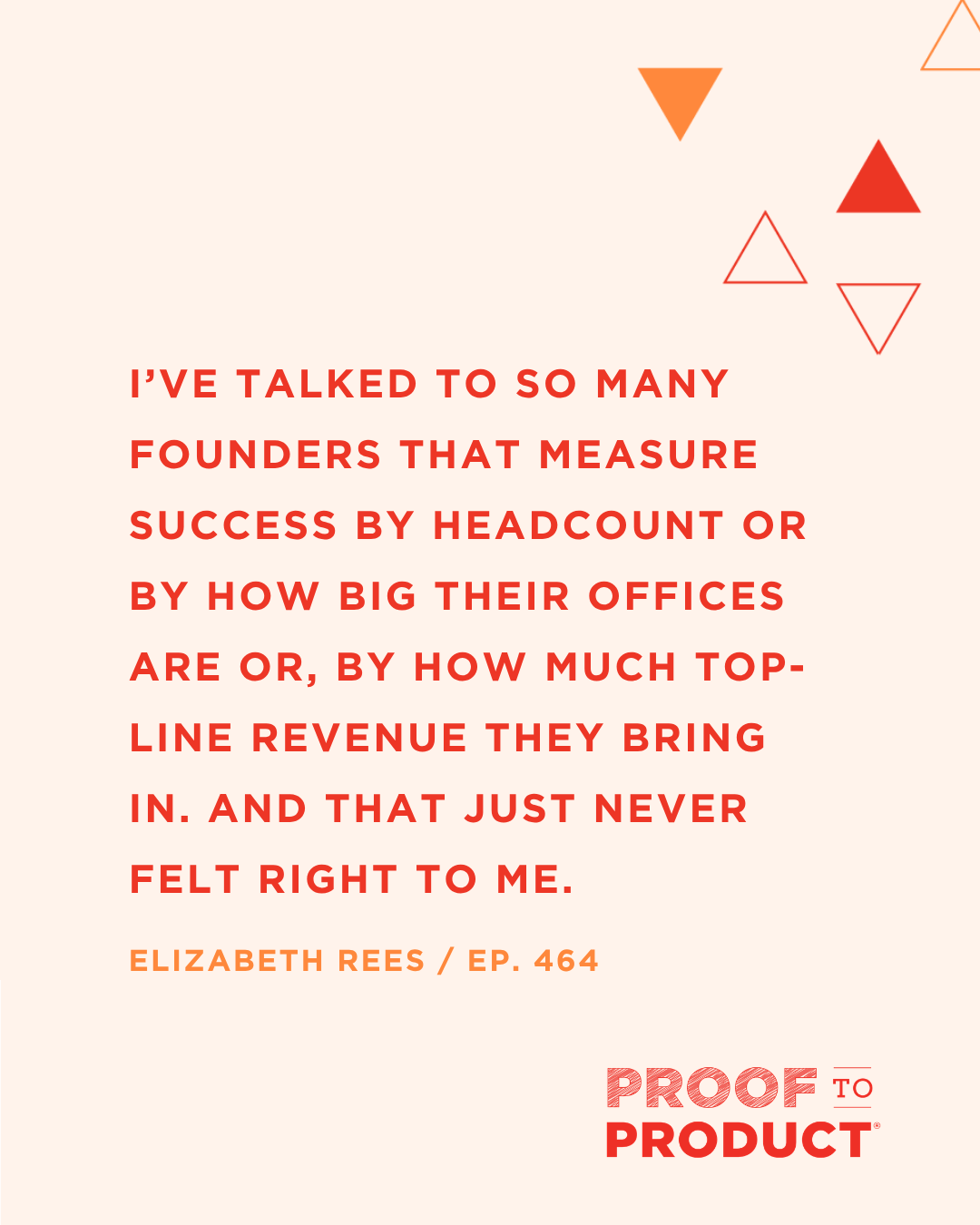
I think the biggest thing is, is that when I started This was in like the 2010s, you know, and like money was free, scaling was the biggest thing. I think running a business that aligns with your values, I always felt so against that because I'm Midwestern, you know, I— being profitable was always something that felt very important to me. Like when I looked at my balance sheet and we had more money coming in than was going out, I felt a sense of calm and I felt like my nervous system responded to that. But for a long time, I felt almost ashamed of that because I was like, everyone else was taking these big bets, these big swings, you know, like taking money, growing fast, scaling at any tick, you know what I mean? Like scaling and growing fast was like the only way to really measure success. And I just wish that I had known then that like running one evergreen company, that's what I always talk about with Chasing Paper. I did not start Chasing Paper to sell. I started it to run for many years and to the way that I make my living and potentially something that I pass down to my children, that that's a very valid and respectable and something to be very proud of. You know, I just talked to so many founders that they measure success by headcount or by how big their offices are or, you know, by how much top-line revenue they, they bring in.
Elizabeth Rees [00:34:06]:
And again, that's just never felt right to me. And I love just hearing more success stories of people being like, we're growing, but we're also profitable. We're growing, but we don't have this massive team and a ton of bloat and a ton of overhead that our customers and clients are paying for. I wish there was more stories of that being told, because I think it's a very respectable and honorable way to run a company.
Katie Hunt [00:34:29]:
1,000%. My motto with everything we do at Proof to Product is slow, steady growth is how profitable, sustainable businesses are built. You know, this, this online era of overnight successes, we all know that that's smoke and mirrors, but it's also hard to turn away from, tell our brain that when we see it, you know, over and over again. And absolutely what you're saying about, you know, profitability and having the business serve the life you want to live and being able to do the things you want to do in your life, it's absolutely important and aligned with what we talk about here too. So thank you.
Elizabeth Rees [00:35:05]:
Yeah, of course.
Katie Hunt [00:35:06]:
Well, what's next for Chasing Paper? What are you most excited about in the coming months?
Elizabeth Rees [00:35:10]:
We are launching a fall collection that I am super excited about. Our team has been working on it for many, many, many months, and it's launching on October 7th. Tons of travel coming up. We're going to High Point for the first time, which I'm very excited about. And yeah, I just— again, really serving our client and meeting them. We're just doing a lot more in real life events, you know, centered around different collaborations. We've got a lot of things planned for next year where we're just, again, kind of getting offline and meeting our customers in the real world. And, you know, I think that there's just kind of been a big shift to that, especially being digitally native company, and just allowing our customers to sort of interact with our brand in a way that feels kind of like the next chapter that we can kind of take it offline and you know, you can touch and feel and see, and looking forward to having lots more of those experiences.
Katie Hunt [00:36:01]:
I love that. Well, Elizabeth, thank you so much for your time today and for sharing your story with us. Lots of really good nuggets and takeaways for our listeners today, but it was just a joy to meet you and hear more about your journey.
Elizabeth Rees [00:36:11]:
Same. Thank you so much.
Katie Hunt [00:36:13]:
Of course. All right, Elizabeth's story is a good reminder that your customers are always giving you hints or telling you what to create, what to cut, and where to focus But we do have to be listening and we do need to have discernment, right? If we hear something from one customer, we may not move forward with that. But if we're hearing from multiple people and they're asking for the same thing over and over, that's a sign to investigate that further. I really loved hearing about Elizabeth's unique business model, particularly how she's leaning into both trade and also collaborations for her business. Maybe we can have her join us for a coffee chat or a training inside of Labs to hear more about that. I will keep you guys posted. I would love that. Speaking of Labs, if you are looking to build a business, a product business that puts more profit back into your pocket, then I want you to come join us in Labs.
Katie Hunt [00:37:04]:
This is a space dedicated to helping product founders grow. There's a lot of spaces out there for service providers, and we've built this one just for you. We have monthly coaching calls with me, peer masterminds and coworking sessions. We do a quarterly CEO sprint and also other focus sprints throughout the year. Plus our training vaults, our done-for-you templates, and you get a room full of generous product brands who are working towards similar goals. You don't have to build this business alone. Learn more and join us at prooftoproduct.com/labs. Again, that's prooftoproduct.com/labs.
Katie Hunt [00:37:39]:
Thank you for hanging out today. I will be back next week with a new episode.
How do you decide what to make next, what to cut, and where to put your limited time and money? For Elizabeth Rees, founder of Chasing Paper, the answer has come from her customers for nearly 13 years. In this week’s podcast episode, she shares how customer feedback shaped her product format, her materials, her wholesale approach, and her newest line, and why she checks every instinct against the data before acting on it.