463 | How NY NOW’s New Ownership is Reimagining the Experience For Brands and Buyers with Dorothy Belshaw
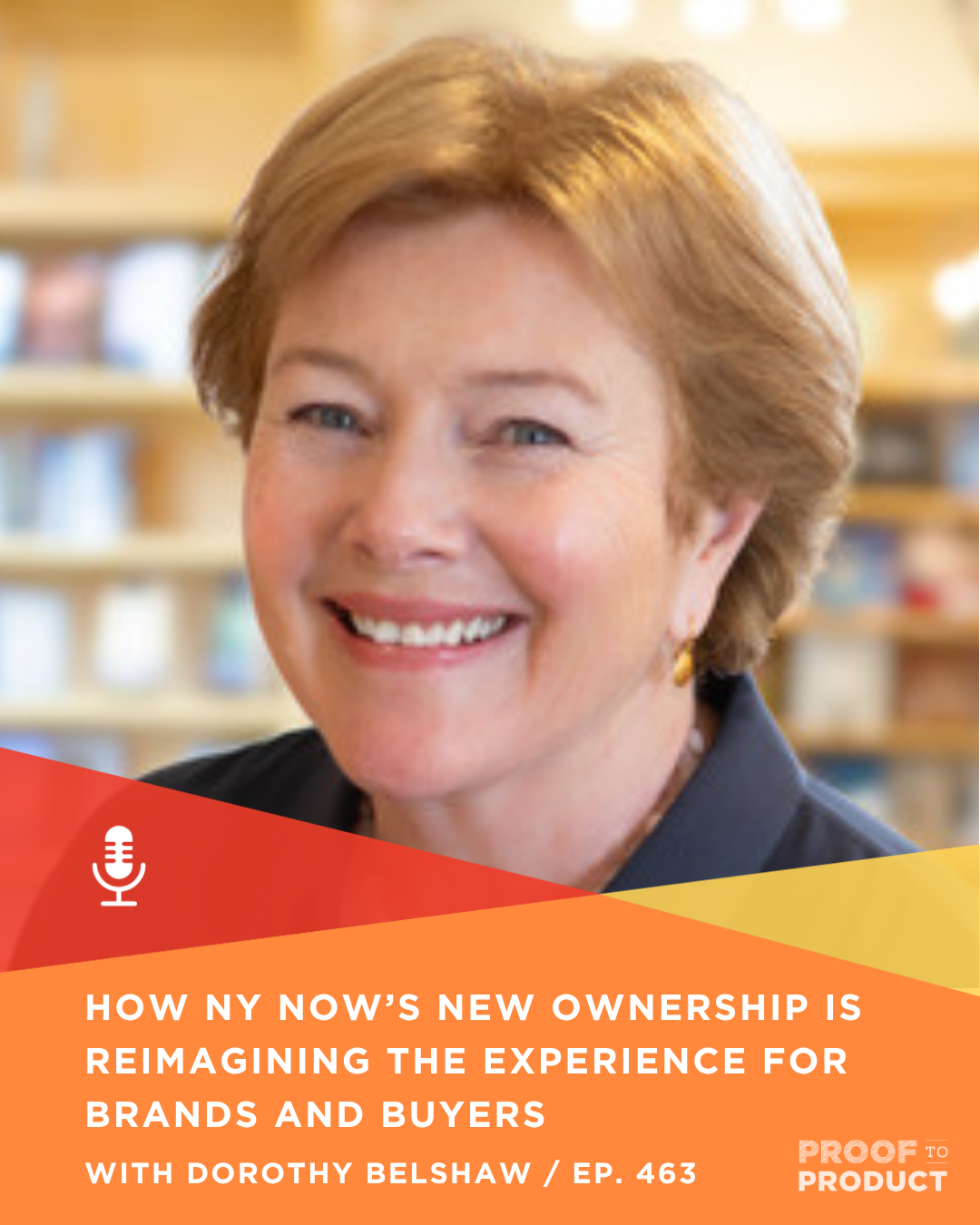
Dorothy Belshaw has spent more than three decades in the gift, home, and trade show industries. She's led some of North America's biggest markets—from NY NOW to Atlanta Mart, and Las Vegas Market.
Earlier this year, Dorothy partnered with industry veterans William Lacey and Karen Olson to acquire NY NOW through Rockview Management Group and bring the iconic 100+ year-old show into its next chapter.
In this episode, you'll learn:
What changes when a trade show is owned by a small, industry-embedded team instead of a large company
What she and her partners changed in their first few months, and how the summer show performed
How they're rebuilding category depth, including Home returning as a primary category and Handmade coming back under external jury
How multi-line agency partnerships re-engage the reps who are already in stores year-round
What NY NOW is doing to bring buyers back from the Northeast, mid-Atlantic, northern Midwest, and eastern Canada
Why Dorothy believes buyers can't build a full assortment digitally, and what that means for your booth
What support is being built for newer and smaller exhibitors, and how to make an impact in a smaller footprint
What the strongest brands at the show have in common: evolving product, early commitment, and follow-up
Why Shoppe Object and NY NOW are on different weekends for Winter 2027, and the plan to get back to the same dates
Today's episode is brought to you by our Retailer Roundtable interview series.
To make a strong first impression with wholesale buyers, we need to do a few things well.
We need to make it easy for stores to purchase from us
We need clear pricing and terms and conditions
We need to build strong relationships with our customers
All of that gets easier when we listen to our customers. This on-demand interview series gives you a window into what buyers want and need from you, and it's only $27.
MEET DOROTHY BELSHAW
Dorothy Belshaw is the Chief Executive Officer and Co-Owner of NY NOW, the premier wholesale marketplace for gift, home, lifestyle, and accessories. A respected leader with more than three decades of experience in the trade show and home furnishings industries, Belshaw has built her career creating platforms that connect brands, retailers, designers, and manufacturers. In April 2026, she partnered with industry veterans William Lacey and Karen Olson to acquire NY NOW through Rockview Management Group, aiming to lead the iconic New York market into its next chapter with a renewed focus on innovation, community, and commercial opportunity. Prior to NY NOW, Belshaw served as President of ANDMORE, where she oversaw some of North America's most influential trade events, including Atlanta Market, Las Vegas Market, High Point Market, and Shoppe Object. Earlier in her career, she spent nearly two decades with George Little Management, where she directed the New York International Gift Fair and played a pivotal role in transforming the event into NY NOW, a name she helped create. Throughout her career, Belshaw has earned a reputation for anticipating industry trends, fostering meaningful business connections, and championing the growth of the gift, home, and design sectors.
CONNECT WITH DOROTHY BELSHAW
WEBSITE: https://nynow.com | INSTAGRAM: @ny_now
your product brand right now?
Connect with Katie Hunt
Katie Hunt is a business strategist, podcaster, mentor and mama to four. She helps product based businesses build profitable, sustainable companies through her conferences, courses and coaching programs.
Website: prooftoproduct.com | Instagram: @prooftoproduct
-
Katie Hunt [00:00:00]:
Hey friends, it's Katie and welcome back to Proof to Product. Today's guest is Dorothy Belshaw. She's the CEO and co-owner of New York NOW, the premier wholesale gift and home marketplace in New York. Now Dorothy has spent more than 3 decades in the gift, home, and trade show industry. She's led some of North America's most influential markets including New York NOW, Las Vegas Market, High Point Market, and Atlanta Mart. This year she and 2 of her business partners acquired New York NOW through a new company that they started called Rock Management Group, which kind of brings this whole thing full circle. Decades of years working for other organizations, bringing these shows to life, and now she and her business partners own New York Now, and they are going to just run with it. On today's episode, Dorothy talks about what it means to have New York Now privately owned by a small team that knows the industry well.
Katie Hunt [00:00:53]:
She walks us through how they're rebuilding the categories that are coming back, how they're recruiting buyers to attend their New York show, and what they're building for new and smaller exhibitors. She also shares what she sees the strongest brands at the shows doing differently than newer brands. We also talk about why New York Now and Shop Object are on different weekends for the upcoming winter 2027 show season, but there are plans in the work. They will be back together for summer of 2027 and hopefully beyond. So I hope you enjoy this conversation. Today's episode is brought to you by our Retailer Roundtable interview series. To make a strong first impression with wholesale buyers, we need to do a few things really well. We need to make it easy for stores to purchase from us.
Katie Hunt [00:01:37]:
We need to have clear pricing and terms and conditions, and we need to build strong relationships with our customers. And all of that becomes infinitely easier when we actively listen to our customers. So this on-demand interview series, it kind of makes you a fly on the wall. You get to hear buyers talking about what they're looking for, how they buy, and how you as a brand can better serve them and build that relationship too. And the best part, it's only $27. You can find that at prooftoproduct.com/interviews. .com/roundtable. Again, that's prooftoproduct.com/roundtable.
Katie Hunt [00:02:13]:
I'm Katie Hunt, wholesale expert, business strategist, and mom of 4. I'm also the host of the Proof to Product podcast. Since 2011, I've coached thousands of brands whose products can be found on the shelves of indie shops and big box stores all around the world. If you are a creative entrepreneur that makes and sells physical goods, you're in the right place here on Proof to product, you'll learn new strategies for product development, sales, marketing, and more. It's like your weekly dose of business school, and we're going to help you confidently grow your revenue in your own way and at your own pace. So let's get started. Dorothy, it is such a pleasure to meet you. Thank you for being here today.
Dorothy Belshaw [00:02:57]:
Of course, Katie, anytime.
Katie Hunt [00:02:59]:
You know, you have such a rich background in the gift, home, and trade show industry. I'm excited to chat with you today because I know our lives have probably crossed paths in the past without Without even realizing it. But I do want to start with your most recent news. You and your partners at Rockview Management Group acquired New York NOW earlier this year, but this isn't your first rodeo with New York NOW.
Dorothy Belshaw [00:03:22]:
You go—
Katie Hunt [00:03:22]:
your experience goes back decades to when it was run by GLM and called the New York International Gift Fair, then rebranded to New York NOW. So I just— when you step back and look at that arc of your career in this industry, what does it feel like to have come full circle with this?
Dorothy Belshaw [00:03:39]:
It's an amazing feeling, honestly. I started in 1992. I started at George Little Management in an entry-level position, kind of helping out in new business development and research. And over the course of that 20-year time with GLM, I had the great fortune of working on a number of different shows that we were launching in industries that were gift adjacent, but that sort of had their own critical mass. And so, Learned a lot that way. And also back then, really robust regional gift show network. So I was able to work in gift shows in all of the different regions, including various parts of Canada. So that was amazing.
Dorothy Belshaw [00:04:18]:
And then I had the incredible opportunity to work with Robert Maricich when he set up International Market Centers. And so I then moved into kind of the permanent showroom environment, which was quite different from trade shows. I mean, same vendors, same buyers, but engaging in a very different way.
Katie Hunt [00:04:35]:
Yeah.
Dorothy Belshaw [00:04:35]:
And kind of that longer-term view and had the opportunity to work on building up the Las Vegas market. And also at IMC, which is now known as Anmore, I was also able to sit in some different roles. So I was in a leasing capacity, a revenue capacity, a marketing capacity. So I really saw a lot of different aspects of putting shows and markets together, which just was great, great learning experience for me. But this is really kind of the icing on the cake. I left Anmore a year and a half ago, a little bit more than that. Wasn't really sure what my next move was going to be. And I'd been approached by Emerald to help them out because, you know, the show, the New York show had been declining since COVID I kind of knew that getting back into the large corporate environment wasn't necessarily what I wanted.
Dorothy Belshaw [00:05:27]:
And I knew it also wasn't what the show needed.
Katie Hunt [00:05:30]:
Mm-hmm.
Dorothy Belshaw [00:05:30]:
I felt the show needed more personal attention, very focused attention. not to be one show in a stable of hundreds, but to have that agility, strategic agility, and personal connection. So, I told them that. And I said, it's just, that's not the right structure. It wouldn't be good for you. It wouldn't be good for the show. And then they came back and said, do you want to buy it? Which was the furthest thing from my mind. And, you know, I was able to put a deal together with them that made it possible and was able to find 2 partners in Bill Lacey and Karen Olson, two professionals that I'd worked with for 13 years at Anmore.
Dorothy Belshaw [00:06:05]:
Bill as its CFO and Karen as its CMO. And I just was looking for their feedback as friends and colleagues. Like, what do you think about this? Like, does it feel crazy or doable? And they both got really excited about it. And then we built this great little team of people that know the gift industry. A couple folks have worked on the New York show before. So it's full circle, but it's also brand new for me to own my own business, which is something my customers, all of my customers. have done for all these years, but I've never been in that position. And it just hits differently.
Dorothy Belshaw [00:06:37]:
It just changes the game for me to have skin in the game, to be super invested in it. Look, I always cared deeply about my customers and the performance of the shows that I worked on, but it's different when it's your own.
Katie Hunt [00:06:49]:
Of course.
Dorothy Belshaw [00:06:49]:
And it also puts me in their shoes, right? Like, I get what it feels like to have yourself so heavily invested in your business. So anyway, it feels great. I'm so happy to be back in the New York region. I'm from New York. I'm a native New Yorker. And I'm so happy to have the opportunity to kind of re-envision what this show can be because it's a really special show. It's a really special region. And it deserves to be kind of closer to what it once was.
Dorothy Belshaw [00:07:20]:
It deserves a recast. So I'm thrilled.
Katie Hunt [00:07:23]:
Well, I'm excited to hear all about the things you have ahead. But I do want to acknowledge what you said, too, about your depth of knowledge in this industry and all sides, really of like show management, working with the buyers, working with the exhibitors and the brands. And I agree with you that now you owning the business, you're not just an employee for one of these larger companies that's running a show. You're a business owner that's trying to bring value to your customers. And I do see how that lends a different perspective or lens to the work you're doing in New York now. And I just want to thank you for acknowledging that because I think it is important for us to hear, like, you're not just some big business that's running things.
Dorothy Belshaw [00:08:00]:
Oh, I'm definitely not a big business right now.
Katie Hunt [00:08:04]:
Okay, so this summer's New York NOW was the first one under RMG.
Dorothy Belshaw [00:08:08]:
Yeah.
Katie Hunt [00:08:09]:
How did it go?
Dorothy Belshaw [00:08:10]:
You know, it went really well, better than I think we expected. I mean, we concluded the deal on April 13th, I think, and took possession. Like, there was a transitional period. We had to— shows have cycles and they're generally 6-month cycles. And so we acquired the show right smack in the middle of a cycle, which is awkward timing. So we really only had a couple of months to make an impact. And I— our primary focus was not to change the name because there is brand equity behind the name and we're not looking to confuse the industry. But we wanted to change the branding to make it known that there were some changes going on and we felt the branding needed to be a bit bolder.
Dorothy Belshaw [00:08:49]:
And so we changed the branding. We wanted to remerchandise it a little bit to the best of our ability, even though we were coming in Midway.
Katie Hunt [00:08:57]:
It was a short timeline.
Dorothy Belshaw [00:08:58]:
Yeah, very short. And we wanted to try to attract some brands that hadn't been in and to establish some new partnerships in the industry to help us get Critical Mass moving. And then we also wanted to move the narrative, right? We wanted customers to quickly recognize that it was privately owned by a small company. of people that were invested in the industry and knew the industry and had preexisting relationships. We wanted it to feel personal.
Katie Hunt [00:09:30]:
Yeah.
Dorothy Belshaw [00:09:31]:
Again, and so, because we felt that was a— for it to feel personal and for there to be an element of trust and stability there based on our long-term relationships and knowledge of the industry, we thought that would give a sense of confidence and excitement and it would just sort of change the narrative. And I believe we were successful in doing that in just a couple of months.
Katie Hunt [00:09:52]:
It's different than George Little Management selling this to Emerald, right? It's like one big company selling it to another big company. Now it's going to these folks who are like really embedded in the industry, who care deeply about the success of everyone involved. It is. And I do think you all did a good job of kind of articulating that experience. And the rebrand looked good too.
Dorothy Belshaw [00:10:14]:
And it felt different at the show. There was a great sense of optimism and that went from the exhibitors through to the labor. Like, you know, there were electricians there that I remembered from years ago, and they were like, we're so glad this team is, you know, you're back and we know you can help grow the show. And it gave me the opportunity to talk to them about their role in helping to reinvigorate the show, right?
Katie Hunt [00:10:37]:
Yeah.
Dorothy Belshaw [00:10:37]:
Like, you're a big part of the fabric of the experience that we offer our customers. So own that, right? And step up and be service-oriented. You want this show to grow? It behooves you if it grows, right? So you have a role to play there. And I think that gave them a sense of sort of ownership and involvement that was different. So it felt good. And then not for nothing, but we did increase attendance by a little bit, 5%. But after 8 or 9 years of consecutive decline, that's huge. Increasing a little bit made a big difference.
Dorothy Belshaw [00:11:07]:
People felt it.
Katie Hunt [00:11:08]:
Oh yeah, definitely. Okay. I'm deciding which way I want to take this conversation next. I think I'm just going to hit it over the head. There's been a lot of talk online about Shop and New York Now being on different weekends for the Winter 2027 show. I know that you can't speak to Shop and their business decisions and, and their management leadership and what they're doing over there, but can you provide a little context for our listeners as to why the shows are on different dates? And then also, I'd love to know if you foresee these shows being on the same weekend again in the future.
Dorothy Belshaw [00:11:42]:
Well, let me start by saying that I've worked with Jesse and Renata, Jesse being one of the founders of the show for, oh gosh, probably almost 25 years.
Katie Hunt [00:11:52]:
Oh my gosh.
Dorothy Belshaw [00:11:53]:
Yeah, he was a customer of mine when I ran the New York International Gift Fair 15 years ago. And then he was a customer of mine in Las Vegas as the owner and founder of Aesthetic Movement. And as I was seeing what was happening with the New York show, I also took note when Jesse stepped out of his Aesthetic Movement role to launch Shop Object. I thought what he did was really powerful. I agree.
Katie Hunt [00:12:15]:
Yeah.
Dorothy Belshaw [00:12:16]:
And he executed it so beautifully. And so, I was watching Shop grow even as I was at Anmore and at a certain point worked with our ownership at Anmore to say that, look, this is an incredible thing that he's doing and we should buy it. Gives us a toe in the water in New York where we're not represented right now. And so, we did. So, Jesse and I worked really closely together for a number of years. I mean, he's really responsible for growing and creating the Shop brand, but I was there sort of in the background helping to provide whatever support he needed from Annemore. So we have a great relationship. And when this opportunity came available to me and I was getting ready to announce it, he was one of the very first people that I spoke to saying that your show, Shop, and New York NOW have the opportunity to be much more successful together, right?
Katie Hunt [00:13:04]:
Yeah.
Dorothy Belshaw [00:13:04]:
Than separated. And so I don't want to go down this path if we can't work collaboratively together. And he and I both agreed And so, but what then happened was New York now was in its customary date pattern. Ambiente, the German gift and home show that occurs in February, generally the second week in February, I mean, for like hundreds of years, moved. It moved forward a week onto the New York market dates. And Shop Object, and I've discussed with Jesse that he would say this too, they have a number of international exhibitors and they feel that their international flair is very important to their overall ethos. And so, he didn't feel he could conflict with Ambiente. I think— so, we have had the discussion.
Dorothy Belshaw [00:13:53]:
It's unfortunate. I don't— you know, New York NOW doesn't have the opportunity to move back a week because Javits Center is occupied by the Coterie shows.
Katie Hunt [00:14:01]:
Contracts and things, yes.
Dorothy Belshaw [00:14:03]:
Exactly. We are at the same time in the summer and we are committed to trying to get back to the same timing in 2028. So agreed, it's not optimal, but it's not something— nobody's doing this to create problems for buyers or for the other show. It's just, it was a series of events that were unfortunate. And, you know, hopefully the German shows go back to their original timeframe. I think there's just a lot of questions about the fluidity there. It's, it's not great for other shows in the EU. So suffice it to say that it wasn't a decision made purposefully or to hurt anyone.
Dorothy Belshaw [00:14:40]:
And it's— we are committed to getting the shows back together as soon as we reasonably can.
Katie Hunt [00:14:45]:
That's great news. And I appreciate you sharing that context because I got to say, there were a lot of rumors flying around. And, you know, you never know what's actual— what's true and what's not. And so I also think it's really important for our listeners to hear about your deep relationship with the folks at Shop because you are working in tandem. There are conversations happening. This is not one pitting against the other here. It's, you know, so—
Dorothy Belshaw [00:15:10]:
no, and you know what, Shop is such a very specific, focused, beautifully curated event, and it needs a strong— it will be stronger when it has a big, strong commercial show alongside it in New York now. And it's my intent to build that show. And so I think ultimately we have the unique opportunity to help each other.
Katie Hunt [00:15:32]:
Oh, totally.
Dorothy Belshaw [00:15:33]:
And I think our goal is to get back at it as soon as we can.
Katie Hunt [00:15:36]:
Awesome. Well, let's talk about what you have planned for New York now. I mean, you guys, you already mentioned the rebrand and some of the things you did quickly with this first show you did, but I'm sure you have some pretty, like, exciting plans in the works that you want to roll out next year. Do you mind sharing them with us?
Dorothy Belshaw [00:15:51]:
No, not at all. I mean, and most of them are out there publicly, but the most important thing to do for a show is to improve the breadth and depth of the resource. And in the gift industry in particular, you know, it's an industry of industries. It's an industry of verticals that all pair well together at retail. And there's always been ebb and flow, you know, collectibles were really, really popular. And then later jewelry became really, really popular and candles. And so as those trends flow, the size and the depth of the categories within a gift show need to reflect that level of interest. And so New York needs both to grow the breadth back, but also the depth.
Dorothy Belshaw [00:16:30]:
So we need to have major anchor lines and brands in each of the key categories. Tabletop, housewares, home, baby, toy, jewelry, candle, fragrance, all of them, right? Yep. And so the fastest way to kind of aggregate those lines that are important is to work with multi-line agencies that can help to bring those line packages back to the show quickly. And so that's a big part of what we're doing is partnering with those agencies. There are a couple of agencies that have been in the show consistently over the last however many years. Like the Harper Group, and we're continuing to work collaboratively with them. But we're also bringing back agencies that represent key accounts in the Northeast and the Mid-Atlantic and other territories. So Ivy Stone, Symbolist, we have a few others that we'll be announcing in the next week, and they're going to help us bring those brands back.
Dorothy Belshaw [00:17:20]:
But the other thing that working with the agencies does is it re-engages that road force that is out there in the stores connecting with those buyers in a personal way. throughout the course of the year. And it's so important as you're bringing brands back into a show to make sure that you're also bringing back the right buyers.
Katie Hunt [00:17:37]:
Yes.
Dorothy Belshaw [00:17:38]:
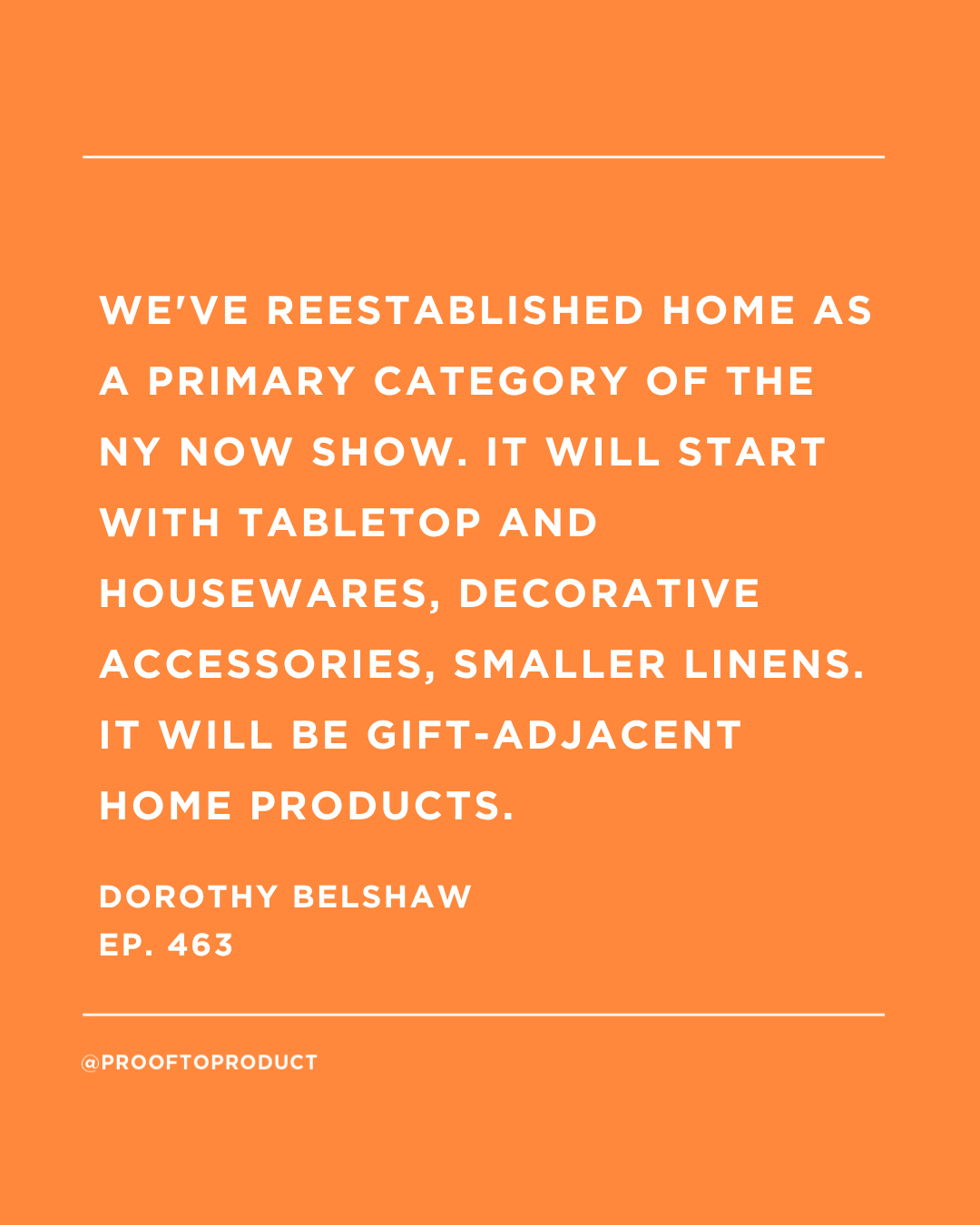
And so that brand and buyer, that product and buyer resonance is something that we're going to be partnering with the agencies to make sure it's well calibrated as we're growing the show so that we're not like growing some division then, but we don't have the right buyers for it, right? Yeah. Which creates a kind of a negative experience. So It's that kind of hand in glove, that chicken and egg experience that these agency partnerships are going to help us lean into. The other is to bring back home as a category, which used to be back in the day, the whole of Pier 94 was home product. And so we've reestablished home as a primary category of the show. And it'll start with tabletop and housewares, decorative accessories, smaller linens. It won't be big furniture, which isn't really appropriate for this market, but it will be gift-adjacent home product that really rounds out that kind of lifestyle retail.
Katie Hunt [00:18:29]:
Yeah.
Dorothy Belshaw [00:18:30]:
We are relaunching Handmade, which was such an important category in the New York market for so long and had been abandoned in the last, I think, 5 years. And we announced that we would be reinstating Handmade and that it would be externally juried to ensure authenticity and those sorts of things. And the social media reaction was kind of Crazy. Just the reposts and the hundreds and hundreds of—
Katie Hunt [00:18:55]:
Good crazy, I assume?
Dorothy Belshaw [00:18:57]:
Yeah, because, you know, that artisan community, New York was always such an important market for them. You know, many artisans are doing D2C through art fairs and online and Etsy and things like that. But when they are ready to take that wholesale step, being in a trade show is critical. And so I'm so pleased that New York is going to be able to feature those kinds of artists going forward.
Katie Hunt [00:19:21]:
Yeah.
Dorothy Belshaw [00:19:21]:
And then, you know, the other sort of big change— and this is a partnership that's been in place in the past between New York NOW and the Greeting Card Association, but we're really kind of blowing it out for February, if you will. So instead of being positioned as a pavilion, it's really going to be positioned more as a show within a show. So Greeting Card Association launched a show called Noted a number of years ago when the stationery show unfortunately went away.
Katie Hunt [00:19:46]:
I know.
Dorothy Belshaw [00:19:46]:
Such a powerful show back in the day.
Katie Hunt [00:19:48]:
It was fun.
Dorothy Belshaw [00:19:49]:
Yeah, it was a great show, beautiful show. And paper is a thing again, right? I mean, that whole notion that once email started, nobody was gonna write a card again. I mean, letterpress cards are hugely popular. They're carried through all manner of retail channels, all types of stores. Journaling is back again, generationally back. And so That is such a bold, strong, popular category. So we'll work with GCA to have kind of their own branded presence, but adjacent to our show floor. And we'll have, I think, probably pretty close to 100 companies in that area, which is terrific.
Dorothy Belshaw [00:20:29]:
I think actually we already have like 67 signed up. So—
Katie Hunt [00:20:33]:
I work with several of the folks that are on the Noted board and stuff. So yeah, yeah, they're doing great work and it sounds like it's filling up pretty quickly.
Dorothy Belshaw [00:20:40]:
Yeah, they are. It's a beautiful category. It's so creative. They do such a great job. So anyway, those are some of the things that we're doing to turn the tide. I mean, I think just going back to that whole personal nature, we're in the trenches. This is it. This is all we're doing is this show, and everybody on the team is laser-focused on it.
Katie Hunt [00:20:56]:
Yeah.
Dorothy Belshaw [00:20:56]:
And so anybody that has questions or concerns or has heard a rumor that needs to be substantiated or killed, they should pick up the phone and call me.
Katie Hunt [00:21:07]:
Nice.
Dorothy Belshaw [00:21:07]:
And I'm available to have those conversations, but it's exciting. And we've just, we haven't really hit a lot of roadblocks. We've just hit, we've had a lot of conversations with customers, former customers that are enthusiastic, that need this show to be strong for their business.
Katie Hunt [00:21:22]:
Yeah.
Dorothy Belshaw [00:21:22]:
Both on the retail side and the vendor side. And, you know, we take that expectation and that responsibility very seriously. So we're invested.
Katie Hunt [00:21:31]:
Excellent. That's good to hear. We had some questions from our community about 2 specific key areas. One is you mentioned that you are leveraging a lot of your agency partnerships to bring new buyers into the show. What other modes are you doing or using to attract new buyers, to reengage with people that have come in the past? I know it's going to be particularly important for this winter show, given that buyers now have 2 choices and exhibitors have 2 choices. But in general, what are you doing to attract more of the buyer community and the right buyer community, like you talked about, right, to your show?
Dorothy Belshaw [00:22:06]:
Yeah, well, you know, we have a database, you know, part of the acquisition was acquiring a database of buyers from the Mid-Atlantic and the Northeast, but also from northern Midwest, from eastern Canada. I mean, typically really strong feeder territories for the New York market. We're re-engaging pretty aggressively with that audience. We work with a third-party publicist, and then we're working with a third-party ad agency that handles all of our digital media. We have a very dedicated and active social media presence. And I think the best way to reengage buyers is going to be kind of just bold grassroots messaging. I think, you know, most of the buyers we've spoken to to date that had stopped coming to the show, they miss it. They need it.
Dorothy Belshaw [00:22:51]:
There's no doubt this is an omnichannel world and it will be like that ship has sailed.
Katie Hunt [00:22:56]:
Yeah.
Dorothy Belshaw [00:22:56]:
But it is hard for buyers to do all of their buying digitally. It's hard to put a big order together. It's hard to figure out an assortment when you're working digitally. It's great for reordering. It's great for a little bit of discovery, right? It's great for connecting with brands that you already know and are doing business with, but nothing really beats that in-person experience. And so I think leaning into that with buyers, which is you're going to be a better buyer, you're going to put a more robust assortment together, and frankly, You need to engage physically with your customer base. If you're picking up new lines, you need to know that that line exists, that it can be produced, that you trust that vendor to ship.
Katie Hunt [00:23:38]:
Yeah.
Dorothy Belshaw [00:23:38]:
And you need to know what they're doing that's new. So I think leaning into— you need a hybrid experience to be the best retailer that you can be, I think, is a big part of getting people to come back to market.
Katie Hunt [00:23:51]:
Yeah, I love that.
Dorothy Belshaw [00:23:52]:
And I think this isn't an industry. It's not a commoditized industry. Yeah. We're not buying and selling widgets. It's highly fashion-oriented, really. I mean, consider how many different candles there are out there, right? Is it scented? Is it soy? Is it pillar? Is it poured? Is it hand-poured? Is it in a beautiful decorative vessel? Is it a tea light? You know, there's so many different iterations. And scents. And as a retailer, you know, you get to know your customer base and what they want, and you really need to do your homework to determine if what you're buying is— you're going to be able to sell it through.
Dorothy Belshaw [00:24:31]:
So I think just leaning into that whole line of thinking, I think, is a big part of it.
Katie Hunt [00:24:37]:
You did take the words out of my mouth when you said that nothing can replace the in-person relationship and the buying experience. As you said, the buyer knows what they want. They can see it at a glance when they're in a room with multiple options. They can say yes, no, yes, no, like knowing what their customer needs much more quickly and efficiently for sure. We did have a couple of questions too about, you said you're bringing back the handmade section. I'm also curious what kind of programs you're going to have in place for new exhibitors or newer brands that are starting to exhibit that may not have, you know, the same budget as some of the bigger brands or the ability to do the larger booths.
Dorothy Belshaw [00:25:13]:
Right. Well, we're just going through the process of setting up our programming and I think This show has worked with a number of different partners over the years to help to walk new exhibitors through kind of the key steps to take, not just to be successful at the show, but also to be successful after the show.
Katie Hunt [00:25:30]:
Right.
Dorothy Belshaw [00:25:31]:
Because particularly in this day and age, there is a lot of looking and planning and consideration that happens at a show, and then there's a lot of just finalizing orders that happens after the show. And so continuing to remain connected with the customer is so important.
Katie Hunt [00:25:46]:
Yeah.
Dorothy Belshaw [00:25:46]:
So we will, we will be looking at how do we provide that kind of information? Is it information that we provide through a webinar? I mean, I think it's always hard for vendors to make time for webinars in advance of a show, or is it just printed material?
Katie Hunt [00:26:00]:
I'm chuckling just because we experienced that with our programming too, and we're teaching folks what you're talking about. So yeah, it's tough to make time.
Dorothy Belshaw [00:26:07]:
Yeah, it's important and you have to make time for it. But if you can't, what are some quick wins that can be offered online? Are there partners out there like you, like others, that we can connect them with so that they can get the information they need to be as successful as they can be.
Katie Hunt [00:26:23]:
Yeah.
Dorothy Belshaw [00:26:23]:
I think too, finding representation downstream really matters for a small line.
Katie Hunt [00:26:29]:
Yep.
Dorothy Belshaw [00:26:29]:
Because if you're a newer line, you need to be focused on product development. And so marketing and sales, if you can leverage a consultant or an agency that already has those relationships and those skill sets in place and some of the back office work, to not have to invest a lot of full-time resources in that is, is important as you're getting your business off the ground. So.
Katie Hunt [00:26:52]:
Absolutely. I also think programs like what GCA is doing with Noted are a great entry point for a lot of people. So if anyone's listening right now and they're thinking, okay, I need something to work through, definitely go give that a look.
Dorothy Belshaw [00:27:03]:
Yeah.
Katie Hunt [00:27:04]:
When you look at the pool of New York Now exhibitors, what do the strongest brands have in common?
Dorothy Belshaw [00:27:09]:
I think it's a mixture of, I mean, product is the holy grail, right? I mean, it just really is. And when I say that, I mean, it has to be priced well for what it is, right? It has to be produced in consideration of the customer base and all of that. But making sure that the product is always evolving, right? So, it's the exhibitors that don't always show up just the same every year, year after year. You can still have a brand and you can make sure that buyers associate with your brand when they see your booth, but it can still feel a little bit different every 6 months, right? Like, you can change it up without losing your flair, without losing your kind of footprint and your core messaging, but making sure that, that it's always evolving. So your product's evolving, your merchandising's evolving. I think those things are really, really important.
Katie Hunt [00:28:03]:
Yeah.
Dorothy Belshaw [00:28:03]:
I think also making a commitment to a market far enough in advance to be able to take advantage of what these markets offer. And I'm not just talking about New York now, any market that you participate in, waiting until the last minute, it's never going to be as successful as you want it to be. You know, if you sign on early enough, market organizers and show organizers will work with you. They'll ask for imagery, they'll ask for content. I mean, we're always looking for content and we We will push it out to our network in a very aggressive way on the website, through social channels. We'll make sure that your presence is promoted in a way that will help to ensure that you have a better experience and that people know you're going to be there. So I think acting in advance, keeping your product fresh, keeping your merchandising fresh, and then following up. The ones that follow up and are kind of on top of it, who know who they want to see, that are planning.
Dorothy Belshaw [00:28:57]:
to see certain buyers. And then yes, everything else is gravy. And then following up aftermarket, those are the ones that I think tend to have the best experiences.
Katie Hunt [00:29:06]:
I couldn't agree with you more. I really encourage our folks to do their research and look who's coming, who's attending, who they want to meet with. But that follow-up piece, Dorothy, I could not agree with you more. So much money is left on the table after the fact because people are not following up. And I get it, especially for the smaller or mid-sized brands that they're coming back and they're fulfilling orders and they're, you know, they're busy with like moving on. Yeah, exactly. But also, I like to talk about exhibiting at trade shows as, you know, a marathon, not a sprint. And it's just one step in our overall sales process and our marketing and exposure journey.
Katie Hunt [00:29:41]:
We want to make sure that we're really connecting with folks after the fact too. So in our programming, I like to tell— we do a whole section on exhibiting at trade shows, and we go through the logistics of your booth, we go through the marketing pre-show, during the show, after the show. But I always tell a story about how I had a gentleman come to my booth for 4 years straight admiring my product, liking it. He wanted to see the product line growing. He wanted to see that I was coming back.
Dorothy Belshaw [00:30:03]:
That you were still in business.
Katie Hunt [00:30:05]:
Yeah, that I was still there. And when he said, let's write an order the 4th year, I was like taken aback because I was like, oh, he just comes and looks every year, you know? But obviously buying has changed over the years. That was a long time ago.
Dorothy Belshaw [00:30:18]:
Now, I think that's still a thing.
Katie Hunt [00:30:20]:
Yeah, I know, I know. But I like what you're saying about the deciding early, the planning ahead, the preparation, and then the follow-through at the end too. That is where we see them. I too see the most successful brands doing that well.
Dorothy Belshaw [00:30:35]:
Yeah. And managed expectations. It's just not probably the, the right, maybe the right sales approach. But I do tend to be like a pretty straight shooter.
Katie Hunt [00:30:43]:
Like, me too.
Dorothy Belshaw [00:30:44]:
Companies that we're talking to now about coming to the show for the first time or coming back after a hiatus, We're saying come in in a conservative way. You can still make a big impact in a smaller footprint. Yep. I want to make sure that you see a return on your investment because what I really don't want to have happen is for someone to come in, make a big splash, spend too much money, and then feel like, oh, that was, you know, then you lose them for such a long period of time.
Katie Hunt [00:31:08]:
Well, and that happens. It happens a lot.
Dorothy Belshaw [00:31:09]:
Yeah. No, you need to come in in an appropriate way and you do need to manage your expectations. In those early shows. I mean, I typically say 3 shows the charm, like you need to be there for 3 shows. And it is, some of it is just they need to see that you have staying power.
Katie Hunt [00:31:28]:
They want to see the line evolving. They want to see you're there still. I agree. I think now that I'm thinking about this and reflecting, I do think it's more important now than it was in the past because there is such— it's easier to take a new product to market. We see so many brands coming on the scene because it's easier to sell on an online platform, or the barrier to entry is lower now than it once was. So that sustainability piece and the longevity piece is really what buyers want to find— strong brands that they can connect with and build a relationship with.
Dorothy Belshaw [00:31:59]:
It's another impression, right? Like, if you're— it's a channel, right? If you're on—
Katie Hunt [00:32:03]:
It's another channel. Yeah.
Dorothy Belshaw [00:32:04]:
Yeah. If you're on Instagram and you have a really great proprietary website and you're on some multi-line marketplace, wholesale marketplaces, or Etsy or what have you.
Katie Hunt [00:32:14]:
Yeah.
Dorothy Belshaw [00:32:15]:
This is just— it's another channel. And for a buyer, it's a very easy channel to work, right? Like, you can take a lot in visually as a human doing business with humans through your eyes, walking an aisle. You can actually retain a bit more, a bit more easily. And you can sort of think through, I think, as a merchandiser, Or as a merchant, okay, this is going to go with that that I saw over there, and I've already seen a lot of that, so I think I'm not going to do that. I'm going to go do this. Like, I just think there's a nuance to it. You know, buying is, is an art as much as it's a science based on what I've heard from retailers. And yeah, kind of need to treat it that way.
Dorothy Belshaw [00:32:56]:
So it's an important channel.
Katie Hunt [00:32:58]:
Absolutely.
Dorothy Belshaw [00:32:59]:
And all these channels, if you can get them to work well together, gosh, it's going to take your—
Katie Hunt [00:33:03]:
Yes.
Dorothy Belshaw [00:33:04]:
Business to the stratosphere.
Katie Hunt [00:33:05]:
So far. So this is what we're in the middle of our coaching program for wholesale. And like I mentioned, trade shows are one piece of this, but I've been floored by how many folks are coming in thinking that they just need one channel and they're over-relying on that one channel. And it's an online marketplace. And I keep telling them, there's so many ways that you can sell your products wholesale, direct to trade shows, through sales reps, your direct outreach, your email, your socials. Like I could go on and on. The list is so long.
Dorothy Belshaw [00:33:33]:
And being in the physical market will, I think, improve your results on the digital marketplace as well.
Katie Hunt [00:33:38]:
1,000%. Yes. 1,000%. Yes. I agree with you. Okay, Dorothy, I have taken up a lot of your time this morning. I very much appreciate you sharing, you know, your story, what's happening with New York now, a little bit about what's going on with the winter market next year. What kind of final words do you want to leave our audience with, with regards to what you're doing in New York now?
Dorothy Belshaw [00:33:58]:
We are all in business, but we are all people. And we all have customers, right? I think a big part of being successful today is making and keeping a promise to your customer that you're going to meet them where they are. And if you're not willing to invest to stand in front of your customer personally and shake their hand and talk to them about your product, your business, and your partnership, then how serious are you? About keeping that, hanging on to that customer, growing that customer, nurturing that relationship. So I just think the personal aspect of what we do is so, so important. And I just encourage people to consider that when they're thinking that they can just be in one channel. So yeah, if you're just in one trade show, how about all those customers on the other side of the country? Are you not invested in getting in front of them? If you're just on a digital platform, How invested are you in really meeting your customer and being there in front of them? And similarly, on the buyer side, you've got these vendors that have made investments to be in these markets. Show up for them.
Katie Hunt [00:35:03]:
Yeah.
Dorothy Belshaw [00:35:04]:
You know, so showing up, being personal, really important.
Katie Hunt [00:35:08]:
Dorothy, thank you so much for your time. Why don't you tell folks where they can find you guys online? And if they want to learn more about either exhibiting or attending as a buyer, where can they do that?
Dorothy Belshaw [00:35:17]:
On our website, which is www. Awesome.
Katie Hunt [00:35:24]:
Easy peasy. And they can follow you on social at the same—
Dorothy Belshaw [00:35:26]:
Absolutely.
Katie Hunt [00:35:28]:
Awesome. We'll include that with the show notes. So if any of you guys are listening and you're like wanting to throw an application in to exhibit or to attend as a buyer, please do so there. And yeah, Dorothy, just thank you for all you're doing. I'm excited to see what you and your partners come up with next. And if I can ever be a resource to you, please do let me know.
Dorothy Belshaw [00:35:43]:
Of course. Will do. Thanks so much for the opportunity.
Katie Hunt [00:35:46]:
Thank you. A big thanks to Dorothy for joining me today. Friends, if New York NOW is on your list to consider for exhibiting or attending, or if you've been wondering what's happening with the show, I really hope that this gave you a clearer picture of where it's headed, who's behind it, and what you can expect as an industry participant. Also, if you are in the process of growing your wholesale brand and you are considering whether exhibiting at a trade show is the right next step for your business, I want to invite you to get on the Paper Camp waitlist. We dedicate an entire week to helping you decide which shows are right for you. We're going to walk you through the logistics of budgeting, planning, and designing your booth, and then we will show you how to maximize that trade show investment with strategic marketing. And I'm talking about marketing before the show, during the show, and even after the show. To learn more, head to prooftoproduct.com/papercamp.
Katie Hunt [00:36:41]:
I will note here that we work with all types of home gift and lifestyle brands, and our folks exhibit at a wide range of shows— regional shows, specialty, international, large-scale gift shows. The methods we teach are applicable for any type of product and any show that you might be going to, but we will help you figure out the right next step for your particular business in this wholesale coaching program. Again, you can learn more at proof2product.com/papercamp. PaperCamp, proof2product.com/papercamp. All right. Thanks for sticking around until the end. I will be back next week with a new episode.
This week’s guest is Dorothy Belshaw, CEO and co-owner of NY NOW, the premier wholesale gift and home marketplace in New York. Dorothy walks us through how they're rebuilding NY NOW — the categories coming back, how they're recruiting buyers to New York, and what they're building for newer and smaller exhibitors.