466 | How to Balance Creativity and Profit in Wholesale with Katie Wilson, The Good Twin [Part 1]
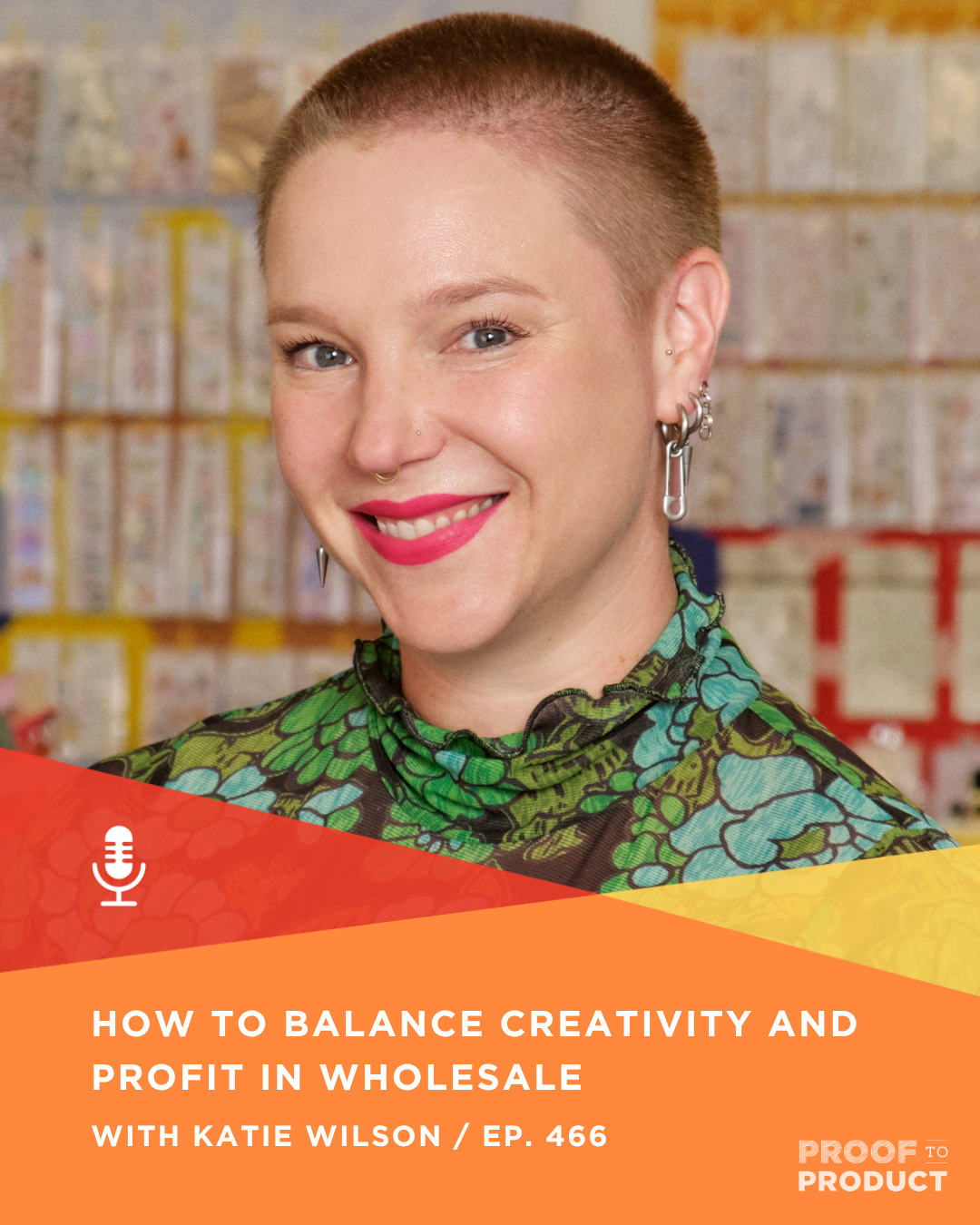
How do you run a high-volume wholesale business with a tiny team, and still make room for the work you love? Katie Wilson has been in the greeting card and gift industry since 2008, and her brand, The Good Twin, is 95% wholesale and stocked in more than 1,500 independent shops around the world.
She and her partner Scotty also run Crush and Touch Art Supply, a neighborhood art store and gift shop in Los Angeles. You’ve heard Katie talked about the shop side on the podcast before in episode 129, episode 316, and episode 317.
This time she focuses on the brand: why wholesale is still her main revenue stream, how she keeps orders moving, and which products she’ll never cut. This episode was so juicy, we had to split it into two parts!
In part 1, you’ll learn:
Why Katie chooses to keep wholesale as The Good Twin’s primary revenue stream
How a tiny team handles high-volume wholesale orders with strong systems, and why she keeps fulfillment in-house
How to spot trends in product cycles and categories
How to balance making money from your work with projects that fill your creative cup
Why you should think twice before discontinuing a bestseller, even if you’re tired of looking at it years later
Today's episode is brought to you by our Retailer Roundtable interview series.
To make a strong first impression with wholesale buyers, we need to do a few things well.
We need to make it easy for stores to purchase from us
We need clear pricing and terms and conditions
We need to build strong relationships with our customers
All of that gets easier when we listen to our customers. This on-demand interview series gives you a window into what buyers want and need from you, and it's only $27.
MEET KATIE WILSON
Katie Wilson is an illustrator and shopkeep with a well-documented affinity for pugs, frogs, and trinkets. A longtime lover of paper goods, she has been in the greeting card industry since 2008 and founded The Good Twin in 2014. The Good Twin has since grown to a full line of gifts and stationery featuring her hand drawn illustrations and type, and is now stocked in over 1500 independent shops in the US and abroad. In 2018, Katie and her partner Scotte opened Crush and Touch Art Supply, a brick and mortar neighborhood art supply and gift shop.
Katie is based in Los Angeles, where she lives with Scotte and their two pugs, Stevie and Buffy.
CONNECT WITH KATIE WILSON
WEBSITE: https://thegoodtwin.co | INSTAGRAM: @thegoodtwinco| FACEBOOK: @thegoodtwinco
your product brand right now?

Connect with Katie Hunt
Katie Hunt is a business strategist, podcaster, mentor and mama to four. She helps product based businesses build profitable, sustainable companies through her conferences, courses and coaching programs.
Website: prooftoproduct.com | Instagram: @prooftoproduct
-
Katie Hunt [00:00:00]:
Hey friend, welcome back to Proof to Product. I'm your host, Katie Hunt. Today's guest is a familiar voice on the show. It's my good friend Katie Wilson. Katie is an illustrator and a shopkeep who has been in the greeting card and gift industry since 2008. She founded The Good Twin, her product brand, in 2014, and today she has an extensive line of cards, stickers, gift bags, hair claws, calendars, and more. Those products are stocked in more than 1,500 independent retailers located around the world. About 95% of Katie's business is wholesale.
Katie Hunt [00:00:35]:
In addition to running her successful product brand, Katie and her partner Scotty opened up a brick and mortar shop called Crush and Touch in 2008. Crush and Touch Art Supply is a neighborhood art store and gift shop located in Los Angeles, California. Now, you heard Katie on this show a few different times, episodes 129, 315, and 317 of Proof to Product. I will include all those links in the show notes. But during those episodes, Katie shared a lot about being a shop owner. She shared about how she buys, the state of retail, and also what it was like opening up her store. Today we're gonna talk more about the brand side of things and what she's been doing with A Good Twin. Our conversation ran a little long because it was just so juicy and fun.
Katie Hunt [00:01:19]:
So we're splitting this into 2 parts. Today's part 1, and we get into why Katie chooses to keep wholesale her primary revenue stream for A Good Twin. How a tiny team handling high-volume wholesale orders with really good systems, why she's keeping that in-house. We talk about spotting trends in product cycles and categories. We talk about balancing the need to make money from our work, but also doing things that fill our creative cup. And we talk about why you should think twice about discontinuing your bestsellers, even if you are tired of looking at them years later. Now, before we dive in, today's episode is brought to you by our Retailer Roundtable interview series. To make a strong first impression with wholesale buyers, you need to do a few things really well.
Katie Hunt [00:02:03]:
We need to make it easy for stores to purchase from us. We need to have clear pricing and terms and conditions, and we need to clearly communicate and build strong relationships with our customers. And all of that becomes infinitely easier when we actively listen to our customers. Now, in this interview series, you're gonna be a fly on the wall. You're gonna get to hear exactly what buyers need and want from you as a wholesaler. And the best part, it's only $27. You can find this at prooftoproduct.com/roundtable. Again, that's prooftoproduct.com/roundtable.
Katie Hunt [00:02:37]:
I'm Katie Hunt, wholesale expert, business strategist, and mom of 4. I'm also the host of the Proof to Product podcast. Since 2011, I've coached thousands of brands whose products can be found on the shelves of indie shops and big box stores all around the world. If you are a creative entrepreneur that makes and sells physical goods, you're in the right place. Here on Proof to Product, you'll learn new strategies for product development, sales, marketing, and more. It's like your weekly dose of business school, and we're going to help you confidently grow your revenue in your own way and at your own pace. So let's get started. Katie Wilson, welcome back to Proof to Product.
Katie Hunt [00:03:21]:
How are you?
Katie Wilson [00:03:22]:
Katie Hutz, I am wonderful. I am so glad to be here chatting with you. How are you doing?
Katie Hunt [00:03:27]:
Good. I should tell folks we've already been chatting for like 30 minutes prior to this and we're like, oh, we should probably start recording.
Katie Wilson [00:03:33]:
We're warmed up. We're warmed up for sure.
Katie Hunt [00:03:36]:
I know. So for longtime listeners, just to give them a heads up, Katie is no stranger to the show. She's been on the podcast several times sharing lots of tips with both her buyer hat on and her brand hat on. From the brand perspective. So I'll share all of those past links in the show notes. So if anyone wants to go check those out, they can. But Katie, let's give folks a recap on the 2 businesses that you run. Let's start with Crush and Touch, your retail shop in Los Angeles.
Katie Hunt [00:04:01]:
Tell us how the shop is doing.
Katie Wilson [00:04:03]:
Crush and Touch Art Supply is in Los Angeles. Like you said, we're on the east side in Highland Park, and we opened in 2018. So we just had our 8-year anniversary in June. We started as 2 separate shops and we combined all in one. So we are a true neighborhood art supply shop combined with an art-focused gift shop. We're relatively queer-focused, handmade-focused. We have a lot of little trinkets and silly little bits and bobs. We're also known for our sticker selection.
Katie Wilson [00:04:34]:
And yeah, we carry a lot of the Good Twin, which we'll talk about in a moment. We carry a lot of that in the shop.
Katie Hunt [00:04:40]:
I didn't realize you'd hit 8-year anniversary for the shop. That's incredible.
Katie Wilson [00:04:44]:
I know. Isn't that wild? It seems like just yesterday. Thank you. I know, I— in my head, 2018 is not that long ago.
Katie Hunt [00:04:52]:
But yeah, neither is like 1996 for me either.
Katie Wilson [00:04:56]:
But yeah. Yeah, I know. I know. I mean, same. But yeah, it's been 8 years now, almost 8 and a half years now. So we're moving.
Katie Hunt [00:05:04]:
Awesome. Okay, so let's talk about your brand, Good Twin. You've been creating and selling products through the Good Twin since 2008. And you work with over 1,500 shops, correct?
Katie Wilson [00:05:17]:
Yes, correct. I was gonna say I actually started Good Twin in 2014.
Katie Hunt [00:05:21]:
Wait, what? How did I get that wrong?
Katie Wilson [00:05:23]:
Because I started Dude and Chick in 2008. So I had a previous brand that I did with a friend of mine, my former business partner, John, and we worked together through 2014. And that's when I started my own thing. So I've been in the stationery space Again, for like 18 years, which is a very long time. But I've been running the ship solo since 2014. And I feel like it was nice to— I started my first brand when I was very young. And it was nice to get my feet on the ground and kind of like figure out what I wanted to do and get some time to find my personal style. And yeah, so Good Twin's been going strong for 12 years now.
Katie Hunt [00:06:02]:
Wow. OK. I'm sorry I messed that up. I knew that detail. And I completely just botched the dates. Oh, that's OK.
Katie Wilson [00:06:07]:
It's a good explanation point.
Katie Hunt [00:06:11]:
But still, like, it's been a good run for The Good Twin and working with 1,500 stores. I mean, is wholesale your primary revenue stream for The Good Twin?
Katie Wilson [00:06:18]:
Yes, wholesale is about 95% of what we do. So we are very focused on wholesale. We do direct-to-consumer, and we're seeing a little bit of an uptick with some of the products that we've made recently with that. But we have a relatively small team, and D2C has not really been my focus, just because it takes so much extra effort for every single little sale. And wholesale has really formed this foundation for our business that I've been able to build and expand upon that I've really appreciated.
Katie Hunt [00:06:48]:
Talk about that a little bit more, because obviously we discussed this inside of our Paper Camp program, how you can build these systems and wholesale's a volume game. And like, we bring in you and other speakers whose businesses are, you know, 95 or more percent wholesale based. But let's talk about like the mechanics. You alluded to like small team and better systems and talk about the advantages of selling wholesale versus D2C, I guess.
Katie Wilson [00:07:14]:
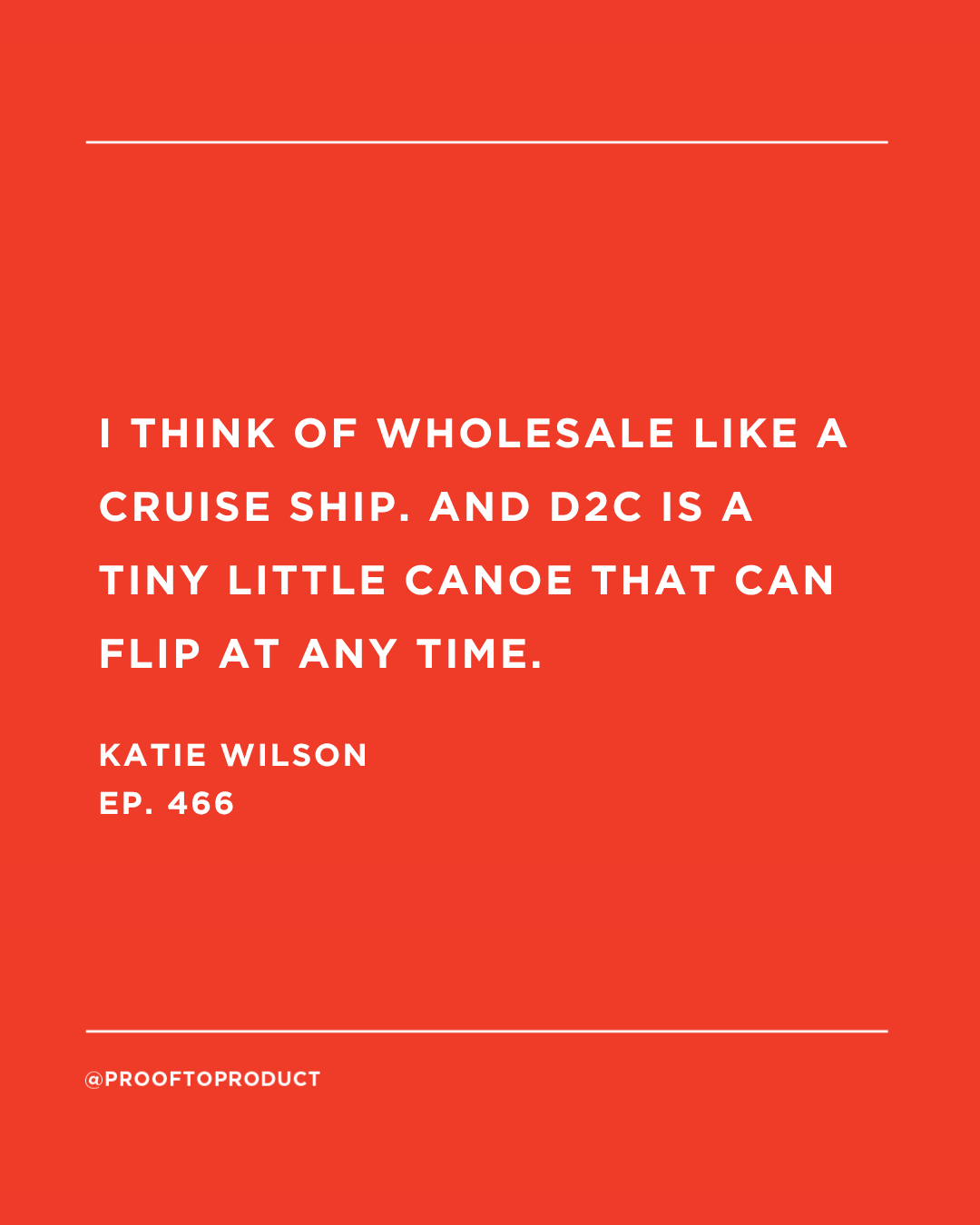
I was going to say, not to really torture a metaphor, but I do always think of wholesale as like a cruise ship. And I feel like D2C is like a tiny little canoe that can flip at any time. You definitely feel waves and fluctuations with the economy and all that sort of thing with wholesale. But you've got your eggs in a lot more baskets. We sell to so many stores. And so when we see when times are getting tough, when people are changing their budgets, whatever, our business is spread over a lot of other small businesses who are also like working hard and killing it. And it's nice to be able to kind of work together as a team so that they're selling our stuff instead of just us selling our things. We run— a lot of our employees are working for both companies.
Katie Wilson [00:07:56]:
So a lot of our back of house work at the shop when we have extra employees, is helping with Good Twin. But Good Twin is really myself, Pilar, our studio manager, and then we have Marilyn and Sly who also work for the shop that run our shipping department. And we are doing very high volume with just that amount of people. We have really good systems in place. We do a couple of trade shows a year, but we just have steady reorders coming in from folks. Some of these people, some of these shops we've been working with, some of them I've been working with since 2008. which is kind of wild since I was doing Dude and Chick. But a lot of them are 10+ years.
Katie Wilson [00:08:32]:
There's always folks that are opening new stores. There's always a need for all the different little fun things that we sell. And I will say, particularly for the types of goods that we sell, I specialize— my first love will always be greeting cards. But we've really seen— I'm sure we'll talk about this later, but we also sell stickers. We sell gift bags, which have been a huge category for us. We now sell calendars, which have also been a huge category for us. In the past, we've really focused on enamel pins and keychains. I've been around the block so long, I've hit a lot of different trends.
Katie Wilson [00:09:06]:
And you really do start to see it's— go ahead.
Katie Hunt [00:09:10]:
I was going to say, we're seeing the same trends come back again, even.
Katie Wilson [00:09:14]:
Yes. It's really wild to see the cyclical nature of the trend game. And there are certainly things that appear and then kind of disappear forever. But there's so many things, especially in the stationery space, that pop up and are really hot for a little while, like enamel pens, and then just sort of cool out. And now I feel like we're starting to see— my theory is that we're a couple of years away from enamel pens and brooches really hitting again, because right now we're in button land. Like little pinback buttons we're seeing are really popular in our shop. And I think part of that is a function of just, you know, people are looking for low-cost things to make. help them feel good.
Katie Wilson [00:09:53]:
But yeah, it's been funny to kind of see that coming and try and decide if I want to dip my toe back into those waters. Same thing with something like stickers. I mean, stickers have been around and have been a craze since forever. I think of like the stickers that were really popular when I was like a kid in the '90s. We sell so many of those at the shop now. We're really seeing a high moment for like stickers, washi tape, journaling stuff. But all of that stuff is evergreen. It's just having a very hot moment right now.
Katie Wilson [00:10:23]:
So deciding what we're going to participate in and what we're just going to kind of like let go.
Katie Hunt [00:10:30]:
Yeah.
Katie Wilson [00:10:31]:
Or wait to see how big the wave really crests. You know, I felt like that about hair accessories too. I should say we are doing some hair accessories through Good Twin. Mostly that's because of the shop. We haven't really focused on that for wholesale, but we're starting to see that pick up as well. That was a trend that we saw really heavy in the shop that has cooled down a little bit, but seems to be really sticking around in a way that frankly, I was not expecting.
Katie Hunt [00:10:54]:
Yeah. Well, and long enough that you're like, okay, yeah, let's go ahead and dip our toe in this and do some SKUs.
Katie Wilson [00:10:59]:
Exactly. Let's maybe get in on this a little bit. Yeah. And I think with any trend, the most important thing to kind of assess for yourself is, is this something that I can add my voice to and it's going to feel special? There's so many options for anything. I'm not saying that you have to put out something that is completely unique from everything, single thing that you see on the market. But I do think it's important to find those items that fit for your voice, your illustration style. So you're not just kind of, you know, contributing for the sake of contributing. That's going to be reflective in your sales.
Katie Wilson [00:11:35]:
The things that will stick around are the things that feel special to you and that you like designing and making too.
Katie Hunt [00:11:41]:
Yeah. Well, let's talk about that a little bit more. Like, how are you balancing your need to make money because you're running a business that pays for your life, right? And also creatively filling your cup of like producing things that excite you, that you're energized by. I mean, we already talked about like looking at trends and looking at sales data and some of these things, obviously those are checkboxes you're going to look at, but how are you balancing, I got to make money and I also want to be creative and lean into that more?
Katie Wilson [00:12:14]:
What a great question. How am I doing that? I feel like I'm reevaluating that all the time, even 12 years into my like own brand. There's so many different factors when you're making things. And I'll be the first one to tell you that sometimes the things that make us the most money are not necessarily the things that speak to our creative heart the most. I always joke that if I, if I put out every single product with like cat and/or pizza on it, I'd be extremely rich. But I just don't want to do that. It's a joke around the studio that I kind of have favorite children in terms of my products and my cards. And those tides will turn very quickly when we have new stuff.
Katie Wilson [00:12:52]:
I think it's a good sign for me that I tend to like the newest things that I'm putting out the most. We do have stuff that's been in the line for a really long time, particularly greeting cards and stickers that we can kind of never discontinue because they're a bedrock of our business. But I really believe that the most important thing about working for yourself is enjoying your job. There's kind of no point if you don't like what you're doing. You need to like your boss if your boss is yourself. And I think it's important to enjoy what you're working on. And creative fulfillment is a huge part of my job. I— so much of my art practice is actually the brand.
Katie Wilson [00:13:29]:
I paint and I work outside of Good Twin in different styles and that sort of thing. But really, a lot of my creative fulfillment comes from my actual work that I'm doing. So what that means for me is making sure, like you said, while I'm keeping an eye on trends, that's not the only thing that's driving what I'm making. I'm trying to be sure that I'm doing my own research about things that are speaking to me. I'm going to the library, I'm looking at physical media, I'm trying to make sure that I'm not just finding all of my inspo from Pinterest, from other people's lines, from the things that are really hitting on social media. Those things do influence my work. And I cater to them a little bit, but I try and do it in a way that speaks to me. So for me right now, I've got this Froggy character that has really ballooned over the last few years.
Katie Wilson [00:14:19]:
There's like a calendar. I feel like half of my releases are frog-related now. Froggy is a way for me to play with and interpret some trends that I'm seeing in a way that feels very true to me because Froggy is just like a little weirdo. Froggy can wear cowboy boots and be part of the Western trend. I might not do that if I didn't have Froggy as a conduit to— Right. —access those things. But yeah, I think that just making sure— I don't want to say keep your eyes on your own work, because I think it's very important to be aware of other makers in the space. And we're all like inspired and influenced by all the amazing people that are also making work.
Katie Wilson [00:14:57]:
But just being sure that you're, you're adding something to the conversation. And knowing that, in my experience, the longevity of products that I care about, and I put my time and effort into has been much longer lasting than those like quick-hit trendy things. And I think those really create a foundation for a business that you can maintain for a long time. I also think that the making money part of it is an interesting conversation because when I started Good Twin, I did not have a 9 to 5 since I was already doing Dude and Chick. That was my full-time income. And I did kind of moonlight as Good Twin. John and I had a little bit of overlap where I was still helping run that company while I was creating my own so that I could financially be a little bit stable. But I was not one of those people that was working a full-time job while starting my brand.
Katie Wilson [00:15:49]:
And I think sometimes when I talk to younger— not younger makers, newer makers that do have a full-time job that's supporting them, there's so much energy and creative output when you're starting your line. It can be difficult to do both things. It can also be difficult when you've got your feet in the corporate world or, you know, at a day job or whatever. To be able to put the effort and financial investment, all of those things into getting your brand big enough so that it can sustain you. Does that make sense? Yeah. I see a lot of folks that are having a hard time like making that jump because they are used to making a baseline salary every year and they're concerned about being able to do that. That takes a long time. So I think having a little bit of faith in yourself and taking the time to really grow your line and making decisions based on what people are reacting to, but also kind of having your North Star, a little bit of a roadmap of where you want your line to be, what you want your brand to look like and your output to look like, and continuing to work towards that, even if it's not an overnight sensation.
Katie Wilson [00:16:51]:
I was not an overnight sensation.
Katie Hunt [00:16:53]:
Nor was I. Nor was I.
Katie Wilson [00:16:55]:
When I started Good Twin, it was like far before TikTok and all of that. But there was still Instagram. There was still like people making crazy money, like overnight going viral, all those sort of things. I never had that.
Katie Hunt [00:17:09]:
But okay, Katie, let's be real.
Katie Wilson [00:17:10]:
It looked a lot different. Yeah,
Katie Hunt [00:17:12]:
it looked like they were overnight successes, but they had been grinding in the background too. And it just— to the outward, it looked overnight.
Katie Wilson [00:17:19]:
Yes, absolutely.
Katie Hunt [00:17:21]:
I like what you said about making money, and I'm glad that you brought up that you were doing freelance work and you weren't working like a traditional corporate job and stuff, because everyone's circumstances is so different. You know, I had overlap with my corporate job for about 4 years But I had other constraints too. You know, I had 2 babies under 2 years old and 2 businesses that were growing, you know, and they were side hustles and nighttime things that I was doing there. And I appreciate you bringing that up because it's just really important for folks to like pay attention. What path are they on and what are their unique circumstances? And then also too, on the making money part, how much money do I need to earn to live a good life, to pay for the house that I sleep in and the food that I eat and all of that? I think there's a bit of a mis— and I'm curious your take on this, like just watching social media and what people are posting and sharing, both from people within our community, as well as just the broader, you know, social world. I feel like there's a little bit of a misalignment in terms of expectations about how much money people do need to live on. Like certainly there is a moderate amount that we need to like pay the bills and live, but also not everyone's trying to make $1 million either. And not everyone needs that much money to live on.
Katie Wilson [00:18:31]:
I was also going to say, not to— I feel like I'm coming in here and being like, when I was your age, I needed nothing. But truly, when I started Good Twin, I was young. I did not have kids. I didn't have a corporate job. I was already living in Los Angeles, but I was in a rent-controlled apartment. I was able to say, look, my priority right now is making work, getting myself on the map, I really don't need much more than that to be able— like, I need to hit my grocery bill. I got to be paying back my student loans, like all that stuff. But sitting down with yourself and being realistic about what your needs are.
Katie Wilson [00:19:07]:
Like, for you, when you were starting your company, that corporate job was a necessity. You had an extra 2 mouths to feed. You know what I mean? I don't have kids.
Katie Hunt [00:19:14]:
And insurance alone was like our reason. Yeah,
Katie Wilson [00:19:18]:
exactly. And I feel like I talk to a lot of folks sometimes. you know, people are in a circumstance where they come into a little bit of money, and that's their initial investment or something. I did not have that. And so I was starting from like a very like small, sustainable place, knowing I have to be able to pay myself. So that also means that I can't be making every single thing that I want to make. I can't necessarily— if something does sell out, I can't necessarily restock it right away. Like, you have to be realistic And that's part of the reason why I love greeting cards so much and stickers too.
Katie Wilson [00:19:52]:
The entry point is so low. Like, you can make so much happen with just some, like, illustrations. And especially now, like, there are plenty of places where you don't have to be ordering a ton of product. When I started, I was doing letterpress, and so I was getting a lot of greeting cards at one time. That has since changed, but I literally have a couple of styles from, like, 2014, 2015 that we're still offloading in, like, mystery grab bags because I ordered 1,000 of them and They never sold. And then there are some styles that I've reordered literally hundreds of times that, like, I have one style that I made the first year that I was opening, that I opened Good Twin, that's still one of our best sellers. I, of course, hate it.
Katie Hunt [00:20:34]:
You hate looking at it.
Katie Wilson [00:20:35]:
It's been putting, it's been putting food on my table for years.
Katie Hunt [00:20:38]:
So we keep those, friends, friends listening, we keep those ones in the line.
Katie Wilson [00:20:41]:
Exactly. We keep those. And I think just Making sure you have that balancing act. I would never advocate for keeping something around that you don't feel proud of creatively. But being realistic about if you have a card that's been picked up by a big box store or that is on every single wholesale order, really think twice before cutting that star player.
Katie Hunt [00:21:02]:
Yeah. Yeah.
Katie Wilson [00:21:03]:
It makes a big difference.
Katie Hunt [00:21:04]:
It does make a big difference. So I like how you talked about that, like the balancing of I need to keep the money flowing to run the business and pay my bills. And I also need to make sure that I am leaning into things that excite me. And I want to kind of go back to that a little bit because I talk about this a lot in Paper Camp and in Labs of like, when we're excited about the products we're creating, they sell better because we're talking about them more. We're excited to post about them on social or write an email about them. Or if we're standing in a trade show booth, hey, look at what's new. Because again, there's some pride involved in it, but also there's a difference, right? When you're super excited about one of the items you're selling versus something that's just kind of there. Yeah.
Katie Hunt [00:21:43]:
you're going to talk about the one you're excited about, so it's going to sell better.
Katie Wilson [00:21:46]:
Absolutely. And I also— I think that being proud of your work comes through, and being excited about your work comes through. And I feel like I'm really hitting this greeting card beat really hard, but the fun thing about cards, like I was saying, if you can find some products that can be the foundation of your business, that you can have a really like stable and fleshed out line of, that can be something that certain stores are only going to order your new stuff, but certain stores are going to come back to you again and again for the same thing. So I still think of cards like that for my business. Like a lot of other things, we see highs and lows and fluctuations, but greeting cards are something that everybody always needs. A lot of my stores that are in touristy areas, they will just stock the same styles forever and ever. Amen. And I think that that's important to think about and not necessarily cater to.
Katie Wilson [00:22:41]:
But the idea of— I do feel like I'm seeing from a buyer perspective at Crush and Touch, I see a lot of folks who are making really exciting new stuff and just discontinuing, like the churn is really heavy. I think that's okay within a product. But as a buyer, not everyone buys like this. But I have sections of my stores that I'm looking to fill. So if you make greeting cards that I know I like, they can be new greeting cards, they can be old greeting cards, I'll always reorder those from you. Same way with like sticker sheets, same way if you're making candles or whatever. Like, just be aware of like keeping things that, that people know that they can come— that you're known for, that people can come to you for and continue to restock.
Katie Hunt [00:23:23]:
So a trend I'm seeing, Katie, you're bringing up some of my thoughts, that's a D2C mentality of releasing new product all the time. Like, from a product creator business model perspective. D2C side, people oftentimes play, they produce new items, they sell through them, they don't ever bring them back, or they discontinue them and they do a new drop, you know, the next month or next quarter or whatever. And I'm seeing more and more people come into wholesale with that same type of mentality, and they don't understand how much that is holding them back from growing. Because as you just said, you've got cards from 2014 that are still some of your best sellers, and, you know, 12 years later And I think when we just did the last round of Paper Camp, there was a lot of mind-boggling moments where people were like, wait, I don't have to like just do a limited release on this item. I can keep offering it. And I'm like, yes, that's what wholesale is all about. We build the catalog, we keep growing the catalog.
Katie Hunt [00:24:18]:
And of course we want to like trim things that no longer make sense, that don't aesthetically fit anymore, that aren't selling well. But at the same time, you can keep SKUs in there that have been in there for years that are selling well and you should.
Katie Wilson [00:24:32]:
Well, and you can also have the 2 arms of your business can inform each other. Relative to wholesale, we do very little D2C, but we do do a decent amount of business on our website, and I see a ton of trends in our store. So I have like the in-the-moment— I don't do markets or that sort of thing anymore, but I'm in our shop regularly. I hear people like discuss Good Twin and the things that they're picking up, the things that they're not. And I think there's a lot to be said for trends move differently in wholesale. They move slower because I'm not just dealing with my little LA bubble. I'm looking at all across the US, people that are in Missouri, people that are in Philadelphia, people that are in Seattle, people that are also in Los Angeles. All of those trends move differently.
Katie Wilson [00:25:17]:
So for instance, we've been selling magnets for 4 years now. I haven't put a lot of love into that line because wholesale-wise they were really sitting. But we started noticing in the shop they were selling really well. And so last year I was like, I'm going to try and like add some more styles, see how those do. And at our last trade show, our sales for magnets were up like 10 times, something crazy. And I was like, oh, that's finally hitting elsewhere.
Katie Hunt [00:25:42]:
It just took a little while to catch on.
Katie Wilson [00:25:44]:
Yeah, exactly. It just took a little while to like pick up. And I don't— like you said, like you need to listen to your own data. It's going to be different for everybody. I'm not suggesting that you pour money into something that you're really seeing no traction on. But if you're selling something really well D2C and you start selling it wholesale, eventually it's going to catch up. And having a little bit of depth within your line in different categories is very, very helpful. That's something I've seen with— I know I mentioned, I feel like all I talk about now is gift bags, but we're selling so many gift bags.
Katie Wilson [00:26:15]:
And I, I've said this before, I'll say it a million times, the magnets too. But my studio manager, Pilar, she and I have been working together for 8 years now. She was our first employee that we hired at Crush, and now she runs Good Twin. she's a great consumer. She has all these great ideas. And she loves shopping at like cute little shops, buying cute little things. She's the perfect person to be running a cute shit company because she loves cute shit. And so when she has an idea for something, like she was the one who came to me and she was like, girl, we got to make gift bags.
Katie Wilson [00:26:44]:
And I myself am not a gift bag buyer. And I was kind of dragging my feet on it. And she was like, I was like, people really want to spend like $9 on a bag? That seems insane. And she was like, I do it every week. And I don't do it here because we don't have them. And I was like, oh, okay, then. Then
Katie Hunt [00:26:59]:
I'll start just for Pilar.
Katie Wilson [00:27:01]:
Yeah, I really was like, okay, like, I'm gonna make some of these for you. And now they're our fastest growing product line. Like, it's insane. I feel like it's on par with where we're at with the pin trend. I was just looking at like the percentage of our products, and it's gotten a little out of control in a good way. So I think Listening to that and hearing that kind of feedback, whether it's from an employee, whether it's from friends and family, or if you're at a market or hearing that from your shops, I think all of those things are important to listen to and know what you're— I mean, I've always loved pattern design and I haven't had like surface design and I've done collabs with people, but I had not done— I hadn't done any sort of gift wrap before. So now I'm able to use my illustration brain elements from cards and stickers and stuff that I'm making and then utilize that like fun repeat brain the all-over color. It's been a great time.
Katie Hunt [00:27:55]:
Yeah, it's kind of filling that creative cup and making you money like we're talking about.
Katie Wilson [00:28:00]:
It's a beautiful thing. I mean, if I could make every single thing do that, we'd be in great shape.
Katie Hunt [00:28:06]:
Totally. All right, I am going to cap this one off right here because this interview is just so good. Next week in part 2, we are going to follow the money. Katie walks us through how she budgets for the good twin how she decides where to spend money, specifically talking about big expenses like trade shows and new product development. And we talk about why she kept fulfillment in-house with a small, well-paid team. You're not going to want to miss this part, it was extra good. If you want to hear more from Katie as a buyer for her shop, I do want to encourage you to check out the Retailer Roundtable interview series. It is a series of interviews that We've done with buyers where we ask them about their buying preferences, how they like to be pitched, how much follow-up is too much, and we also get lots of other insider tips and tricks to help you present your line better to independent retailers.
Katie Hunt [00:28:59]:
And this is on demand, so you can start listening right away, and it's only $27. You can find that at prooftoproduct.com/roundtable. Again, that's prooftoproduct.com/roundtable. All right, thank you so much for hanging out with us today. I'll be back next week with part two. Make sure you're subscribed so you don't miss it. Talk soon.
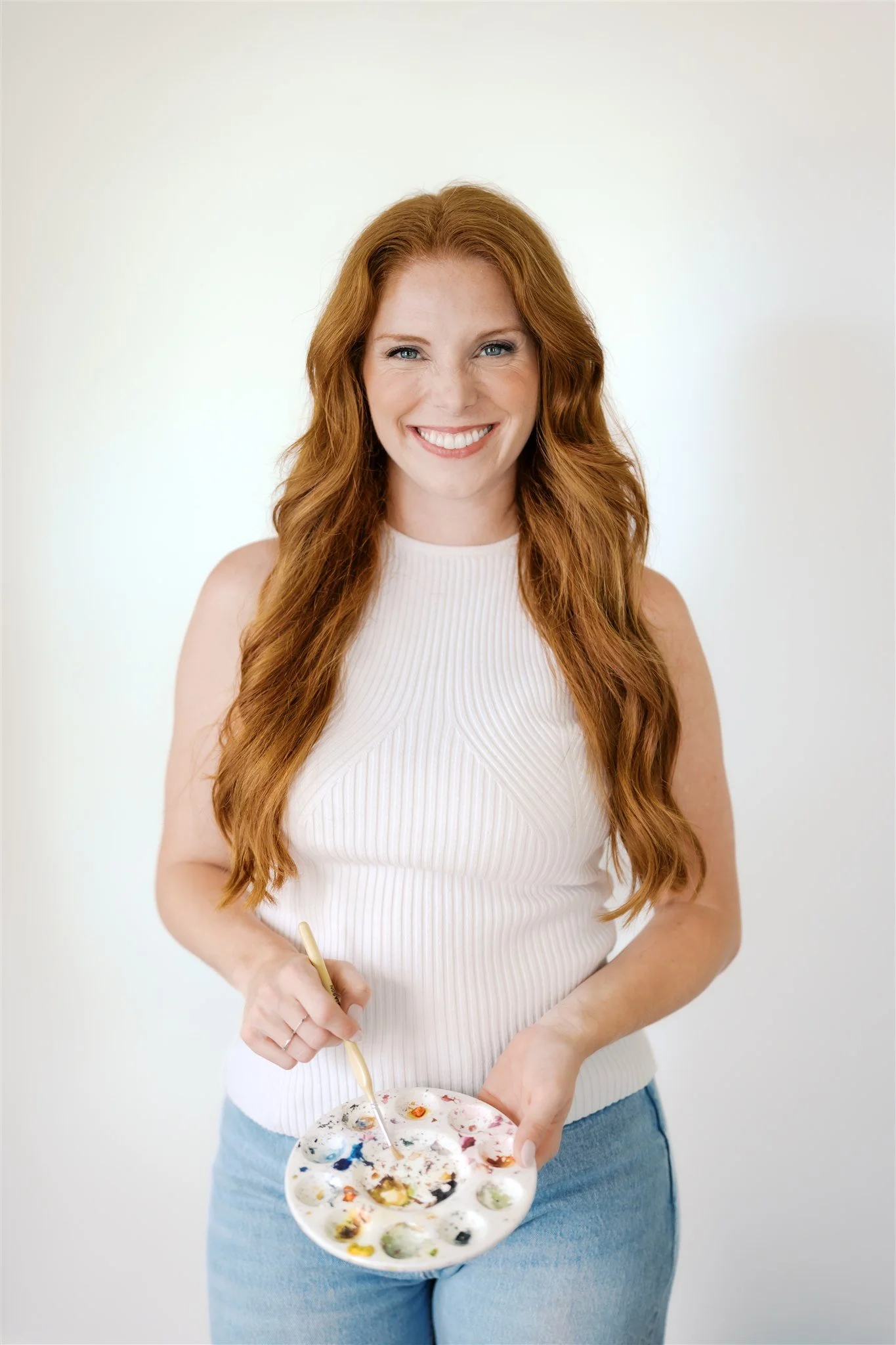

Today's guest is repeat guest Katie Wilson of The Good Twin & Crush + Touch Art Supply. We discuss why Katie chooses to keep wholesale as The Good Twin’s primary revenue stream, how to balance making money from your work with projects that fill your creative cup and why you should think twice before discontinuing a bestseller. Our conversation was so juicy, we needed to break it into two parts. Tune in to the next episode for part 2!