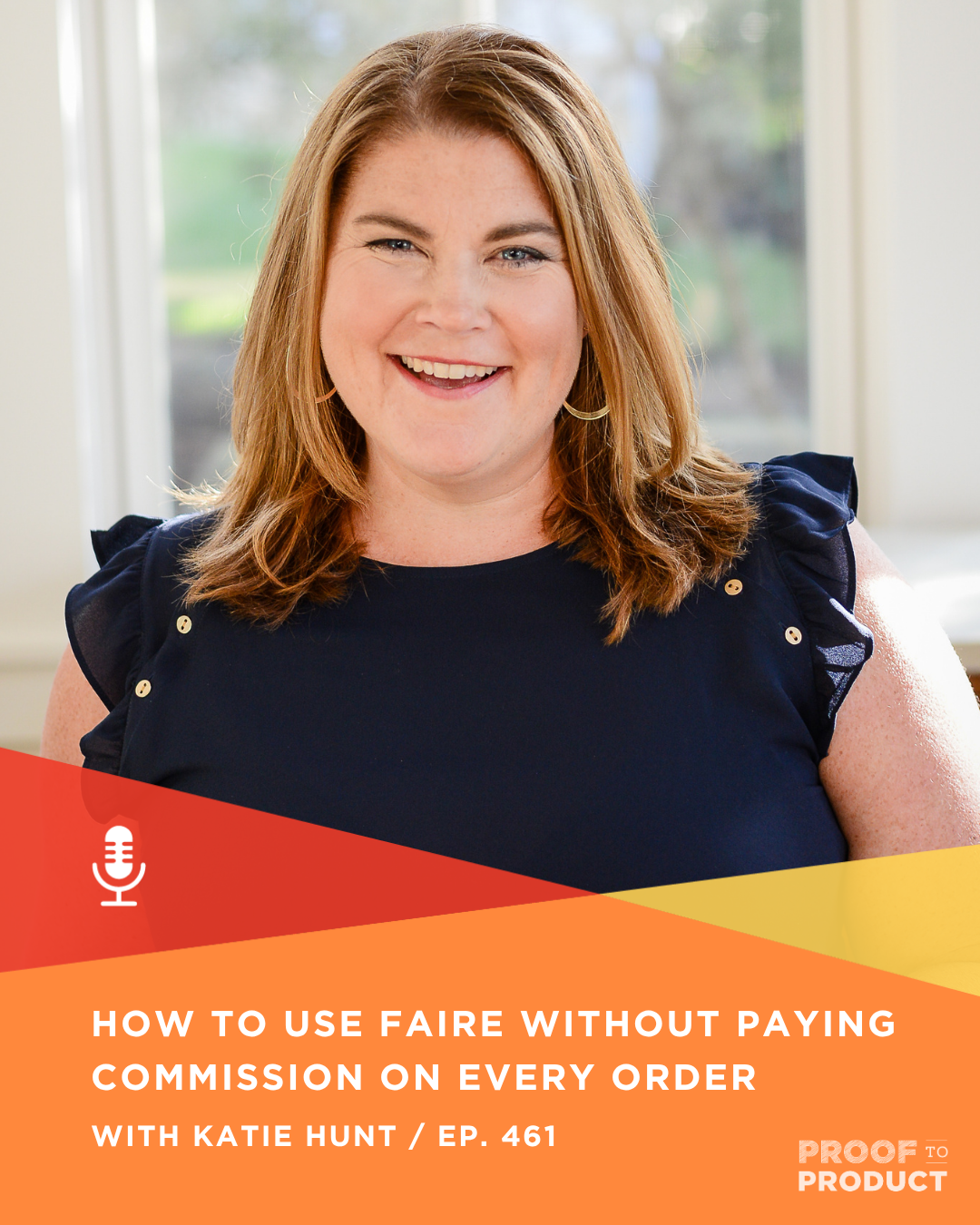
461 | How to Use Faire Without Paying Commission on Every Order with Katie Hunt
I've been having a lot of conversations lately, both private and public, about Faire.
Some of you love the platform. Some of you hate it.
And a lot of you are somewhere in the middle, trying to figure out your next move.
Should I get on Faire?
Should I get off?
Should I let it run on cruise control?
There's a lot of noise right now, and a lot of nuance to every situation.
Here's the part that gets missed: most of our Paper Camp students and alumni sell on Faire, and most of them are not paying commission on the large majority of their orders.
There's no trick to it. They use Faire as a checkout, not as a sales strategy.
In this episode, you'll learn:
What Faire genuinely does well
Why I have no problem with Faire's commissions
The two best ways brands use Faire
The four things Paper Camp alumni specifically do consistently with Faire that helps keep more money in their pockets
How one Proof to Product client pulled abandoned cart and past order data to build a personalized three-day campaign for a single store, and landed a $2,500 order
The one question to ask every time Faire rolls out something new
Today's episode is brought to you by our Retailer Roundtable interview series.
To make a strong first impression with wholesale buyers, we need to do a few things well.
We need to make it easy for stores to purchase from us
We need clear pricing and terms and conditions
We need to build strong relationships with our customers
All of that gets easier when we listen to our customers. This on-demand interview series gives you a window into what buyers want and need from you, and it's only $27.
your product brand right now?

Connect with Katie Hunt
Katie Hunt is a business strategist, podcaster, mentor and mama to four. She helps product based businesses build profitable, sustainable companies through her conferences, courses and coaching programs.
Website: prooftoproduct.com | Instagram: @prooftoproduct
-
KKatie Hunt [00:00:00]:
Hey friend, I have been having a lot of conversations, both private and public, about FAIR lately. Some of you love the platform, some of you hate the platform, and a lot of people are somewhere in the middle trying to figure out what their next move should be. Some folks are thinking, okay, should I get on FAIR? Some folks are thinking, should I get off of FAIR? Some are saying, should I let it roll on cruise control? There's so many discussions happening and there's also so much nuance to every single situation. So. Here's what I want you to know going into today's episode. Most of our Paper Camp students and alumni sell on Faire, and most of them are not paying Faire commissions on the large majority of their orders. And there's no secret trick to that. They're just using the platform differently than most brands do.
Katie Hunt [00:00:54]:
So today I'm going to walk you through what Faire does really well, And how it benefits brands and buyers. We're going to talk about how our students use it, and also I'm going to key you into a few places that I am keeping my eyes on and that you should probably keep your eyes on too. Today's episode is sponsored by our Retail Roundtable interview series. To make a strong first impression with wholesale buyers, we need to do a few things really well. We need to make it easy for stores to purchase from us. We need to have clear pricing and terms and conditions. We need to clearly communicate and focus on building strong relationships with our customers. And all of that, friends, becomes so much simpler and easier when we actively listen to our customers.
Katie Hunt [00:01:38]:
So this on-demand interview series is going to give you really a competitive edge. It's going to allow you to sit in a room and hear buyers talk about what they need and want from you. And the best part is it's only $27. So you can get access at prooftoproduct.com/roundtable. That's prooftoproduct.com/roundtable.
Katie Hunt [00:01:59]:
I'm Katie Hunt, wholesale expert, business strategist, and mom of 4. I'm also the host of the Proof to Product podcast. Since 2011, I've coached thousands of brands whose products can be found on the shelves of indie shops and big box stores all around the world. If you are a creative entrepreneur that makes and sells physical goods, you're in the right place. Here on Proof to Product, you'll learn new strategies for product development, sales, marketing, and more. It's like your weekly dose of business school, and we're going to help you confidently grow your revenue in your own way and at your own pace.
Katie Hunt [00:02:37]:
So let's get started. All right, so today we're going to talk about Faire. I want to talk about what the platform does well, how our students are using it differently than most of the sellers on Faire, and then a few things that I'm paying attention to in case it sparks your interest too. So let's start with the good stuff. What does Faire do well? There's actually a lot of things that Faire does well, but the first and foremost one is that it's relatively easy to get set up. So once you get approved to open a Faire shop, you can very quickly and easily build out a professional-looking online shop to sell wholesale. And you can manually add your products to the shop, or you can import things over from Shopify. They do make it pretty easy there.
Katie Hunt [00:03:16]:
But if you do not have a wholesale website on your own yet, This is a pretty big deal. Building out your own wholesale site requires a lot of time and money and energy. It's a complex and expensive project, and so Faire does give you a professional place to send buyers so that they can order today. Relatively speaking, you can get set up very quickly, and that, in my opinion, is a very big bonus, particularly for newer wholesalers. The second thing that Faire does well is that many buyers are already on the platform, and I will say that that is in part to of the sellers' efforts that are on the platform. There's a lot of sellers who have brought their buyers to the platform, but the fact of the matter is that buyers are already at the platform. A lot of store owners, they like shopping on Faire. Their payment info is saved there.
Katie Hunt [00:04:07]:
They can order from multiple brands in one place. They can see past orders. It is very convenient for them. Now, not every buyer prefers to shop on Faire. Some of them would much rather order from you directly off of the platform. But plenty do shop on Faire. And so a key that we always talk about at PaperCamp and in our programming is that we want to make it as easy as possible for our customers to purchase from us. And that includes meeting them where they are already hanging out and they are hanging out and buying on Faire.
Katie Hunt [00:04:36]:
So that makes it an easier yes when you do pitch them your products. The 3rd highlight or place where I think that Faire does well is by offering buyer perks that you might or might not want to offer directly to stores. So the big one here is extended payment plans. The other one is free shipping in certain cases, but if stores are asking you for net 60 terms, processing that order through Faire means that you will get paid upfront and Faire will take on the administrative and the financial risks that are associated with offering those net terms. So I'm talking about possible late payments. I'm talking about people defaulting and not paying at all. I'm also talking about the cash flow gap that comes between the shipment time and actually receiving payment. By doing that through Faire, they're assuming that extra risk.
Katie Hunt [00:05:27]:
And yes, I know the commissions on Faire can feel high, and that's probably the biggest gripe, the biggest con that people have with Faire. However, I don't, and you're probably gonna be surprised by this, I don't really have a problem with Faire's commissions because I view this as a cost of doing business. Just like a credit card processing fee, if you're paying a sales rep's commission, or if you're paying for a Shopify site every month. In the case with Faire, you're not paying for listing fees like you would on something like Etsy, right? You're simply paying the commissions for orders that are received through their marketplace. And in my opinion, that's just a cost of doing business. I am happy to pay for tools and services that save me time and money. I'm happy to pay for leads too. If Faire is bringing me leads and I'm getting marketplace orders, obviously would rather not pay commissions, but I also understand it and I'm okay with that.
Katie Hunt [00:06:19]:
However, that being said, I do want you keeping as much of your money in your pocket as possible, which kind of brings me to the next phase of this episode where I want to talk about how you are using Faire. Now I've worked with a lot of brands that sell wholesale. A lot of them sell on Faire, and I see over and over again that there are 2 primary ways that folks tend to be using Faire as a seller. Now, are there exceptions to these 2? Yes, absolutely, but I'm going to break down the 2 most common things that I see. The first way is a way that a lot of newer wholesale brands are using the platform, and that is that they are using it as their primary sales strategy, meaning they list their products and they wait for the orders to come in, and they essentially expect the platform to bring the buyers to them. It's kind of one of those, like, if I build it, they will come sort of thing. And they sit there and they watch their rankings. They work really hard towards Top Shop status.
Katie Hunt [00:07:16]:
When Faire makes suggestions in their portal or they send emails out, folks are like doing all the things Faire's suggesting, like lowering their minimums or offering an extra incentive to buyers. They do that because they're hoping that the algorithm will reward them with more orders. So it's a very reactive way of using FAIR, right? Like we're putting things on the platform, we're waiting for things to come to us, we're following the rules of FAIR, we're hoping that the algorithm really pays off and sends us more people. The second way is how our students use FAIR, and that's as a point of sale. They use it as a checkout point. So they are actively doing the sales and marketing outreach proactively, right? This is a proactive method. They are doing sales and marketing outreach, they're doing the things we teach in Paper Camp, they are pitching. Stores, they are sending out samples, they're sending out catalogs, they're attending trade shows and building relationships outside of the Faire platform.
Katie Hunt [00:08:13]:
And then when a buyer says, yes, I want to order, those brands are then sending them to Faire to check out through their Faire Direct link. Now, as most of you know, when a store orders through your Faire Direct link, Faire does not take a commission on the first order or any additional reorders after that. But when a store finds you through the marketplace, that's when you pay a commission on that order, and you also pay a first-time order fee too. But going back to the proactive nature, that commission goes away when the store orders directly from you. So you're only paying the credit card processing fee, which you would pay anyway, even if you took that order directly off of the platform, right? So I mentioned this to say our students aren't worrying, at least too much, they're not worrying too much about things like Topshop ratings or appeasing the algorithm. They aren't necessarily waiting for Faire to bring them the buyers. Instead, they're making connections, they're building relationships, they're building this whole sales ecosystem outside of Faire and using Faire as one part of their process, and then sending people back to Faire sometimes to place their orders. We also have a lot of folks in our community that do have separate Shopify wholesale sites, but many of them are bringing people back to Faire and using that direct link so they don't pay any commission.
Katie Hunt [00:09:33]:
I also should be clear here that like marketplace orders are still great. If a store finds you on Faire and it's on your own, that's a new customer that you didn't have to find or nurture or like go out and find. So again, paying a commission for that order is, in my opinion, totally warranted, but we don't want our entire strategy to be sitting back waiting for orders to roll in. That should not be your entire sales plan. Okay. So how can you keep more money in your pockets while still selling on Faire? I want to walk you through some of the things that our alumni do consistently. So that you can do them too. Okay, the first is put your direct links everywhere.
Katie Hunt [00:10:09]:
I'm talking everywhere: your email signature, your pitch emails, your wholesale catalog, your Instagram bio. Put a QR code on your trade show table or your craft show table if you're doing a D2C show. Anytime you are sending out a marketing piece or you are sending a buyer to fair, I want you to include your fair direct link, not a general link. You would be shocked how many brands do not have their fair direct link listed. Listed in their social media bios. I hear it from buyers all the time who are like, oh my gosh, I have to go dig for their fair direct links. The buyers want to use your direct links. They want to save you that money.
Katie Hunt [00:10:46]:
They know— the best buyers know that if you have a sustainable business, you will be around longer to serve the needs of their customers too. So they want to see you succeed, right? So put that link everywhere. The second thing is stay connected to your customers off of the platform outside of Faire. Faire owns the platform and it controls a lot of your customer data. So don't let Faire be the only place that you have a connection or a relationship with your stores. We want to follow those stores on Instagram or social media. We want to engage with their posts. We want them to be on our wholesale email list so that they can hear directly from us about new releases and updates and things that we're offering.
Katie Hunt [00:11:28]:
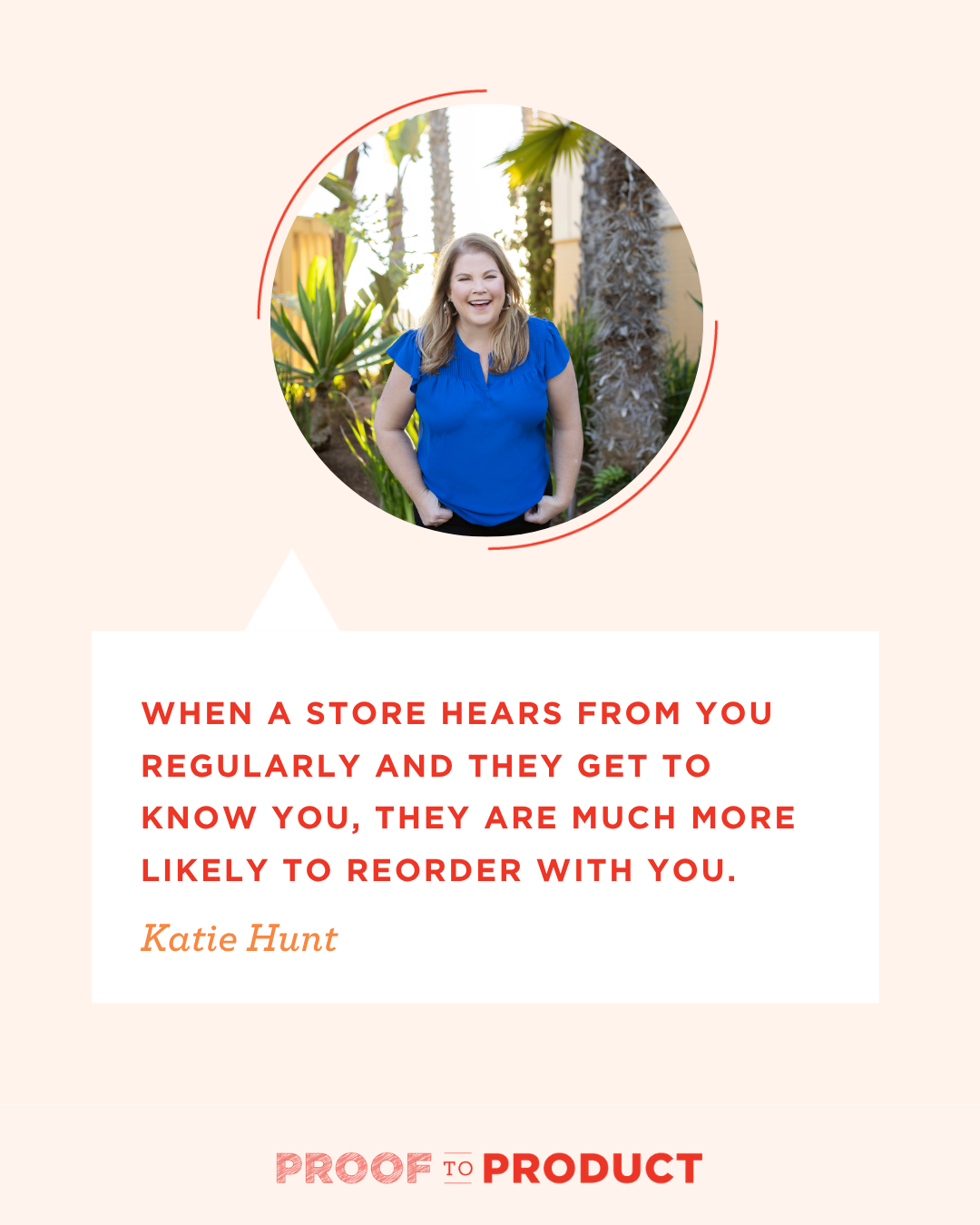
We want to check in personally when it's been a while since they've ordered, right? That reorder campaign. How do we help them? When a store hears from you regularly and they get to know you, they are much more likely to reorder with you. And the other thing here, what if Faire disappeared tomorrow? I want you to still have access to your customers, and I want you to retain that customer database so that you have all the information you need to know to continue that relationship later. The third thing I want you to think about here is get comfortable with your data and use it for strategic follow-up. So my clients are constantly reviewing their customers tab in Fare. They're looking at who their best customers are, when they last ordered, who needs special attention, who has abandoned carts. One of my clients used the data to send a personalized 3-day sales campaign to that store. They recommended things that weren't in the cart.
Katie Hunt [00:12:24]:
They recommended things they'd ordered in the past that they might need to reorder, and that store ended up placing a $2,500 order. My client used the data she had to tailor her pitch to that specific retailer. She included information that she knew would be helpful to that retailer, so she was approaching it from a place of service, but she was also wanting the sale, right? And that strengthened the relationship. She was able to get the order, but she was also able to be helpful and get the retailer what they needed. The buyer felt well taken care of. So dip into that data, understand what's working and not working for your buyers, and try to help them make the next order and use that data to help them. The next thing is I want you to keep records and then decide how hard you want to fight. And what I'm talking about here is commissions.
Katie Hunt [00:13:15]:
The commission fight with Faire is real. If a store you already pitch orders through the marketplace instead of your direct link, you can go and ask Faire waive that commission. I'm sure you guys are already familiar with this, but currently you need to show that you were in contact with that store within the 90-day window before that store ordered. So our alumni are taking photos of trade show badges. They are sending same-day follow-up so that they have a record of when they met that buyer with a timestamp. They are saving DM screenshots. And dated pitch emails. Like, again, they're documenting and keeping records here.
Katie Hunt [00:13:59]:
Contesting commissions can mean a lot of back and forth with FAIR. It can be a very frustrating process. They will oftentimes deny things and you have to appeal it. And I will say too that some of our alumni have tracked the time that they've spent contesting commissions versus what they got waived, and they decided that it wasn't worth fighting for. Other folks Go after every single dollar, and that's valid too. My take is that like, I want you to fight it when it's a meaningful amount or when you think a store is going to be working with you for several years. And also if it is truly somebody that you brought to the platform, you deserve to have that waive. But otherwise, I think there's also value in putting that time and energy into getting your direct link in front of more shop owners.
Katie Hunt [00:14:42]:
So instead of worrying about that one order, let's focus on expanding our reach and reaching more people with the direct orders.
Katie Hunt [00:14:48]:
Mm-hmm.
Katie Hunt [00:14:49]:
Okay. So that is what's in your control. Let's talk about what isn't in your control. The changes that FAIR makes and the ones that FAIR asks you to make. I've said it a few times already, but I don't want you chasing the algorithm. So let me be clear about why I'm paying attention to some of these things that FAIR is doing. It's not so that you can keep up with every new program and you can shift your strategies to appeal to their algorithms. It's more so that you can spot when FAIR is making recommendations that May or may not be in your best interest.
Katie Hunt [00:15:24]:
We know that Faire moves fast. Changes aren't always explained clearly. So whenever something new rolls out, I want you to ask yourself one question. Is this asking me to change fundamentals in my business? Is it asking me to change my pricing, my minimums, my terms, how I work with my stores, or how I want to run my business? I know that was like a lot of questions in one. But if the answer is yes, I want you to kind of push pause or slow down, and I want you to run your numbers or think deeply about whether or not that change, that request, whatever they're saying you should do, makes sense for your business model and what you're wanting. So here are just a couple of examples of things I'm keeping an eye on. Minimums. Some brands are being encouraged, actually a lot of brands are being encouraged to drop their opening order minimums to $50 or even $0.
Katie Hunt [00:16:17]:
Before you do that. Please run your numbers. I want you to subtract the commission, the production costs, the packaging, the shipping supplies, the time it takes for you to manufacture or fulfill that order. Once all of that math is done, you might be making pennies or even losing money on that order if you're allowing such low minimums. I talked about this on episode 298 of Proof to Product, and I actually broke down the math for folks that are interested. So I'm going to link that in the show notes if you want to go back and listen to them, but having a low minimum. It's attracting the wrong customer, and it's likely forcing your business to lose money. Okay, so I'm watching that.
Katie Hunt [00:16:56]:
I'm also watching insiders and the free shipping situation. Fair has the insider program where buyers get free shipping, and brands end up helping to cover that cost. With traditional wholesale, the store has always paid for shipping. The more normal free shipping becomes on Fair, I. Think that buyers are going to start to expect it from all of us, including any direct orders that are not even on Faire. So I am keeping a close eye on that. I'll also say that I feel like the Insider rules constantly change in terms of how much the brands have to cover, and so it makes it a little bit hard to predict the finances there. So I, again, keeping an eye on that.
Katie Hunt [00:17:34]:
Keeping an eye on Fulfilled and Sourced. These are 2 newer programs. Through these programs, Fair is providing 3PL and warehousing services for brands, and then they are also having their Source Program where they're offering stores the opportunity to place very small orders from individual brands by meeting a collective low minimum. What I mean by this is there might be 10 different brands that are in the Source Program, and if a store hits a $100 minimum, they can spread that $100 minimum across multiple brands, which might mean that somebody could get an order as low as like $10 or $20, and that's just It doesn't seem sustainable or profitable for brands. And so I wanna see how that unfolds further. Okay, so here are my takeaways from this chat. Things I want you to remember as you're leaving. Faire is a tool.
Katie Hunt [00:18:22]:
I want you to use it for the benefits it brings to you and your business, but also be mindful of how you are using it. I want you to use it in a proactive manner like our alumni. If you are using Faire as your checkout to make it easier and faster for you to, you know, accept wholesale orders rather than building out a wholesale website of your own right now, Then do that. I love that for you. I think that's a great method for you to do. You can always build out a Shopify site later. We don't want tech or little things like that to hold us back from selling wholesale. So if that's you, use FAIR, use it wisely, move forward.
Katie Hunt [00:18:56]:
But also, we don't want to let FAIR make important decisions for our business. We don't want to adjust our pricing, our minimums, our wholesale terms and conditions to appease the algorithm. Again, fair is a tool, a really useful one. But what matters most in the wholesale sales system that you build it around, things like the outreach, the relationships, the follow-up, those are the pieces that bring in orders all year long. I don't want you working towards just having a great fair market twice a year where orders come in twice a year and that's it, right? We want you to have orders consistently coming in year round. And once you have that system in place, Fair is simply where buyers go to check out, and you keep a lot more of what you're earning back in your pocket. If your wholesale sales have plateaued and you're not sure what's standing in your way between you and stronger sales, I want to invite you to take our free quiz. It's called Find Your Wholesale Blind Spot.
Katie Hunt [00:19:56]:
It takes literally 2 minutes to complete, and at the end I will share one clear action step that you can take right away to grow your sales. You can take that free quiz at prooftoproduct.com/quiz.
Katie Hunt [00:20:08]:
Blindspot.
Katie Hunt[00:20:09]:
Again, that's prooftoproduct.com/blindspot. Thank you for listening to the end. If today's episode resonated with you, please do share it with a friend or do me a solid and leave us a 5-star rating and write a review at ratethispodcast.com/ptp for Proof to Product. All right, thanks friends. I'll be back next week with a new episode.


I've been having a lot of conversations lately about Faire. Some of you love the platform. Some of you hate it. And a lot of you are somewhere in the middle, trying to figure out your next move. In this episode, I’m walking you through what Faire does well, the two very different ways brands use the platform, and the four things our Paper Camp alumni do to keep more of their money in their pockets.